Seven Faraway Planets Offer New Clues in the Search for Life
Astronomers have detected magnetic fields around seven exoplanets, offering new insights into planetary evolution and habitability.

Astronomers have detected magnetic fields around seven exoplanets, offering new insights into planetary evolution and habitability.

The SMILE spacecraft has reached scientific orbit and will study interactions between solar winds and Earth's magnetosphere.

Newly published studies across multiple scientific disciplines highlight continuing global progress in research and innovation.

Global astronomy research continues advancing through new studies of exoplanets, stars, and deep-space observation.

Global astronomy research continues advancing through new studies on exoplanets, galaxies, and the evolution of the universe.

Researchers have published a study aimed at improving forecasts of the 2026 East Asian summer heatwave through advanced climate analysis.

Scientists are using 16th-century eclipse records to improve understanding of Earth's long-term rotational changes.

A new study suggests some Hot Neptune exoplanets may have evolved from larger gas giants after losing much of their atmospheres.

Chinese astronomers have advanced solar observation using a new-generation radio telescope to improve understanding of solar activity and space weather.

Aurora forecast suggests possible visibility in multiple U.S. states due to increased geomagnetic activity.

Scientists study deep sleep mechanisms linked to muscle recovery, fat metabolism, and brain function improvement.

NASA monitors orbital safety of the Swift Observatory as it ages in low-Earth orbit and approaches end-of-life considerations.

A Falcon 9 launch carried a semiconductor manufacturing test bed alongside Starlink satellites for microgravity research.

Research shows bird brains process structured songs in ways that may help explain human musical perception.

Hubble captures an image of a dense star field containing about 500,000 stars, offering insight into stellar evolution and galaxy structure.

JWST observations suggest possible water-ice clouds on Epsilon Indi Ab, refining exoplanet atmospheric models.

A science career narrative highlights how early operational roles can lead to leadership positions in Mars exploration teams.

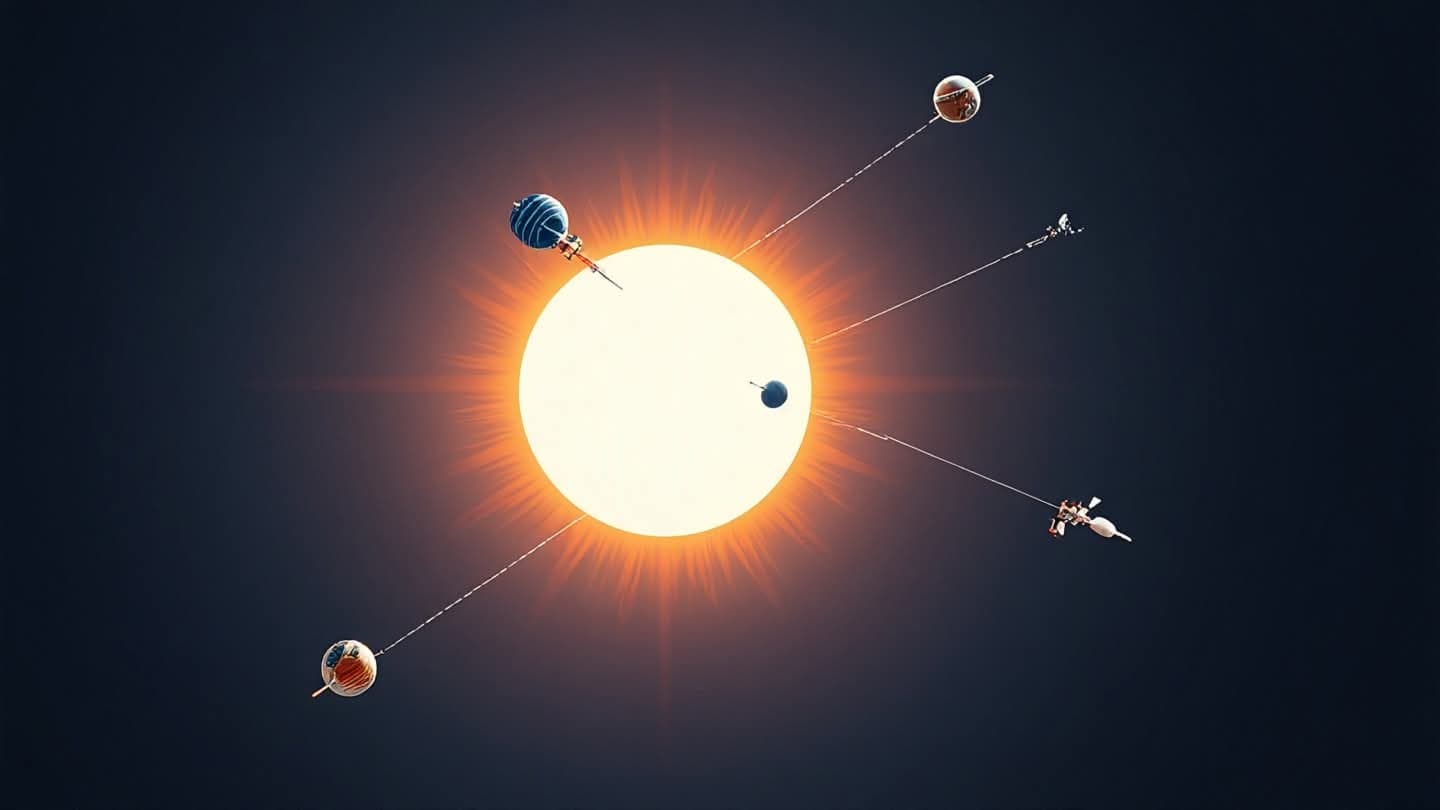
NASA’s fastest spacecraft is not Voyager; newer missions like Parker Solar Probe exceed its speed depending on measurement context.

Australia is accelerating investment in satellite technology through research, industry partnerships, and education to strengthen its growing space sector and support future innovation.

Australia is expanding cooperation with Pacific nations through development, infrastructure, and security initiatives designed to strengthen regional resilience and long-term partnerships.

NASA's James Webb Space Telescope detected methane and atmospheric hazes around WD 1856 b, offering new insight into how planets survive the death of their stars.

An incident at a diabetes conference has prompted wider discussion about conference policies and academic expression.

Scientists have identified a new fossil axolotl species in Mexico, offering fresh insight into the evolution and ancient habitats of these unique amphibians.

Scientists are investigating why a Martian rock contains an unusually high amount of carbon, but its origin remains uncertain.