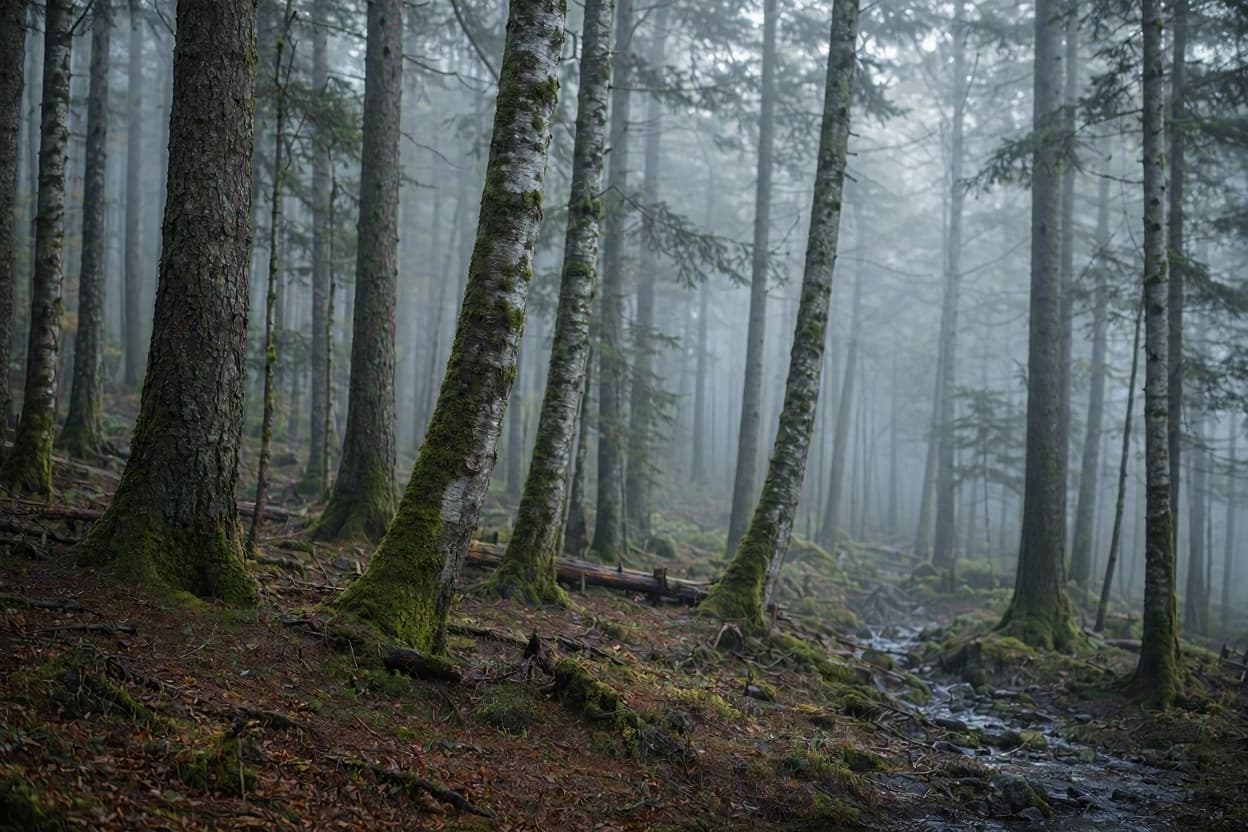
In the vast, silent expanses of Canada’s North, the ground beneath the trees is undergoing a subtle but profound transformation. Permafrost, the frozen soil that has remained solid for millennia, is beginning to thaw due to rising temperatures. This process creates a surreal landscape known as "drunken forests," where trees tilt at odd angles as their foundations shift and sink. These leaning sentinels are not just a visual curiosity; they are living indicators of climate change, offering valuable insights into the stability of the Arctic environment and the broader implications for global ecosystems.
Permafrost acts as a cement-like binder, holding soil and vegetation in place. When it thaws, the ground becomes unstable, causing trees to lose their anchor and lean in various directions. This phenomenon, often called thermokarst, results in uneven terrain and disrupted root systems. For scientists, these drunken forests serve as natural laboratories, providing visible evidence of subsurface changes that are otherwise difficult to monitor. By studying the angle and health of these trees, researchers can gauge the rate and extent of permafrost degradation.
The implications of thawing permafrost extend beyond local ecology. Frozen soil stores vast amounts of carbon, accumulated over thousands of years from dead plant matter. As the ground warms, microbes begin to decompose this organic material, releasing carbon dioxide and methane into the atmosphere. These greenhouse gases contribute further to global warming, creating a feedback loop that accelerates climate change. Understanding this process is crucial for predicting future climate scenarios and developing mitigation strategies.
Indigenous communities in the North have long observed these changes, noting shifts in wildlife patterns, water quality, and land stability. Their traditional knowledge complements scientific data, offering a holistic view of environmental change. Collaborative research projects are increasingly incorporating Indigenous perspectives, recognizing the value of lived experience in understanding complex ecological dynamics. This partnership enhances the accuracy and relevance of climate models.
The impact on infrastructure is also significant. Roads, buildings, and pipelines built on permafrost are at risk of damage as the ground shifts. Engineering solutions must adapt to these changing conditions, requiring innovative designs and materials that can withstand instability. The lessons learned from drunken forests inform these efforts, helping to protect communities and essential services in the Arctic.
Conservation efforts focus on reducing greenhouse gas emissions to slow the rate of thawing. However, some degree of change is already locked in, making adaptation necessary. Monitoring programs using satellite imagery and ground sensors track permafrost temperature and movement, providing real-time data for researchers. This technology allows for early detection of hazardous areas, enabling proactive measures to protect both nature and human settlements.
The aesthetic beauty of drunken forests, with their tilted trunks and resilient greenery, belies the seriousness of the underlying issue. They are a symbol of resilience, yet also of vulnerability. Protecting these ecosystems requires global cooperation and a commitment to sustainable practices. Every fraction of a degree of warming prevented helps preserve the integrity of the permafrost and the communities that depend on it.
Drunken forests offer a powerful visual narrative of climate change in Canada’s North. By studying these tilting trees, scientists gain critical insights into permafrost thaw and its global consequences. As we work to address climate change, let these leaning giants remind us of the urgency of action and the interconnectedness of our planet’s systems.
AI Image Disclaimer: The images associated with this report are AI-generated visualizations created to provide context and should not be interpreted as documentary evidence.
Sources: National Geographic CBC News Nature Climate Change Arctic Council Reports University of Alberta Research
Published by Banx Network. This article is part of the Banx decentralized media programme, powered by the BXE token on the XRP Ledger.