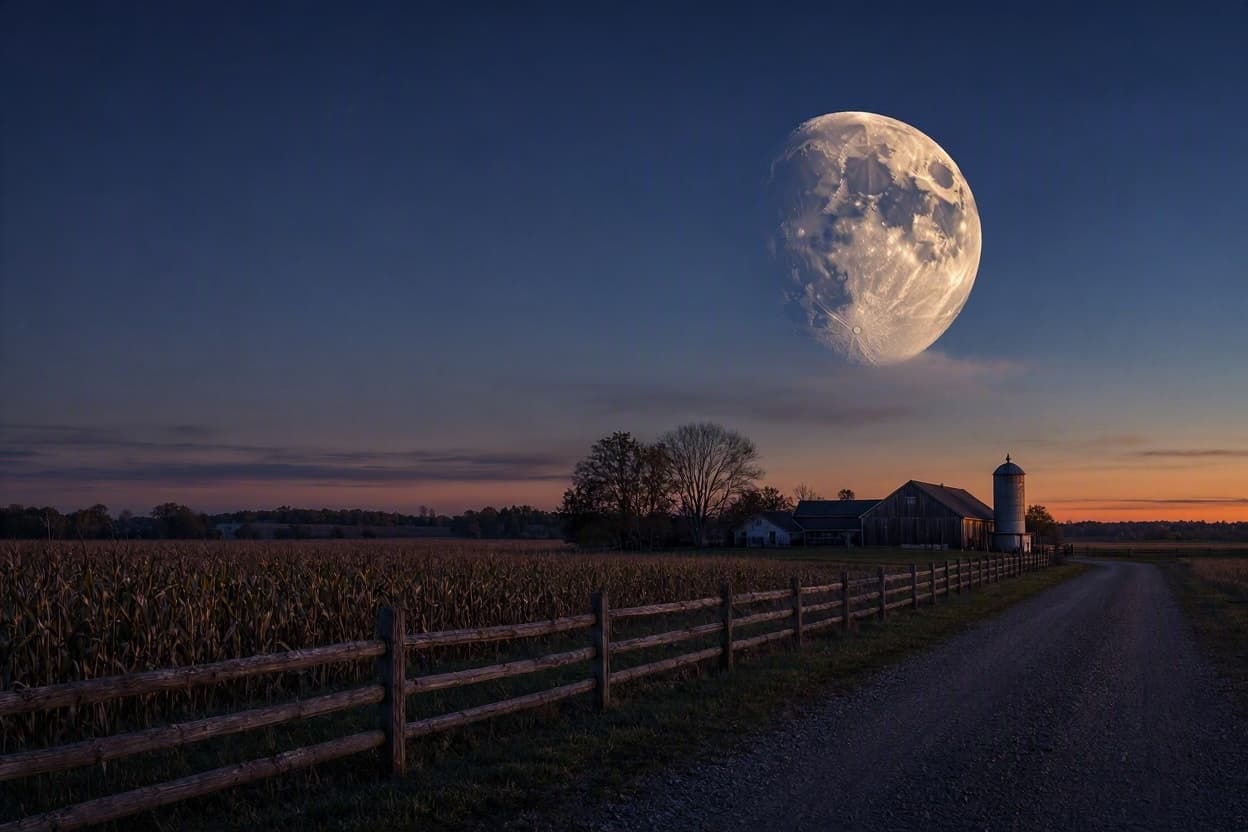
As night falls over central Ohio, the sky offers a celestial spectacle that invites contemplation and wonder. A deep partial lunar eclipse is set to grace the heavens, casting a shadowy veil over the moon’s bright face. For stargazers and casual observers alike, this event provides a rare opportunity to witness the intricate dance of Earth, moon, and sun. It is a moment to pause, look up, and connect with the rhythms of the cosmos.
The eclipse occurs when the moon passes through Earth’s umbra, the darkest part of its shadow. Unlike a total eclipse, where the moon is completely engulfed, a partial eclipse sees only a portion of the lunar surface darkened. In this case, the coverage will be significant, creating a dramatic visual effect as the moon appears to bite into the shadow. The contrast between the illuminated and shaded areas highlights the moon’s craters and mountains in sharp relief.
For residents of central Ohio, the timing is favorable. The eclipse will be visible during the evening hours, allowing for comfortable viewing without the need for late-night vigils. Clear skies are expected, though clouds can never be guaranteed in the Midwest. Observers are encouraged to find a spot with an unobstructed view of the eastern horizon, where the moon will rise already partially eclipsed. Binoculars or a telescope can enhance the experience, revealing details invisible to the naked eye.
The phenomenon is a result of precise orbital mechanics. As the moon orbits Earth, it occasionally aligns with the sun and our planet, creating shadows that play out across its surface. These events are predictable and regular, yet each one feels unique. They remind us of our place in the solar system, governed by laws of physics that have remained constant for billions of years. It is a humbling perspective, offering a break from the hurried pace of daily life.
Photographers and amateur astronomers are preparing to capture the event, using various techniques to document the changing light. The reddish hue often associated with lunar eclipses, caused by sunlight filtering through Earth’s atmosphere, may be less pronounced in a partial eclipse, but the interplay of light and shadow remains striking. Sharing these images online fosters a sense of community among skywatchers, connecting people through a shared appreciation of nature.
For educators, the eclipse is a valuable teaching tool. It offers a practical example of astronomical concepts, helping students understand orbits, shadows, and light. Schools and planetariums may host viewing parties, encouraging curiosity and scientific inquiry. It is a chance to inspire the next generation of explorers, showing them that science is not just in textbooks but in the sky above.
As the eclipse progresses, the moon will gradually emerge from the shadow, returning to its full brightness. This transition is a metaphor for resilience and renewal, reminding us that darkness is temporary. For those who watch, it is a moment of peace and reflection. The sky, vast and indifferent, becomes a canvas for human emotion and wonder.
In the end, the partial lunar eclipse is a gift of time and space. It asks nothing of us but our attention. For central Ohio, it is a night to remember, a shared experience that binds the community under the same sky. Whether viewed from a backyard or a park, the moon’s journey through the shadow is a testament to the beauty of the natural world.
AI Image Disclaimer: The visual elements in this article are AI-generated illustrations of lunar phases and night skies, designed to reflect the themes of astronomy and observation without showing real proprietary telescope imagery or specific location data.
Sources: NASA Eclipse Website, TimeandDate.com, Local Ohio News Outlets, Astronomy Magazine
Published by Banx Network. This article is part of the Banx decentralized media programme, powered by the BXE token on the XRP Ledger.