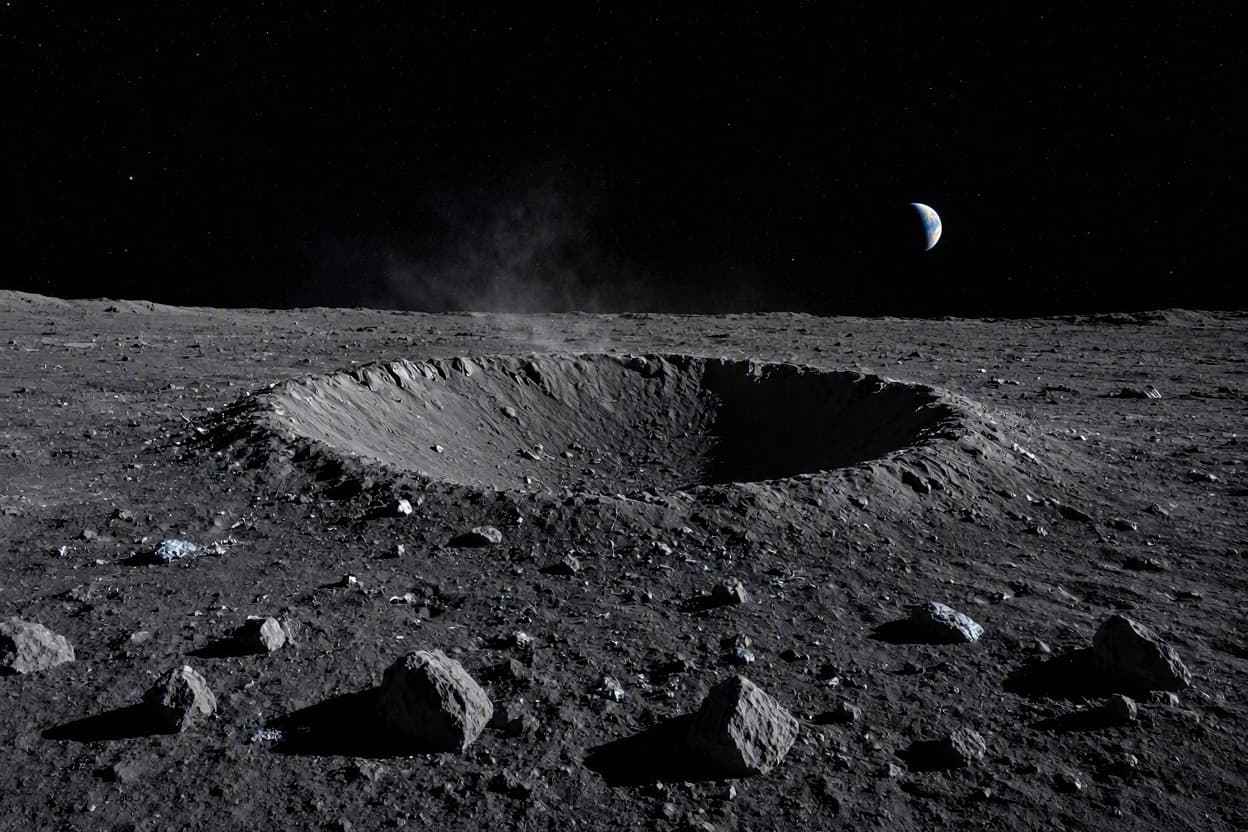
On the silent, gray surface of the Moon, where footprints last for millennia, a new scar has formed. Recent images released by NASA reveal the aftermath of a SpaceX spacecraft crash, marking a stark contrast to the pristine "magnificent desolation" described by Apollo astronauts. The impact site, captured by the Lunar Reconnaissance Orbiter (LRO), shows a fresh crater and debris field, serving as a tangible reminder of the challenges inherent in lunar exploration.
The spacecraft, part of a private mission aimed at testing landing technologies, lost control during its final descent. Instead of a soft touchdown, it struck the surface at high speed, creating a blast zone that scattered debris across the regolith. The images, taken from orbit, provide a detailed view of the damage, allowing scientists to analyze the dynamics of the impact. This data is crucial for improving future landing systems and ensuring the safety of subsequent missions.
For SpaceX and the broader commercial space industry, the crash is a setback but not a defeat. Failure is an integral part of innovation, especially in the unforgiving environment of space. Each accident provides valuable lessons, helping engineers refine their designs and procedures. The transparency of sharing these images demonstrates a commitment to learning and progress, fostering trust in the rapidly evolving sector of private spaceflight.
The term "magnificent desolation," coined by Buzz Aldrin, captures the eerie beauty of the lunar landscape. It is a place of extreme contrasts—bright sunlight and deep shadows, silence and violence. The crash site disrupts this tranquility, introducing a human element of error and ambition. Yet, it also highlights our persistent desire to explore, even when the risks are high. The Moon remains a frontier, challenging us to master its complexities.
NASA’s LRO has been instrumental in documenting such events, providing high-resolution images that serve both scientific and public interests. By monitoring impact sites, researchers can study the physical properties of the lunar surface, such as soil density and rock distribution. This information is vital for planning future bases and resource extraction efforts. The orbiter acts as a vigilant eye, watching over our celestial neighbor.
For the public, the images evoke a mix of awe and concern. They remind us that space exploration is difficult and dangerous. However, they also inspire curiosity about the technology and people behind the missions. The story of the crash is not just about failure but about the courage to try. It connects us to the long history of exploration, where every step forward is built on the lessons of the past.
As plans for returning humans to the Moon accelerate under programs like Artemis, the importance of safe landing technologies grows. Private companies like SpaceX play a key role in this effort, providing innovative solutions and competitive pressure. The crash serves as a cautionary tale, urging continued rigor and testing. It underscores the need for collaboration between government agencies and private enterprises to ensure success.
In the end, the SpaceX crash site is a monument to ambition. It stands on the Moon as a testament to human endeavor, flawed but persistent. The images released by NASA are not just records of destruction but symbols of progress. They invite us to look at the Moon with new eyes, seeing not just a distant world but a destination we are slowly learning to reach. The journey continues, guided by the light of knowledge and the spirit of exploration.
AI Image Disclaimer: Images accompanying this report are AI-generated artistic interpretations of lunar landscapes and impact craters, intended to visualize the context of the crash without depicting real proprietary NASA imagery or specific spacecraft debris.
Sources: NASA Goddard Space Flight Center, SpaceNews, The Verge, Scientific American
Published by Banx Network. This article is part of the Banx decentralized media programme, powered by the BXE token on the XRP Ledger.