In the vast tapestry of the cosmos, where stars are but dust motes in an infinite room, human imagination often struggles to find a foothold. We look up at the night sky and see points of light, yet we rarely grasp the true magnitude of the structures they form. Recent observations have identified the largest known galaxy, Alcyoneus, a radio giant that stretches across 1.7 million light-years. To comprehend this scale is to confront the limits of our own cognition, forcing us to acknowledge that the universe operates on dimensions that defy everyday experience.
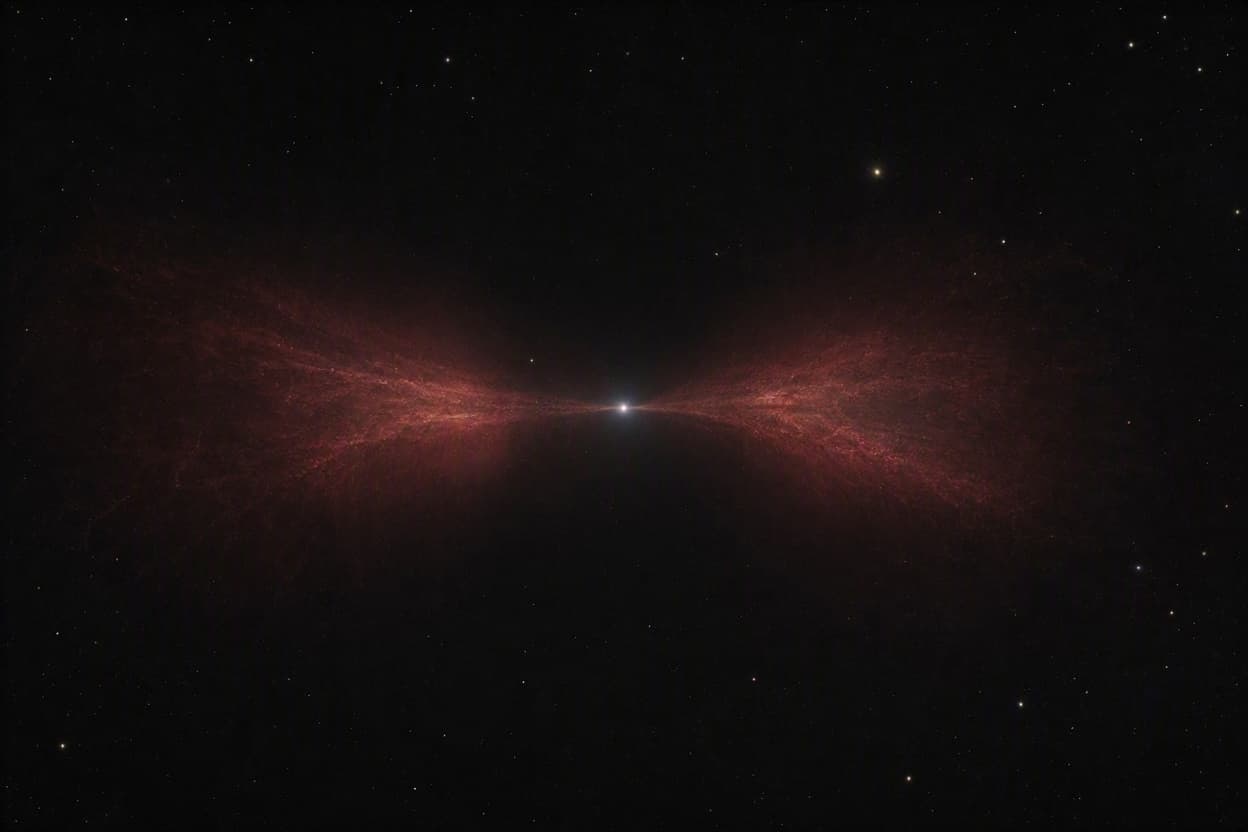
Alcyoneus is not a typical spiral galaxy like our own Milky Way. It is a radio galaxy, characterized by massive jets of particles ejected from its central supermassive black hole. These jets inflate enormous lobes of radio-emitting plasma that extend far beyond the visible stars. When astronomers measure its size, they are not just counting stars but mapping the reach of these energetic outflows. The result is a structure so vast that it dwarfs our entire galactic neighborhood, reminding us of the diverse forms cosmic evolution can take.
The sheer distance involved is difficult to visualize. A light-year is the distance light travels in one year, approximately nine trillion kilometers. Multiplying that by 1.7 million creates a number so large it loses meaning. If our Milky Way, which spans about 100,000 light-years, were placed inside Alcyoneus, it would appear as a small speck in a vast ocean. This comparison highlights the hierarchical nature of the universe, where even the largest familiar structures are insignificant in the grander scheme.
Discovering such a behemoth challenges existing models of galaxy formation. How does a galaxy grow to such proportions without tearing itself apart? Scientists believe that Alcyoneus resides in a region of space with relatively low density, allowing its radio lobes to expand unimpeded. This environment acts as a vacuum, permitting the galaxy’s energy to spread over millions of years. It is a testament to the delicate balance between gravity and energy that shapes the cosmos.
For astronomers, Alcyoneus is more than a record-breaker; it is a laboratory for understanding extreme physics. The processes that power its jets involve magnetic fields and particle acceleration at energies far beyond what can be replicated on Earth. Studying this galaxy provides insights into the behavior of matter under extreme conditions, helping to refine our understanding of black holes and their influence on their surroundings. It is a window into the most violent and powerful events in the universe.
Yet, for the general public, the primary reaction is often one of humble awe. The realization that such structures exist, invisible to the naked eye and detectable only through sophisticated instruments, expands our sense of wonder. It reminds us that we are observers of a reality much larger than ourselves. This perspective can be both intimidating and liberating, offering a sense of connection to the infinite while highlighting our smallness within it.
As technology advances, we may discover even larger structures, pushing the boundaries of knowledge further. Each discovery adds a piece to the puzzle of cosmic history, revealing how galaxies evolve over billions of years. Alcyoneus stands as a current milestone, a beacon of scale that invites us to look deeper and think bigger. It is a reminder that the universe is still full of surprises, waiting to be uncovered.
In the end, the size of Alcyoneus is not just a statistic but a philosophical prompt. It asks us to expand our minds to accommodate the incomprehensible. While we may never fully grasp the scale of 1.7 million light-years, the attempt to do so enriches our understanding of existence. We are small, but our capacity to wonder is vast, bridging the gap between the finite and the infinite.
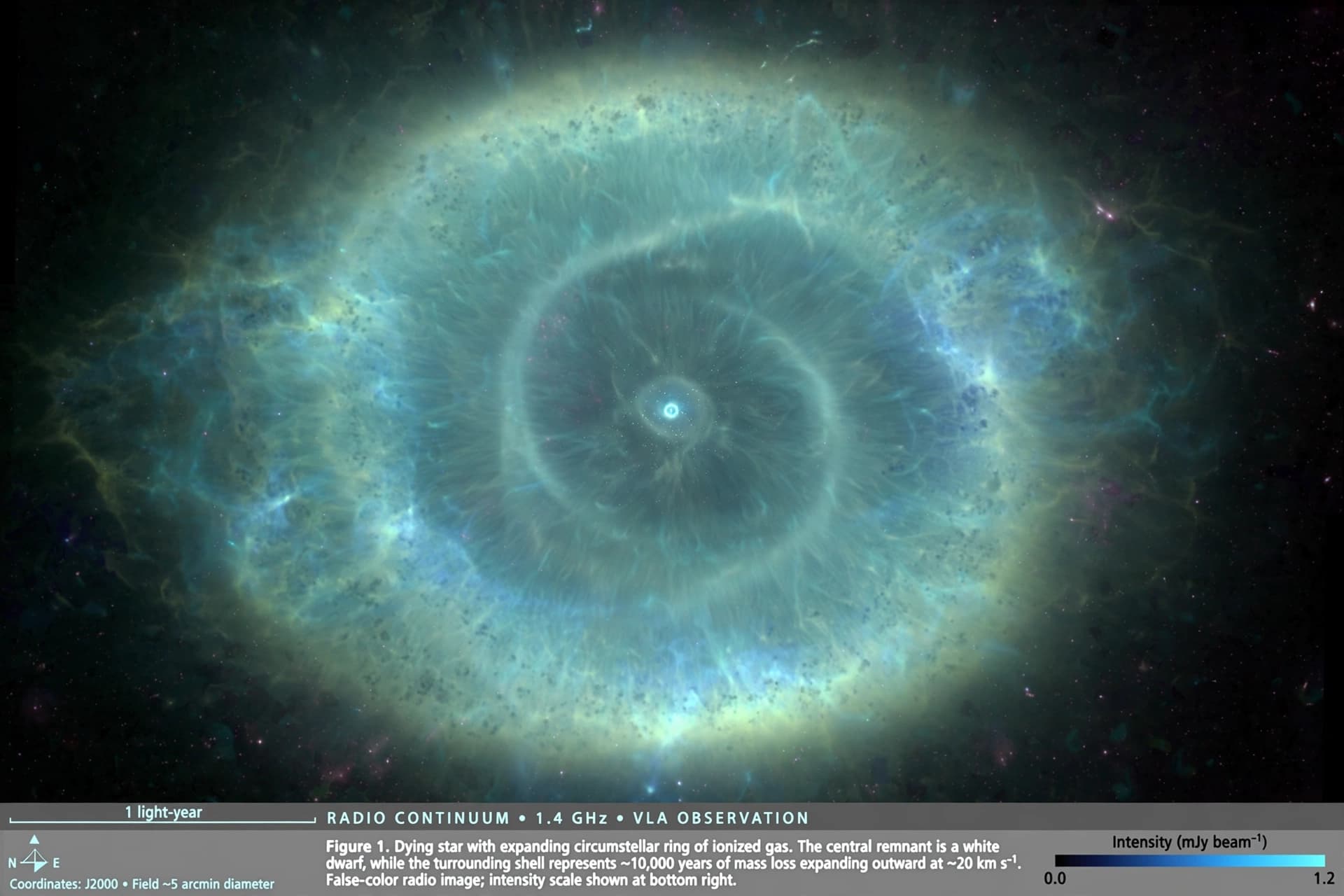
AI Image Disclaimer: The visual elements in this article are AI-generated illustrations depicting abstract cosmic structures and radio galaxy lobes, designed to reflect the themes of scale and astronomy without showing real proprietary telescope data or specific scientific visualizations.
Sources: Astronomy Magazine, Space.com, Universe Today, Phys.org
Published by Banx Network. This article is part of the Banx decentralized media programme, powered by the BXE token on the XRP Ledger.