Artificial Intelligence Becomes a New Partner in Humanity’s Journey Beyond Earth
NASA explores artificial intelligence tools to support spacecraft development, scientific research, and future space missions.

NASA explores artificial intelligence tools to support spacecraft development, scientific research, and future space missions.

NASA’s Artemis program advances human lunar exploration while developing technologies for future deep-space missions.

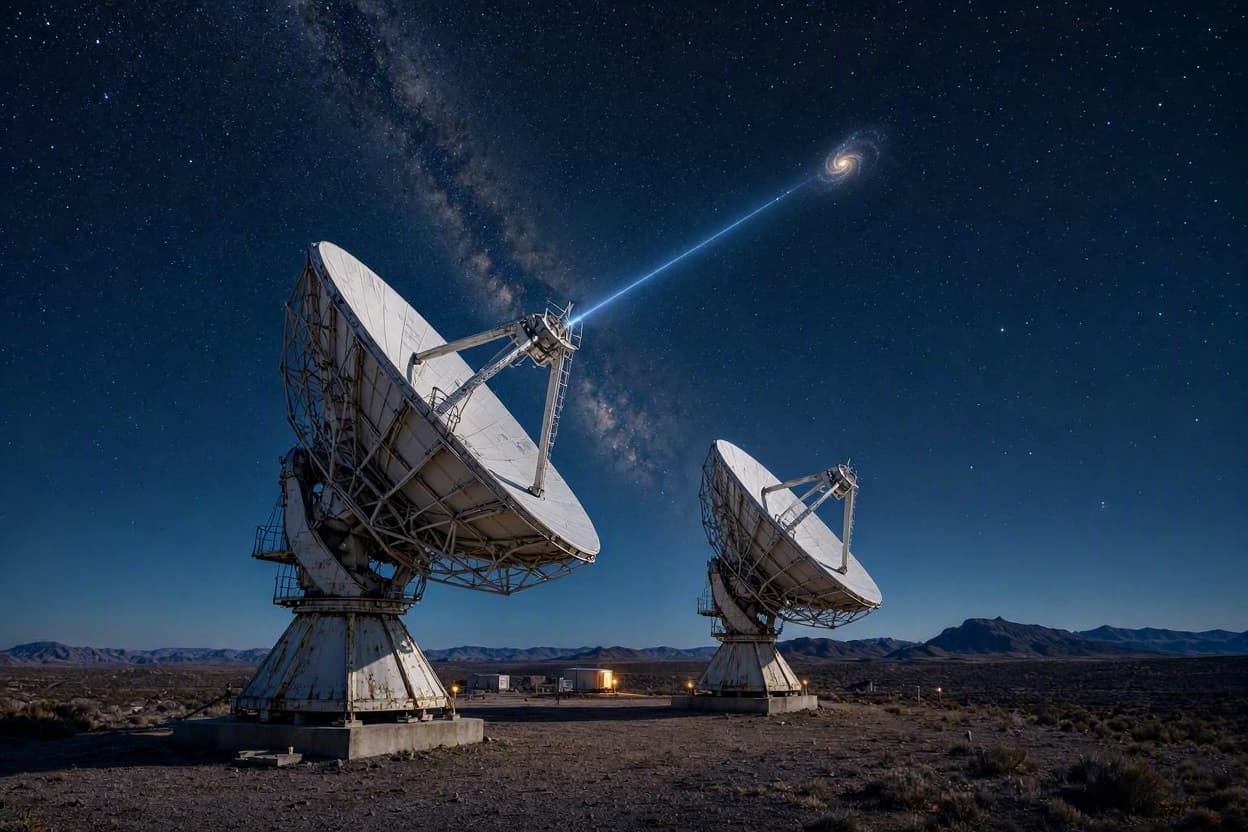
NASA continues developing advanced space telescope technology to explore distant planets, galaxies, and cosmic mysteries.

NASA’s Perseverance rover continues studying ancient Martian carbon materials to better understand Mars’ geological history.

International forensic science organizations are expanding collaboration through research, education, and standardized scientific practices.

Scientists developed a high-temperature copper alloy with improved strength and stability for advanced industrial applications.

Researchers developed AI capable of identifying the origin of 3D-printed components through microscopic production signatures.

Machine learning is helping scientists detect soil contaminants more efficiently while supporting environmental monitoring efforts.

Portable spectroscopy is helping forensic investigators identify evidence more rapidly while supporting accurate laboratory investigations.

Researchers developed an evidence-based AI framework that improves financial risk analysis using transparent knowledge graph technology.

New theoretical research offers additional insight into Hawking's Information Paradox and the physics governing black holes.

New simulations suggest Earth may have a greater chance of surviving the Sun's distant evolution than previously believed.

Astronomers discovered a potentially habitable Super-Earth 25 light-years away, providing another promising target for future planetary research.

Scientists are studying the concept of a lunar quarantine facility to safely examine future extraterrestrial samples before transport to Earth.

China's Tianwen-2 spacecraft has begun asteroid operations, marking an important step toward studying the early history of the solar system.

Scientists identified a new biological target that may support future treatments against harmful gut bacteria while preserving beneficial microbes.

Astronomers observed evidence of a newly formed magnetar, offering valuable insights into stellar evolution and extreme magnetic fields.

NASA is designing the Habitable Worlds Observatory to be serviceable in space, allowing for repairs and upgrades to ensure its long-term success in the search for extraterrestrial life.

Researchers have recovered ancient human DNA from cave walls and rock art for the first time, enabling direct identification of the prehistoric artists who created them.

University of Georgia researchers have found that marigold flowers contain significant amounts of protein, offering a sustainable and upcyclable source for plant-based food products.

NASA’s New Horizons spacecraft revealed a massive heart-shaped nitrogen ice plain on Pluto during its 2015 flyby, transforming our understanding of the dwarf planet’s geology.

Researchers have proposed creating an artificial plasma shield in space to weaken solar storms, offering a potential defense mechanism for Earth’s technology and infrastructure.

Turkey has intensified restrictions on public life and media ahead of the NATO summit in Ankara, citing security concerns, while critics warn of impacts on civil liberties.

New stellar models suggest Earth will escape being swallowed by the sun during its red giant phase, as planetary orbits expand due to solar mass loss, though habitability will end.