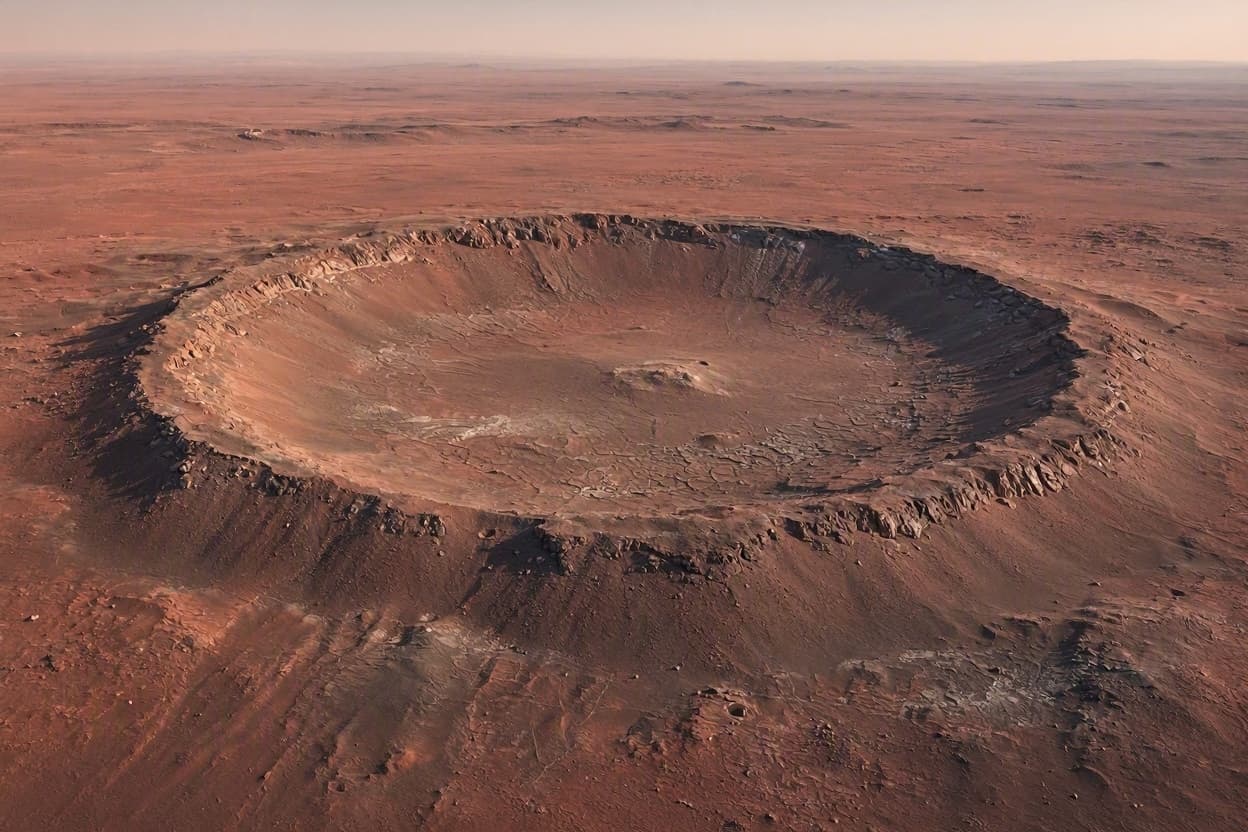
On the rust-colored surface of Mars, where wind sculpts the dunes and silence reigns supreme, lies a crater that has captured the global imagination. Schiaparelli Crater, featured prominently in the film "The Martian," has recently been photographed in stunning detail by the European Space Agency’s Trace Gas Orbiter (TGO). These new images offer a fresh perspective on a landscape that has become synonymous with cinematic survival, bridging the gap between fiction and scientific reality.
The TGO, part of the ExoMars mission, orbits the Red Planet with a high-resolution camera capable of capturing features as small as a few meters. The recent images reveal the intricate textures of Schiaparelli’s floor, including sand dunes, rocky outcrops, and impact scars. For fans of the movie, seeing these details brings the fictional narrative to life, grounding the story in actual geography. It is a reminder that Mars is not just a setting for stories but a real world with its own complex history.
Schiaparelli Crater was chosen for the film due to its dramatic appearance and strategic location near the equator. In the movie, it serves as the landing site for the protagonist, Mark Watney. While the actual mission plans for human exploration may differ, the crater remains a significant landmark for robotic missions. Its study helps scientists understand the geological processes that have shaped Mars over billions of years, from ancient water flows to recent wind erosion.
The images also highlight the technological prowess of modern space exploration. The ability to capture such clear visuals from hundreds of kilometers above the surface is a testament to engineering excellence. Each photo is a data point, contributing to our understanding of Martian geology and climate. They help identify potential hazards and resources for future missions, paving the way for human exploration.
For the public, these images serve as an inspiration. They transform Mars from a distant red dot into a tangible place, accessible through the lens of science. The connection between pop culture and scientific discovery fosters interest in space exploration, encouraging younger generations to pursue careers in STEM fields. It shows that art and science are not mutually exclusive but can enhance each other.
Scientists continue to analyze the data, looking for signs of past habitability. Schiaparelli, like many Martian craters, may have once held water, making it a prime target for astrobiological research. The detailed views allow researchers to study sedimentary layers and mineral compositions, searching for clues about the planet’s wetter past. Every image brings us closer to answering the question of whether life ever existed on Mars.
As we prepare for future missions, including sample returns and human landings, landmarks like Schiaparelli will play a crucial role. They serve as reference points for navigation and scientific inquiry. The TGO’s ongoing monitoring ensures that we have up-to-date information on surface changes, such as dust storms or new impacts. This continuous observation is vital for mission planning and safety.
In the end, the new views of Schiaparelli Crater are a celebration of exploration. They remind us that Mars is a world of beauty and mystery, waiting to be understood. Whether through the lens of a camera or the imagination of a filmmaker, the Red Planet continues to captivate us. It is a destination that promises discovery, challenging us to reach further and dream bigger.
AI Image Disclaimer: Visuals in this article are AI-generated illustrations of Martian landscapes and orbital perspectives, designed to visualize the theme of space exploration without depicting real proprietary satellite imagery or specific mission hardware.
Sources: ESA, Space.com, NASA, The Verge
Published by Banx Network. This article is part of the Banx decentralized media programme, powered by the BXE token on the XRP Ledger.