In the quiet hum of a laboratory, where temperatures approach absolute zero, physicists are hunting for particles that exist only at the edge of theoretical possibility. Recently, researchers announced the detection of signatures consistent with exotic parafermion zero modes. These elusive entities, predicted by quantum theory but never before observed, could hold the key to a new era of computing. Their discovery marks a subtle but profound step forward in our understanding of the quantum world.
Parafermions are quasiparticles that emerge in certain condensed matter systems, behaving differently from the familiar fermions and bosons. Unlike electrons, which follow strict rules of exclusion, parafermions can occupy states in ways that allow for more complex information storage. The "zero mode" refers to a specific energy state where these particles can exist without dissipation, making them ideal candidates for robust quantum bits, or qubits.
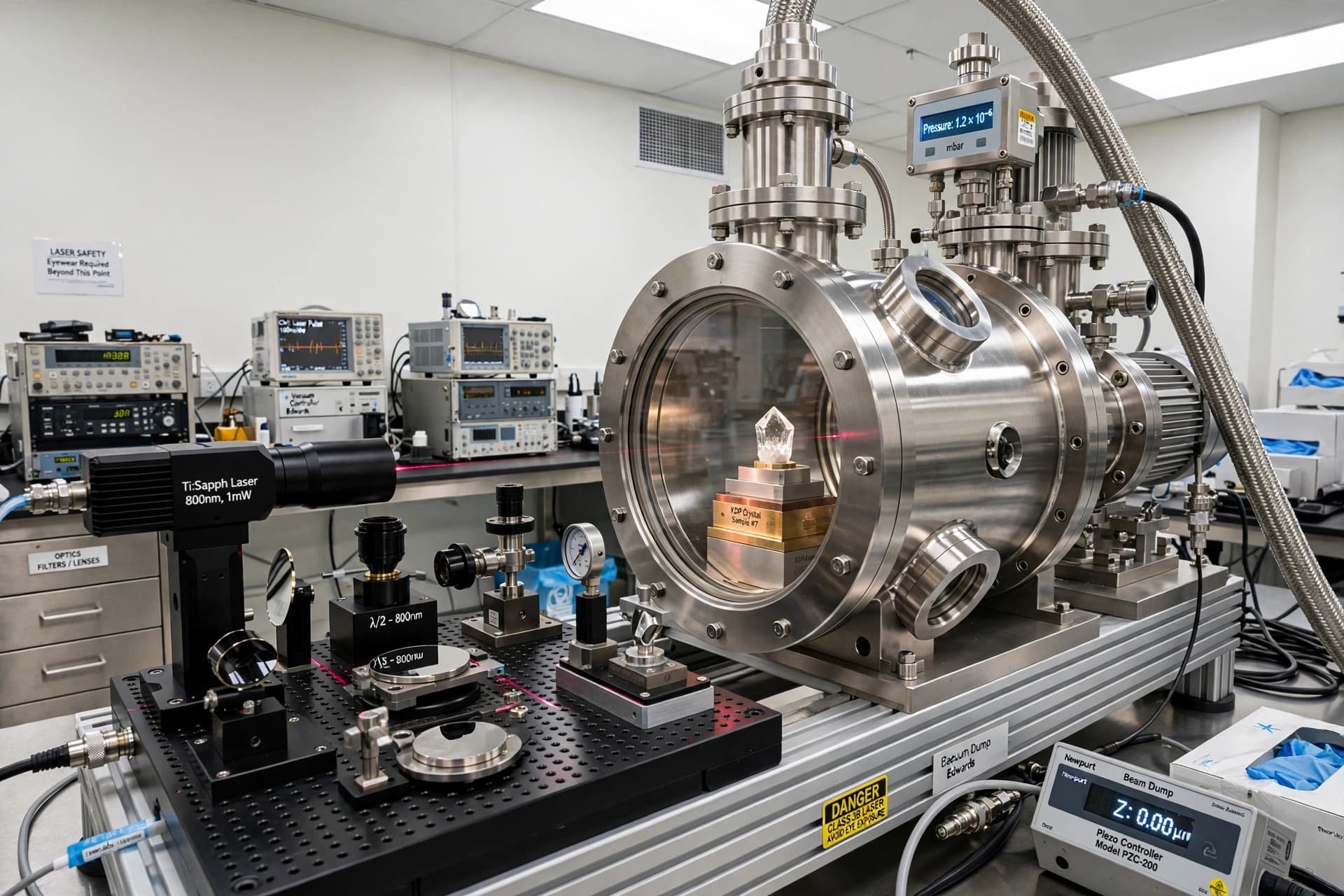
The experiment involved creating a hybrid structure of superconductors and semiconductors, carefully engineered to host these exotic states. By measuring electrical conductance through the device, the team observed distinct peaks that matched theoretical predictions for parafermion zero modes. While not a direct visualization of the particle, these signatures provide strong evidence of their presence, akin to seeing footprints in the snow.
The implications for quantum computing are significant. Current qubits are fragile, prone to errors from environmental noise. Parafermion-based qubits, however, are topologically protected, meaning their information is stored in the global properties of the system rather than local states. This makes them inherently more stable and less susceptible to decoherence, a major hurdle in building scalable quantum computers.
Despite the excitement, caution remains. The signals are subtle, and alternative explanations must be rigorously ruled out. Peer review and independent replication will be essential to confirm the findings. The scientific community is watching closely, aware that a confirmed discovery would validate decades of theoretical work and open new avenues for material science.
Beyond computing, the study of parafermions deepens our understanding of fundamental physics. It challenges our classification of particles and forces, suggesting that nature has more tricks up its sleeve than we previously imagined. Each new quasiparticle discovered adds a piece to the puzzle of how matter behaves at its most basic level.
The research also highlights the importance of interdisciplinary collaboration. Physicists, materials scientists, and engineers worked together to design, build, and interpret the experiment. This synergy is crucial for tackling complex problems that lie at the intersection of theory and application.
The detection of parafermion zero modes is a delicate triumph of experimental physics. It offers a glimpse into a future where quantum computers are more reliable and powerful, driven by the exotic behavior of particles that dance on the edge of reality.
AI Image Disclaimer: Visuals associated with this article are AI-generated interpretations designed to reflect the urgency and scale of the public safety concern.
Sources: Nature Physics, Physical Review Letters, MIT News, ScienceDaily
Published by Banx Network. This article is part of the Banx decentralized media programme, powered by the BXE token on the XRP Ledger.