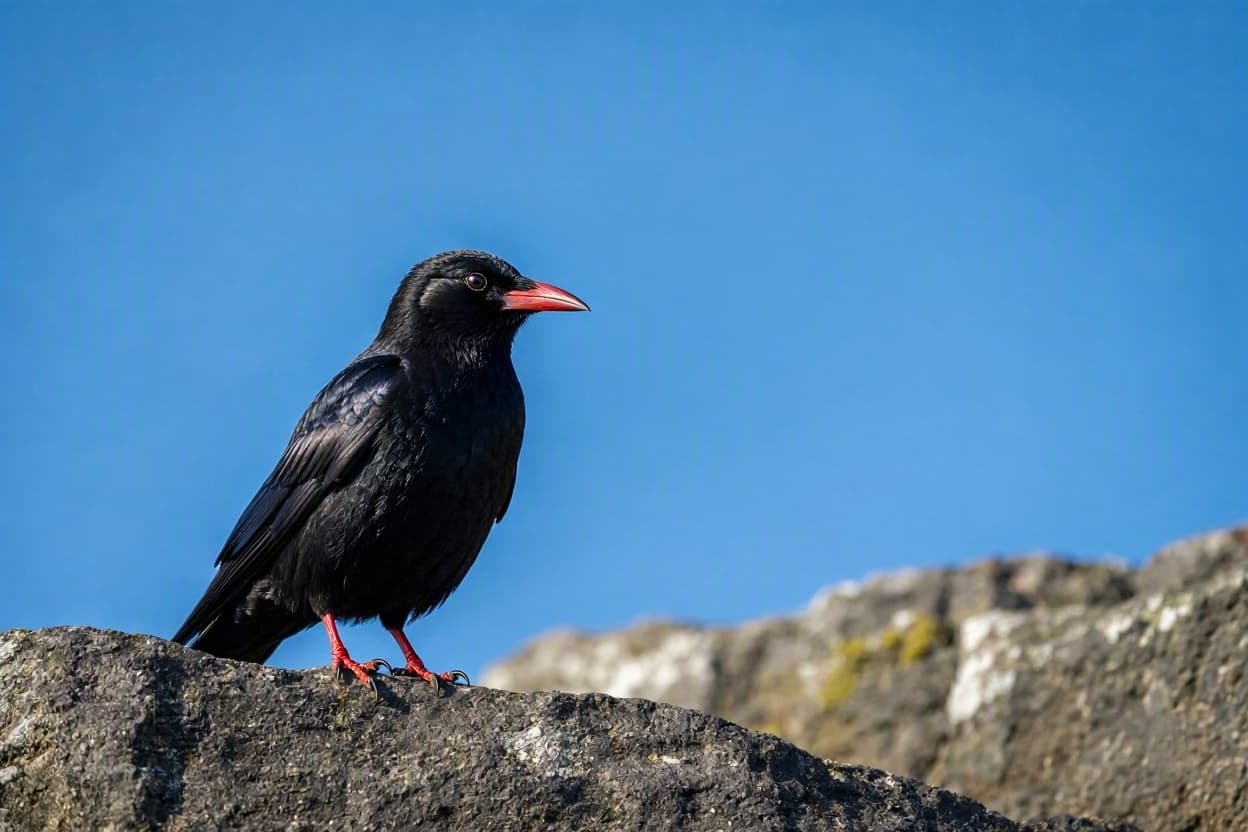
Along the rugged coastlines and windswept cliffs of the United Kingdom, a distinctive red-beaked silhouette has long been a symbol of wild resilience. The chough, with its glossy black plumage and raucous call, is a bird that thrives where few others dare to nest. Recently, the Royal Society for the Protection of Birds (RSPB) announced a heartening milestone: chough populations have reached record-breaking numbers. This resurgence is not merely a statistical victory but a testament to the power of sustained conservation efforts and the enduring capacity of nature to recover when given space and support.
The chough was once on the brink of extinction in many parts of its former range, having disappeared from several regions due to changes in agricultural practices and habitat loss. Its decline served as a warning about the fragility of specialized species that depend on specific ecological conditions. However, through dedicated programs focused on restoring grasslands and protecting nesting sites, conservationists have managed to turn the tide. The recent data reflects years of patient work, demonstrating that targeted intervention can yield tangible results.
The increase in numbers is particularly significant in areas like Cornwall and Wales, where the chough holds cultural importance. In Cornwall, the bird is featured on the county’s coat of arms, symbolizing a deep historical connection between the local community and the natural world. The return of the chough is thus celebrated not just by ornithologists but by residents who see it as a restoration of their regional heritage. It bridges the gap between ecological health and cultural identity.
One of the key factors in this success has been the management of grazing regimes. Choughs feed primarily on invertebrates found in short, grazed turf. By working with farmers to maintain appropriate grazing levels, conservation groups have ensured that the birds have access to their preferred food sources. This collaboration highlights the importance of integrating agricultural needs with wildlife protection, creating a landscape that supports both livelihoods and biodiversity.
The record-breaking figures also indicate that breeding success rates have improved. Younger birds are surviving to adulthood in greater numbers, suggesting that the habitats provided are not only suitable for feeding but also safe for nesting. Cliff faces, protected from disturbance and predation, offer secure havens for these cavity-nesting birds. The stability of these sites is crucial for the long-term viability of the population.
However, experts caution against complacency. While the current trends are positive, the chough remains vulnerable to future changes in land use and climate. Continued monitoring and adaptive management are essential to ensure that the gains made are not lost. The record numbers are a milestone, not a finish line, reminding us that conservation is an ongoing commitment rather than a one-time achievement.
The story of the chough offers hope for other threatened species. It proves that with sufficient will, resources, and community engagement, it is possible to reverse declines and restore ecological balance. As more people become aware of the chough’s plight and its recovery, it serves as an ambassador for broader environmental stewardship, inspiring action beyond its immediate habitat.
The RSPB’s report on record-breaking chough numbers is a welcome piece of news in an era often dominated by stories of environmental loss. It reminds us that nature is resilient and that human intervention, when guided by science and compassion, can make a profound difference. As the chough continues to soar along the cliffs, it carries with it a message of hope and the promise of a healthier, more diverse natural world.
AI Image Disclaimer: Please note that any accompanying visuals for this article are AI-generated representations intended for illustrative purposes only.
Sources: RSPB (Royal Society for the Protection of Birds), BBC News, The Guardian, BirdLife International
Published by Banx Network. This article is part of the Banx decentralized media programme, powered by the BXE token on the XRP Ledger.