Life’s origins are shrouded in the mists of deep time, a mystery that has captivated scientists for centuries. One compelling theory suggests that the spark of life may have come not from the sky, but from the depths of the ocean, specifically from rocks known as hydrothermal vents. Recent studies propose that the chemical reactions occurring within these porous stones could have provided the necessary conditions for the first organic molecules to form, turning inert mineral into the precursors of biology.
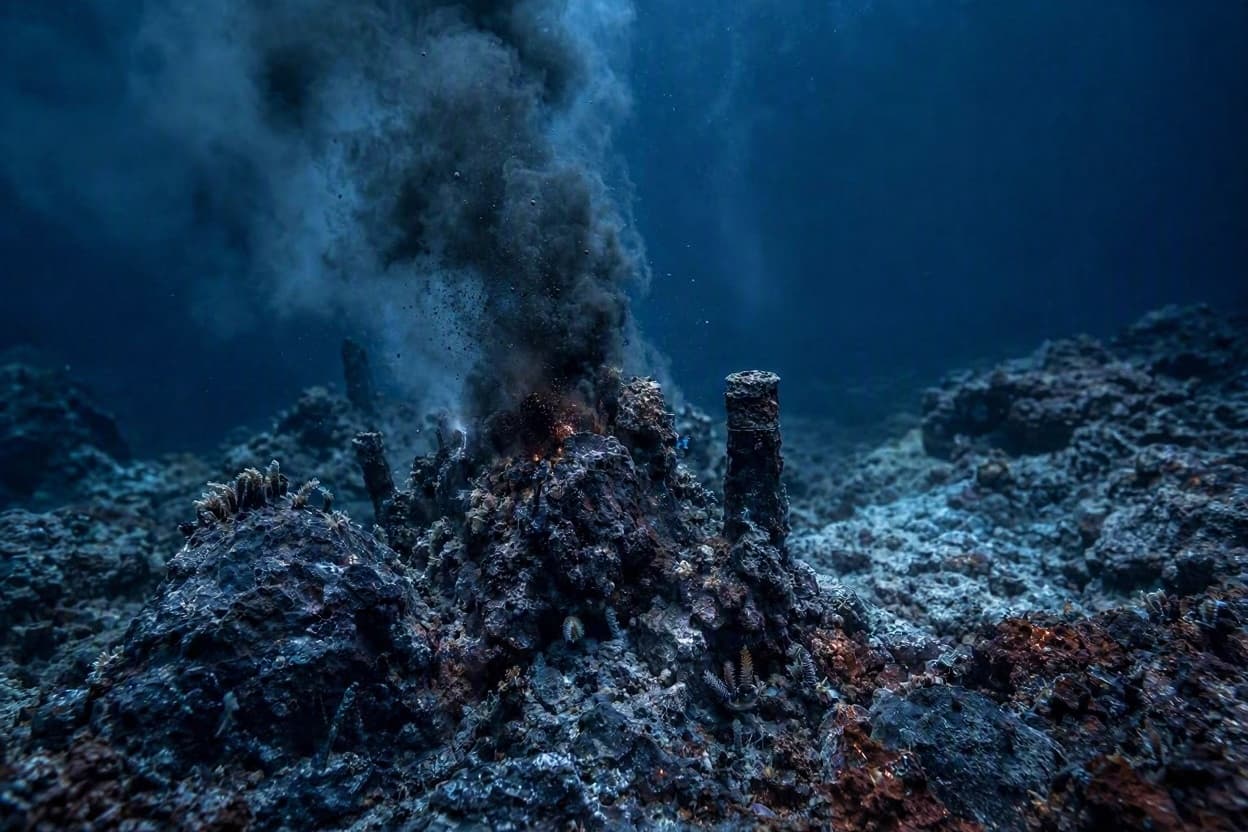
Hydrothermal vents are fissures in the seafloor where superheated, mineral-rich water escapes from the Earth’s crust. These environments are rich in hydrogen, carbon dioxide, and other simple compounds. When these fluids mix with cooler seawater, they create a gradient of energy and chemistry that can drive complex reactions. The rocks surrounding these vents, particularly those containing iron and sulfur, act as catalysts, facilitating the formation of organic molecules.
Researchers have recreated these conditions in the laboratory, demonstrating that amino acids and other building blocks of life can indeed form under such circumstances. The porous structure of the rocks provides tiny compartments, similar to cells, where these molecules can concentrate and interact. This confinement is crucial, as it prevents the dilution of reactants in the vast ocean, allowing reactions to proceed efficiently.
This "rock-bottom" hypothesis contrasts with other theories, such as the primordial soup or panspermia. It grounds the origin of life in a specific, tangible location, offering a testable model for how non-living matter transitioned into living systems. The focus on geochemistry bridges the gap between geology and biology, suggesting that life is a natural outcome of planetary processes.
The discovery of ancient rocks on land that resemble modern hydrothermal vent deposits supports this idea. These fossils of early Earth environments contain traces of organic matter, hinting that similar processes occurred billions of years ago. By studying these ancient stones, scientists can trace the chemical pathways that may have led to the first self-replicating molecules.
While the theory is gaining traction, questions remain. How did these simple molecules organize into complex structures like RNA or DNA? How did they escape the rocks to populate the wider ocean? These are active areas of research, with scientists exploring various mechanisms for encapsulation and replication. Each answer brings us closer to understanding the leap from chemistry to biology.
The implications extend beyond Earth. If life can start in hydrothermal vents here, it might also arise in similar environments on other worlds, such as the subsurface oceans of Europa or Enceladus. This universality makes the study of sea-floor rocks a key component of astrobiology, guiding the search for extraterrestrial life.
The idea that life began in the pores of a rock at the bottom of the sea is a powerful narrative of emergence. It reminds us that even in the darkest, hottest depths, the ingredients for life may have been quietly assembling, waiting for the right moment to ignite.
AI Image Disclaimer: Any images used in conjunction with this article are AI-generated conceptualizations meant to illustrate the themes of media and justice.
Sources: Nature Ecology & Evolution, BBC Future, National Geographic, Astrobiology Magazine
Published by Banx Network. This article is part of the Banx decentralized media programme, powered by the BXE token on the XRP Ledger.