At midday, a city can reveal its temperature through surfaces before a thermometer ever does. Concrete walls hold the afternoon heat, asphalt radiates warmth and shaded sidewalks feel like a different world. Across Indonesia, urban planners and researchers are increasingly examining how cities can respond to that familiar tropical intensity.
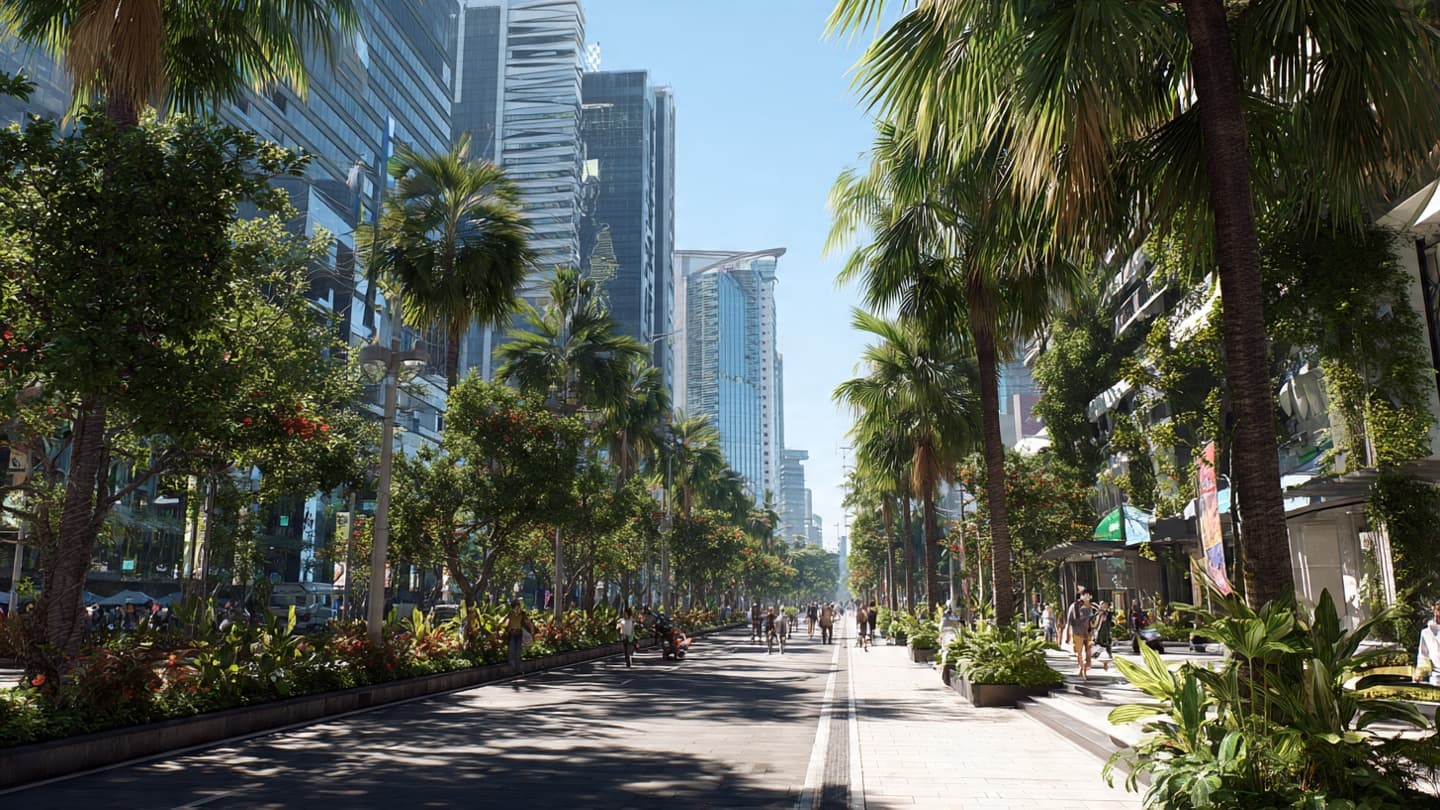
Trees are among the simplest elements in this conversation. Their shade can reduce direct exposure to sunlight, while vegetation can influence local temperatures through evapotranspiration. In dense neighborhoods, even small areas of greenery can create noticeably different microclimates.
The issue is becoming more relevant as urban populations grow. Buildings, roads and other paved surfaces can replace vegetation, changing how heat is absorbed and released. The resulting urban heat island effect can make cities warmer than surrounding areas, particularly during periods of intense sunlight.
Indonesia's tropical climate makes urban cooling particularly important. Cities such as Jakarta, Surabaya and Bandung experience high temperatures and humidity, while rapid development continues to change the physical character of their neighborhoods.
Urban design can influence how heat moves through these spaces. Building orientation, street trees, reflective surfaces, ventilation corridors and public parks can all contribute to the way an area experiences temperature.
Water is another element often incorporated into climate-sensitive planning. Rivers, ponds and other water features can influence local environments, although they must be designed and managed carefully to avoid creating other public-health or infrastructure problems.
Green roofs and vertical gardens offer additional possibilities where ground space is limited. They can introduce vegetation into dense districts without requiring large areas of land, although maintenance and water requirements remain practical considerations.
Technology can also support urban climate research. Sensors, satellite imagery and weather models allow researchers to measure temperature differences between neighborhoods and identify areas that experience greater heat exposure.
For residents, however, climate-sensitive design often appears in simple forms: a shaded walkway, a tree-lined street, a park close to home or a building designed to allow natural airflow. These details can shape how people move through a city during the hottest parts of the day.
Indonesia's search for cooler urban environments therefore combines science with ordinary features of city life. As development continues, the balance between concrete and canopy, buildings and open space, will remain an important part of designing cities that are more comfortable under a tropical sky.
AI Image Disclaimer These images were created with AI as conceptual representations of climate-responsive Indonesian urban design and are not photographs of specific locations.
Sources BRIN Ministry of Environment of Indonesia BMKG The Jakarta Post ANTARA News
Published by Banx Network. This article is part of the Banx decentralized media programme, powered by the BXE token on the XRP Ledger.