When Cloud Meets Artificial Intelligence, Alibaba Builds a Costly Bridge Toward China’s Digital Future
Alibaba plans to raise $10.2 billion through a Hong Kong share sale to fund AI chips, infrastructure, and models.

Alibaba plans to raise $10.2 billion through a Hong Kong share sale to fund AI chips, infrastructure, and models.

An environmental watchdog has challenged a giant data center project due to concerns over noise pollution, highlighting the conflict between tech growth and local quality of life.

Tasmania’s reluctant approval of a major data center highlights the national tension between technological growth and environmental conservation, setting a precedent for future projects.

Cornell University has co-founded the Quantum Processor Institute to accelerate the development of scalable and reliable quantum computing technology.

Footage from smart camera glasses appears to have accidentally recorded workers inside a Chinese factory, raising concerns about privacy and testing protocols.

Russia’s Rassvet network reportedly faces setbacks after one satellite was lost, while two others may also be at risk soon.

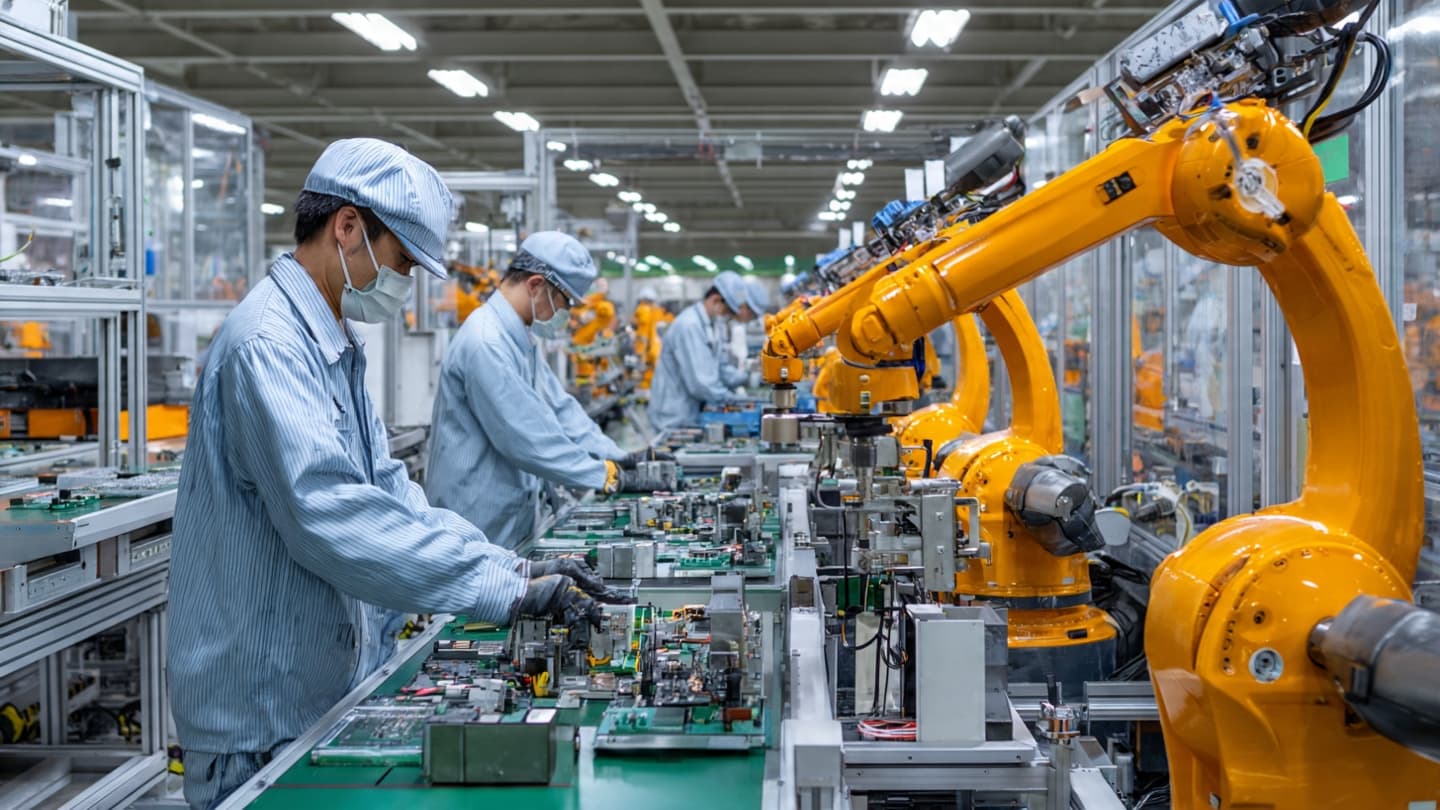
Japan is expanding industrial robotics as manufacturers respond to labor shortages, aging workers, and growing demand for automation across production lines.

Indonesia is attracting major data-center investment as cloud computing, digital services, and AI increase demand for local computing infrastructure.

Japan’s August manufacturing PMI rose to 55.1, the strongest expansion since 2022, driven by semiconductor and AI-related demand.

YMTC’s parent company plans a $4.9 billion Shanghai IPO to expand production and research as AI boosts demand for NAND memory.

Xiaomi has unveiled three self-developed chips as the Chinese technology company expands its semiconductor capabilities and domestic hardware ecosystem.

China is accelerating embodied-intelligence development by combining AI models, robotics, sensors, and domestic computing infrastructure for physical-world applications.

China’s Tiangong Ultra humanoid robot reportedly ran 100 meters in 8.66 seconds at a Beijing robotics competition

SK Hynix is considering a memory-chip manufacturing plant in Japan’s Miyagi Prefecture as AI demand drives global capacity expansion.

South Korea plans a new fund using semiconductor-related tax revenue to support AI, youth investment, and future-growth industries.

Samsung approved a record 90–110 trillion won shareholder-return plan, but investors wanted larger buybacks and clearer distribution of AI-driven profits.

The U.S. has named South Korea’s Honam chip cluster while urging Korean companies to build memory plants on American soil.

The United States is expanding semiconductor manufacturing and research capacity as AI demand increases pressure for more advanced computing infrastructure.

Indonesia is expanding submarine cable infrastructure to strengthen internet connectivity between major islands and support growing digital and cloud demand.

Japan is preparing guidance that would encourage AI developers to disclose information about training data and methods amid growing copyright concerns.

Singapore is expanding AI adoption while emphasizing retraining and safeguards so workers can adapt as new technologies reshape workplaces.

Singapore approved 200MW of new data center capacity for four operators, requiring more than half the power to come from green sources.

Voters oppose local data centers due to concerns over noise, water usage, electricity costs, and property values, reflecting a clash between tech growth and community well-being.

Nvidia's upcoming earnings are becoming a key test of AI infrastructure demand as investors question whether its extraordinary growth can continue.