“From Deep Brine to Rust‑Red Outflow: The Tale of Antarctica’s Blood Falls”
Antarctica’s Blood Falls appears to bleed red because iron‑rich, hypersaline water beneath Taylor Glacier oxidizes when it reaches the air, creating rust‑colored flows.

Antarctica’s Blood Falls appears to bleed red because iron‑rich, hypersaline water beneath Taylor Glacier oxidizes when it reaches the air, creating rust‑colored flows.

NASA’s James Webb Space Telescope captures new infrared details of the Cranium Nebula (NGC 2467), revealing intricate star formation within the distant stellar nursery.

NASA has identified Serena Auñón-Chancellor as the astronaut who required the first medical evacuation from the ISS, highlighting safety protocols in human spaceflight.

March brings a total lunar eclipse, a planetary parade, and multiple moon-star encounters, offering skywatchers nine celestial events visible with minimal equipment.

A bomb threat prompted evacuation of the Lodge during a visit linked to Shen Yun, the New York-based Chinese dance troupe associated with Falun Gong and known for cultural and political themes.

Scientists confirm trees emit brief ultraviolet flashes during thunderstorms, triggered by lightning’s electric fields and electromagnetic pulses interacting with forest canopies.

A newly released Milky Way image reveals dense molecular clouds and stellar nurseries, offering astronomers deeper insight into how stars form and shape our galaxy.

Research suggests modern complex eyes evolved from a primitive single light-sensing organ, guided by shared genetic pathways conserved across diverse animal species.

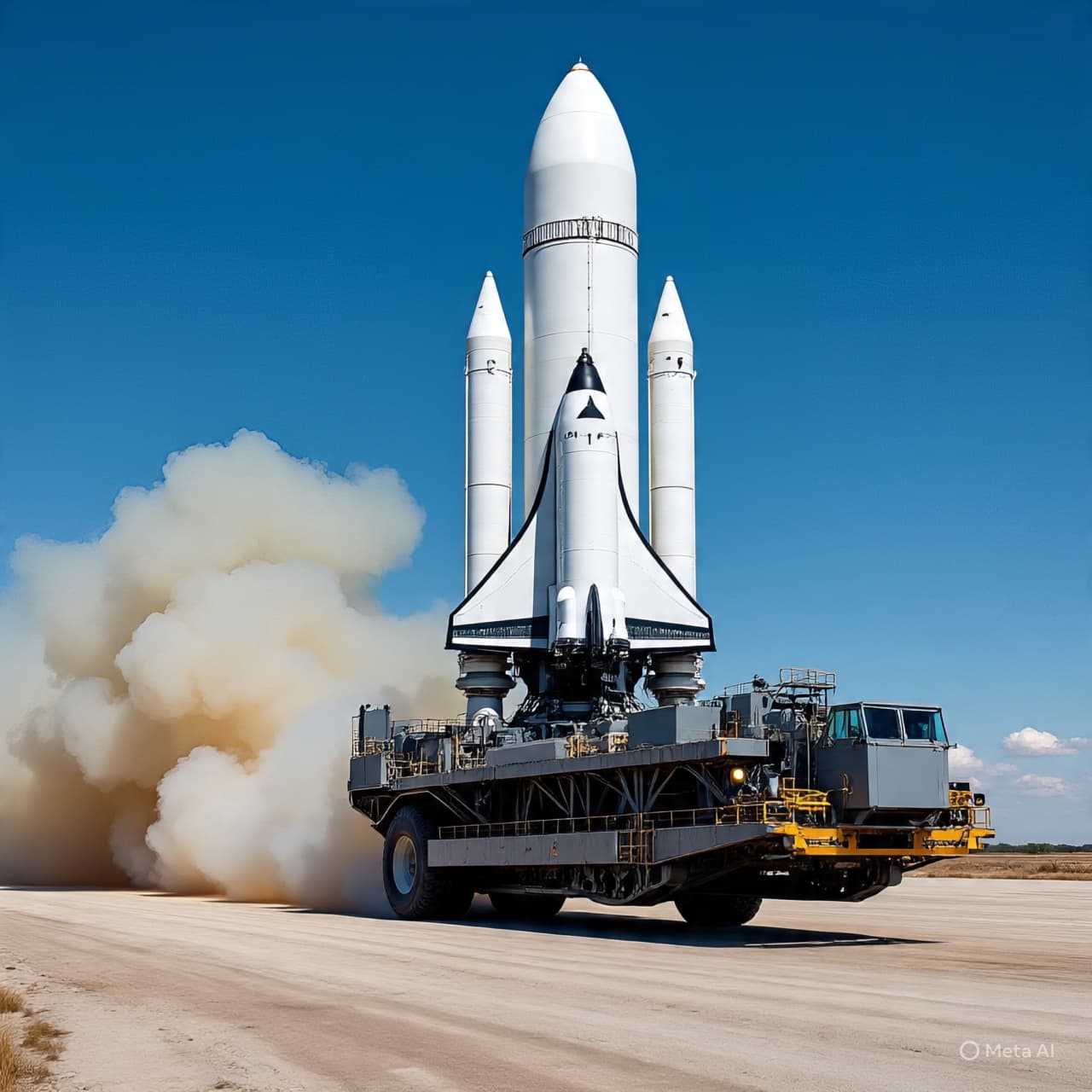
NASA rolled its Artemis Moon rocket off the launch pad for additional repairs and testing, prioritizing safety and technical readiness before setting a new launch date.

Chinese researchers developed an AI model that integrates stellar data from different telescopes, helping astronomers process multi-wavelength observations more efficiently.

In a groundbreaking medical achievement, a baby boy named Hugo became the first child in the UK to be born using a womb transplanted from a deceased donor, marking a significant milestone for reproductive medicine.

Archaeologists in Germany found a late medieval corridor system beneath a 4th millennium BC burial site, revealing a rare layering of prehistoric and Middle Age history.

Deep within Antarctic ice, IceCube’s optical modules detect faint flashes from neutrinos, offering clues about black holes, cosmic rays, and the universe’s most energetic events.

Engraved ostrich eggshells from South Africa, dating back about 60,000 years, reveal some of humanity’s earliest geometric patterns and evidence of symbolic thought.

Some caterpillars survive by mimicking ant chemical signals, allowing them to enter ant nests unnoticed and live among potential predators through precise scent imitation.

Researchers propose the LUMOS method, using HOMO‑LUMO energy gap patterns in amino acids to distinguish samples from living systems versus nonliving chemistry, offering a potential agnostic biosignature.

Astrophysicists propose a new stochastic siren method using the gravitational‑wave background to refine measurements of the Hubble constant, offering an independent probe of cosmic expansion.

A nearly complete 90‑million‑year‑old skeleton of Alnashetri cerropoliciensis, a tiny bird‑like dinosaur, was found in Patagonia, reshaping views of its evolutionary lineage.

A remarkably complete alvarezsauroid fossil from Argentina challenges previous ideas about dinosaur miniaturization and suggests a complex evolutionary history shaped by ancient continental movements.

New algorithms preserve electron coherence in magnetic fields, enhancing quantum computing stability, spintronics, and high-precision sensing by counteracting decoherence in real time.

A new approach to qualifying nuclear reactor components uses digital twins, simulations, and advanced sensors to improve safety, efficiency, and predictive maintenance.

The largest radio survey ever conducted has identified 13.7 million cosmic radio sources, revealing black holes, supernova remnants, and merging galaxies in unprecedented detail.

The Vera C. Rubin Observatory has launched a real-time alert system, enabling rapid global responses to changing cosmic events during its decade-long sky survey.

NASA identified the astronaut who suffered a life-threatening emergency aboard the ISS, prompting a historic evacuation and underscoring the agency’s health-first mission protocols.