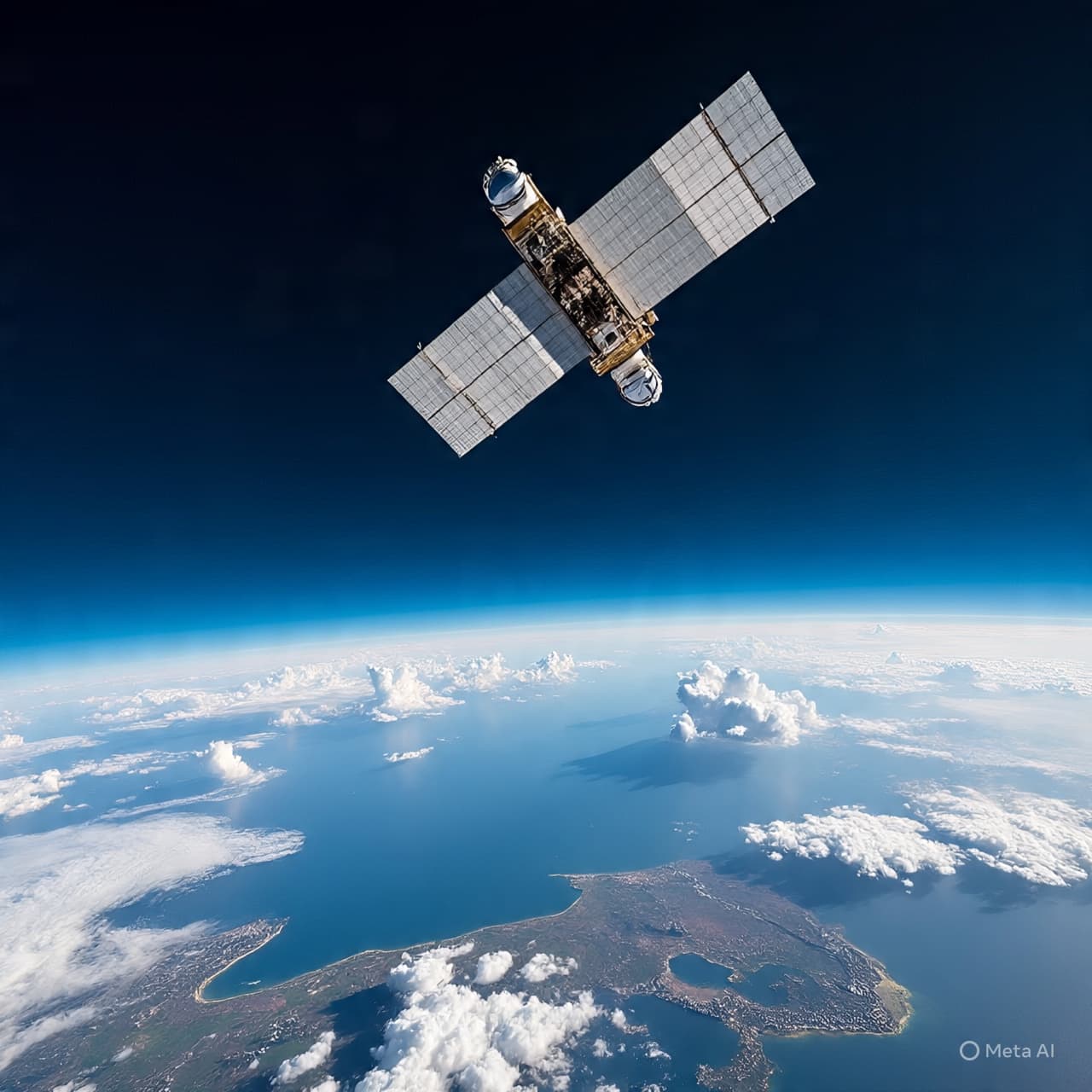
Space has always asked much of those who dare to enter it. Beyond the curve of Earth, where continents blur into blue and night arrives every ninety minutes, life depends on preparation, precision, and trust. The International Space Station drifts in disciplined silence, a testament to human ingenuity — but also a reminder that even the most advanced technology cannot entirely tame uncertainty.
Recently, confirmed the identity of the astronaut who suffered a life-threatening medical emergency in orbit, an event that ultimately triggered a historic evacuation from the . The disclosure marked a sobering moment in the long history of human spaceflight, where triumph and vulnerability often exist side by side.
According to the agency, the emergency unfolded aboard the station during what had otherwise been a routine mission. Astronauts are trained extensively for contingencies, and onboard medical kits are carefully designed to address a wide range of conditions. Yet space presents unique physiological stresses — microgravity alters circulation, affects balance, and changes how the body regulates fluids. Even minor symptoms are evaluated with caution; serious ones demand swift action.
NASA described the situation as life-threatening, prompting mission control teams on Earth to initiate established emergency protocols. Docked spacecraft serve as lifeboats precisely for such scenarios. Within hours, coordination between flight surgeons, engineers, and international partners led to the decision to return the affected astronaut to Earth earlier than planned.
The evacuation itself unfolded with deliberate calm. Fellow crew members assisted in preparations, securing experiments and configuring the spacecraft for departure. While the word “emergency” carries urgency, the response reflected years of rehearsal and layered safety planning. Space agencies do not improvise in moments like these; they rely on systems refined through decades of experience.
In confirming the astronaut’s identity, NASA balanced transparency with respect for medical privacy. Officials emphasized that the individual received immediate care upon landing and was transported for further evaluation. The agency also noted that other crew members remained safe and that station operations continued without interruption.
The episode stands as a milestone — not because of failure, but because it tested the resilience of human systems beyond Earth. For the first time, a life-threatening condition necessitated a full emergency evacuation from orbit, underscoring both the risks inherent in exploration and the safeguards built to manage them.
Spaceflight has always been an exercise in humility. It reminds us that exploration is carried out not by machines alone, but by people — individuals whose courage is matched by the institutions committed to protecting them. In this case, that commitment was visible in every step of the return journey.
NASA officials later confirmed that the astronaut is in stable condition and continues to receive medical care. The agency reiterated that crew health remains the highest priority in all mission decisions, and that contingency planning is an integral part of responsible space exploration.
The station continues its orbit, circling Earth as it has for more than two decades — steady, luminous, and watchful. And in its quiet path across the sky, it carries a renewed reminder: that even at the edge of the atmosphere, humanity’s first duty is to safeguard life.
AI Image Disclaimer Graphics are AI-generated and intended for representation, not reality.
SOURCE CHECK
Credible mainstream and niche sources covering this development include:
Reuters The Associated Press BBC News CNN Space.com
Published by Banx Network. This article is part of the Banx decentralized media programme, powered by the BXE token on the XRP Ledger.