Spaceflight has often been described as humanity’s boldest frontier — a realm of precision, courage, and meticulous planning. Yet even in the vast quiet beyond Earth’s atmosphere, the human body remains quietly human. It carries its strengths upward, but also its vulnerabilities. In orbit, as on Earth, health is never taken for granted.
Recently, NASA disclosed new details about the astronaut who required the first medical evacuation from the International Space Station. The case, once handled with measured privacy, has now been clarified as part of the agency’s ongoing commitment to transparency in long-duration space missions.
The astronaut involved was Serena Auñón-Chancellor, who flew to the space station in 2018. During her mission, she developed a medical condition that required early return to Earth. At the time, NASA confirmed that an astronaut had been transported home for medical reasons but did not release the name publicly, citing personal privacy and medical confidentiality.
The evacuation was conducted aboard a Russian Soyuz spacecraft, which serves both as a transport vehicle and an emergency return craft for station crews. The system is designed with contingencies in mind; at any given moment, astronauts aboard the ISS have a means of returning to Earth within hours if necessary. In this instance, mission managers coordinated closely with international partners to ensure a safe and prompt descent.
Details of the specific medical issue have not been extensively disclosed, in keeping with privacy standards. However, NASA officials have emphasized that the condition was not life-threatening and that the astronaut received appropriate treatment upon landing. The mission architecture allowed for rapid response, underscoring the layered safety protocols embedded in human spaceflight.
The event marked a notable moment in the history of the ISS program. Since continuous habitation began in 2000, astronauts have experienced a range of minor illnesses and injuries in orbit — from muscle strain to fluid shifts affecting vision. Yet a formal medical evacuation requiring mission adjustment remains rare.
Space medicine is a specialized and evolving field. In microgravity, bodily systems behave differently: fluids redistribute, bones gradually lose density, and muscles weaken without resistance. Astronauts train extensively to monitor their health, and crews have access to medical kits and remote consultation with flight surgeons on Earth. Still, the unpredictability of human physiology cannot be fully eliminated.
NASA’s acknowledgment of the astronaut’s identity comes as part of broader discussions about astronaut health and operational readiness. Transparency, officials note, strengthens public understanding of the realities of space exploration. It also highlights the collaborative infrastructure that supports every mission — from onboard crewmates to ground-based medical teams.
Since her return, Auñón-Chancellor has continued her role within NASA, contributing her medical expertise to astronaut training and mission planning. Her experience adds practical insight into how health contingencies are managed beyond Earth.
The ISS remains a symbol of international cooperation, jointly operated by agencies including Roscosmos, the European Space Agency, JAXA, and the Canadian Space Agency alongside NASA. Each partner contributes to the shared responsibility of crew safety.
While the phrase “medical evacuation” may sound dramatic, officials have framed the incident as evidence that contingency systems function as intended. Space exploration carries inherent risk, but it is paired with rigorous preparation and redundancy.
For NASA and its partners, the lesson is not one of alarm, but of assurance: that even hundreds of miles above Earth, systems exist to bring astronauts home when needed.
As missions grow longer and humanity prepares for journeys to the Moon and Mars, understanding and managing medical risk will remain central. The first medical evacuation from the ISS is now part of the program’s history — a reminder that exploration moves forward not only on rockets and research, but on care.
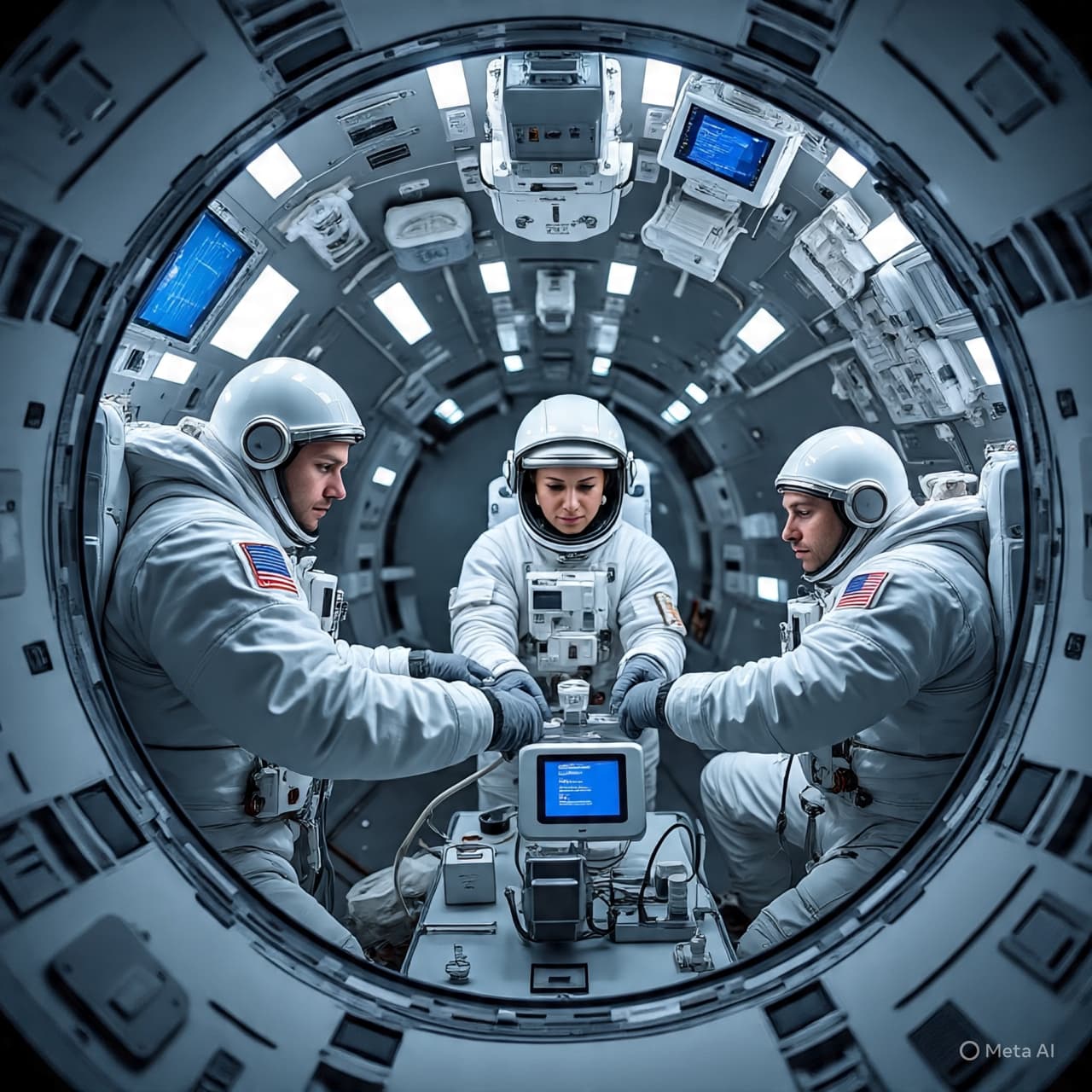
AI Image Disclaimer (Rewritten) Visuals are created with AI tools and are not real photographs; they are intended solely as conceptual representations.
Source Check: NASA Reuters BBC News Space.com The New York Times
Published by Banx Network. This article is part of the Banx decentralized media programme, powered by the BXE token on the XRP Ledger.