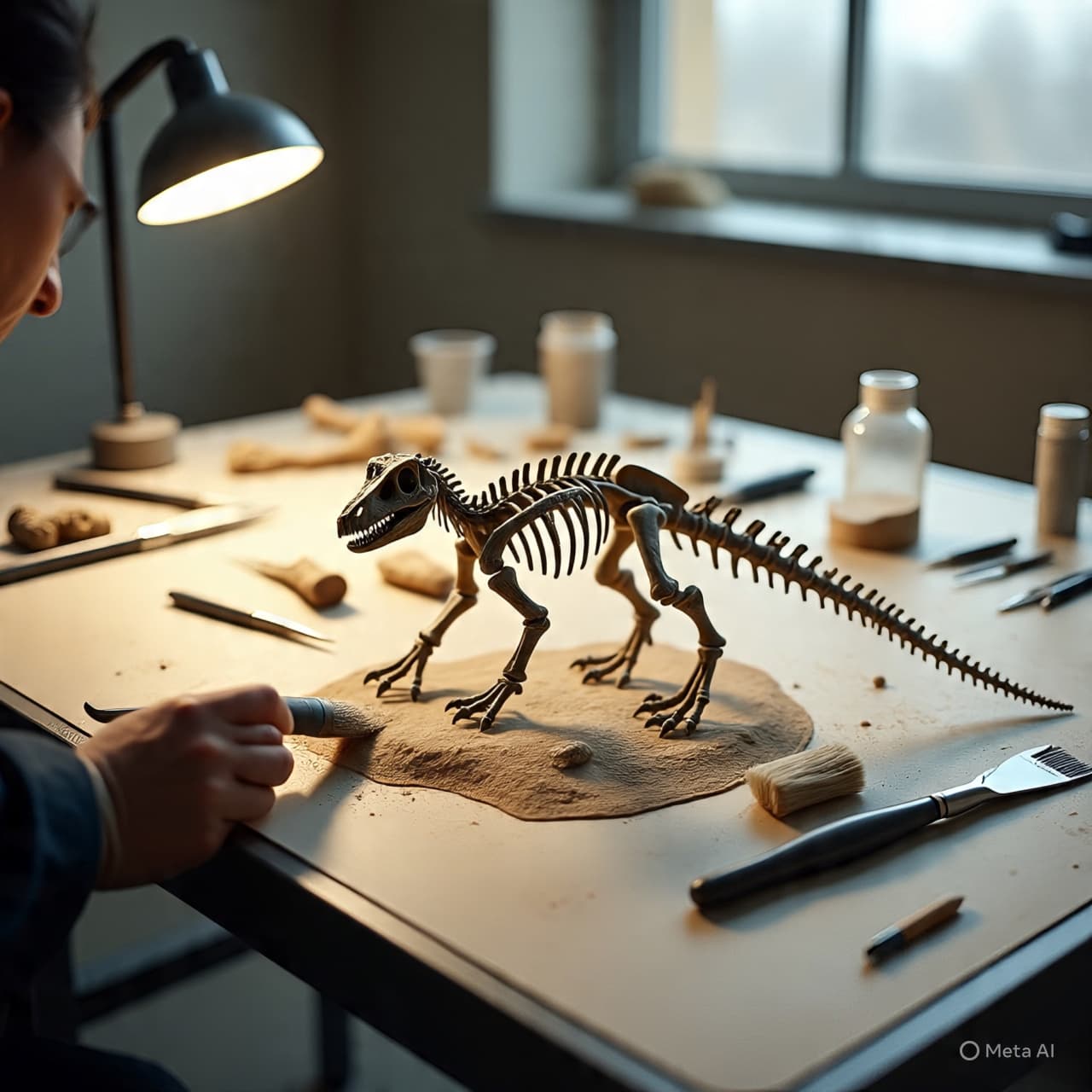
There are moments when a single bone, uncovered from the embrace of ancient rock, can shift our view of a long‑forgotten world. In the quiet deserts of Patagonia, where wind whispers across sediments laid down millions of years ago, paleontologists have unearthed such a relic — a fossil so exquisitely preserved that it lets us glimpse not just the shape of a vanished creature, but the shape of its entire family tree.
This fossil belongs to an alvarezsauroid dinosaur, a small, bird‑like theropod known from fragments scattered across Asia and South America. Dubbed Alnashetri cerropoliciensis, the newly described specimen from the La Buitrera fossil area in northern Río Negro province stands out not for its size — it was no larger than a modern crow — but for its remarkable completeness and the questions it raises about dinosaur evolution.
Traditionally, scientists believed that alvarezsauroids — a group once thought to have evolved progressively toward extremely tiny, highly specialized forms with adaptations for insect‑eating — represented a relatively simple evolutionary arc: miniaturization tied to dietary niche. Yet the new fossil, and the detailed analysis presented in Nature, suggests a different narrative. Instead of evolving steadily smaller, these dinosaurs may have maintained a more consistent body size over time, with repeated changes branching off in various directions, like the twisting limbs of an ancient tree reaching skyward.
The specimen’s anatomy offers clues that challenge earlier models of how these creatures diversified. Its skeletal features position it among the earliest branches of the alvarezsauroid lineage rather than near the extreme, highly specialized descendants. In doing so, it blurs the boundary between what scientists thought was a clear evolutionary path and the more tangled, nuanced reality.
The implications extend beyond size and shape. Biogeographical analyses drawn from this find suggest that the ancestors of alvarezsauroids may have been widespread across the ancient supercontinent Pangaea, with later geographic shifts sculpted more by continental separation than by dramatic migrations across seas. In this view, these dinosaurs did not disperse far and wide so much as drifted apart with the shifting of the Earth itself, their journeys inscribed in the slow dance of tectonic plates.
The La Buitrera site has long been fruitful for paleontology. Here, desert sands have yielded primitive snakes, tiny saber‑toothed mammals, and a menagerie of other Cretaceous life forms that together paint a vision of a richly diverse ecosystem. The discovery of Alnashetri adds another brushstroke to this ancient tableau — a reminder that even the smallest fossils can illuminate vast evolutionary arcs.
Although small in stature, the specimen carries outsized significance. Its bones preserve fine details that let researchers assess growth patterns, sensory capabilities, and potential ecological roles. It lacked the extreme insect‑eating specializations seen in later alvarezsauroids, suggesting a lifestyle that may have been broader or more varied than previously imagined.
In preparing and studying this remarkable find, scientists from Argentina and abroad continue to unravel threads of a narrative that stretches back nearly 100 million years. The work is far from complete: additional fossils from the same region, now being prepared in laboratories, promise to add texture to the emerging picture of how these enigmatic dinosaurs lived and evolved.
What we learn from this fossil reshapes not only specific theories about a little‑known clade but also how we approach the broader story of life on Earth. In paleontology, as in life, surprises often arrive from the most unexpected corners — sometimes in forms no larger than a crow’s wing.
AI Image Disclaimer Visuals are created with AI tools and are not real photographs.
SOURCE CHECK Credible mainstream and scientific sources reporting on this discovery:
Nature Reuters EurekAlert! Phys.org CONICET (Argentine science agency)
Published by Banx Network. This article is part of the Banx decentralized media programme, powered by the BXE token on the XRP Ledger.