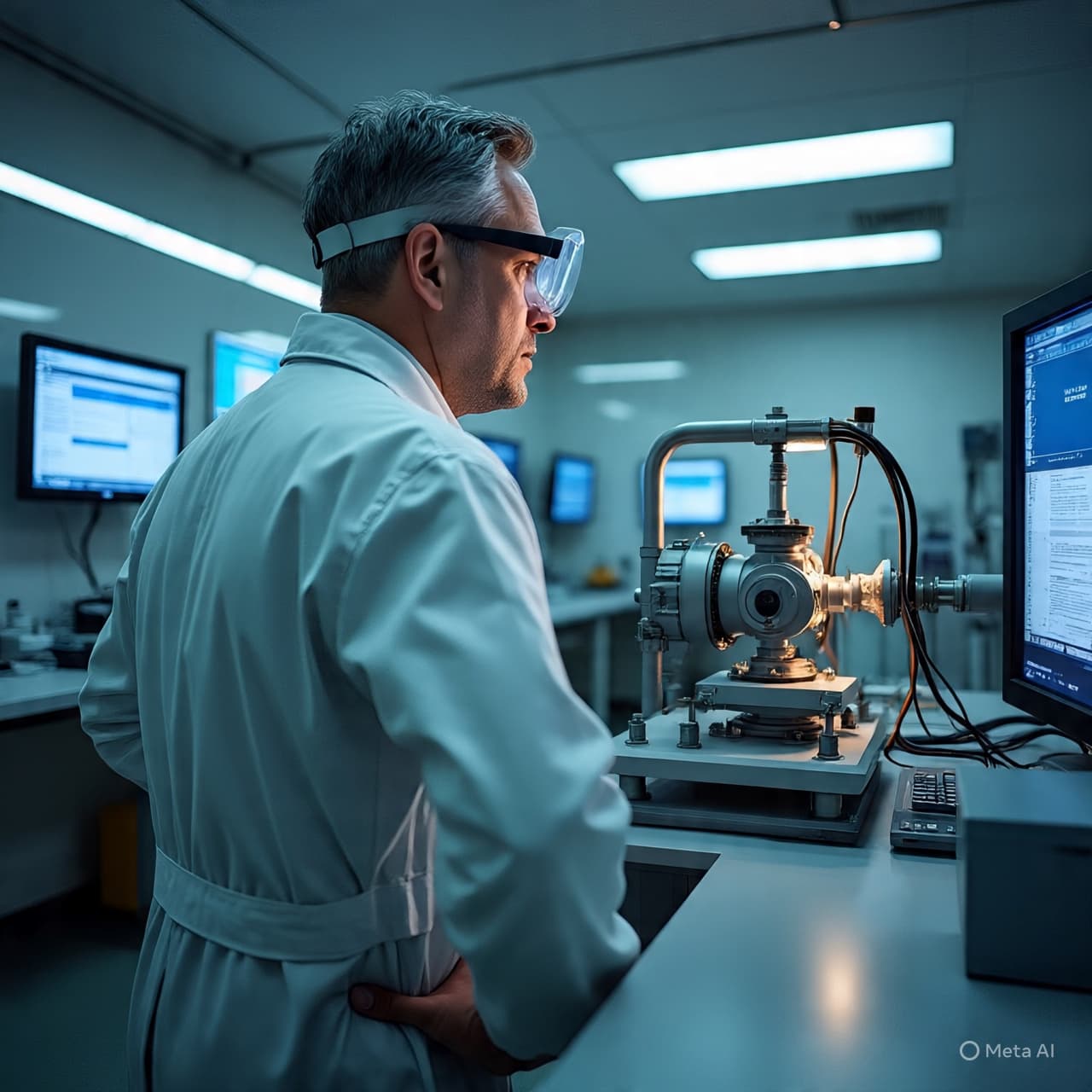
In the quiet hum of laboratories and test facilities, safety often begins long before a reactor ever comes online. The materials, components, and systems that form the heart of a nuclear power plant are subjected to a rigorous choreography of tests, each designed to anticipate stresses and failures invisible to the eye. It is here, in these early stages, that reliability and responsibility intertwine.
Now, a new approach is rolling out for qualifying nuclear reactor components, aiming to streamline assessment while maintaining the highest safety standards. Engineers and regulators are embracing advanced modeling, simulation, and inspection technologies that allow components to be evaluated with unprecedented precision and speed, reducing reliance on lengthy physical testing alone.
The approach combines digital twins — detailed virtual replicas of reactor parts — with enhanced sensor data and machine-learning algorithms. By simulating years of operational stress in a fraction of the time, engineers can identify potential vulnerabilities before a component is ever installed. This methodology preserves the rigor of traditional testing while opening opportunities for efficiency and scalability.
Beyond efficiency, the innovation carries implications for safety culture. Reactor operators can gain deeper insights into component behavior, improving predictive maintenance schedules and mitigating the risk of unexpected failures. Regulators, too, can review and verify performance data more thoroughly, ensuring that confidence in reactor integrity remains uncompromised.
The rollout has already begun in pilot programs at several nuclear facilities. Early feedback suggests that engineers are able to flag minor defects sooner, prioritize critical replacements, and reduce the overall timeline for component certification. This is especially important as new reactor designs, including small modular reactors, move from concept to construction.
The transition is not without challenges. Implementing digital twins and high-fidelity simulations requires significant expertise and infrastructure. Data security and regulatory alignment are also critical considerations. Yet the potential benefits — faster qualification, enhanced safety, and more predictable performance — make the effort worthwhile.
Experts emphasize that this approach does not replace physical testing entirely. Rather, it complements traditional methods, providing a dual lens of virtual and real-world evaluation. In practice, this means that each component is observed under multiple stress scenarios, increasing confidence in its ability to perform reliably under extreme conditions.
By adopting this integrated methodology, the nuclear industry takes another step toward modernization while maintaining the foundational principles of safety. It is a reminder that progress in energy technology is rarely sudden or dramatic; it emerges through careful refinement, iteration, and foresight.
As the new qualification process expands, stakeholders hope to see a smoother path from design to operation, ensuring that nuclear energy — a critical component of global clean-energy strategies — remains both safe and dependable. The careful balance between innovation and caution, here, reflects the very ethos of the industry itself.
The rollout represents a quiet milestone: not a headline-grabbing event, but a meaningful evolution in how humans steward one of the most powerful sources of energy ever harnessed. In every simulation, every test, and every analysis, the commitment to reliability and protection remains the guiding principle.
AI Image Disclaimer Illustrations were produced with AI and serve as conceptual depictions.
SOURCE CHECK
Credible mainstream and industry sources covering this development include:
Reuters BBC News The New York Times World Nuclear News Scientific American
Published by Banx Network. This article is part of the Banx decentralized media programme, powered by the BXE token on the XRP Ledger.