Iran War Could Unleash a Marine “Super-Spreader” Event as Stalled Ships Resume Trade
Researchers warn idling vessels near the Strait of Hormuz could spread invasive marine organisms worldwide when shipping restart

Researchers warn idling vessels near the Strait of Hormuz could spread invasive marine organisms worldwide when shipping restart

New evidence shows mammals migrated between North and South America millions of years before the Isthmus of Panama formed, using island chains and temporary land bridges.

Fossil and genetic evidence suggests early snakes adapted to land, sea, and underground environments, showcasing a versatile evolutionary history that challenges single-origin theories.

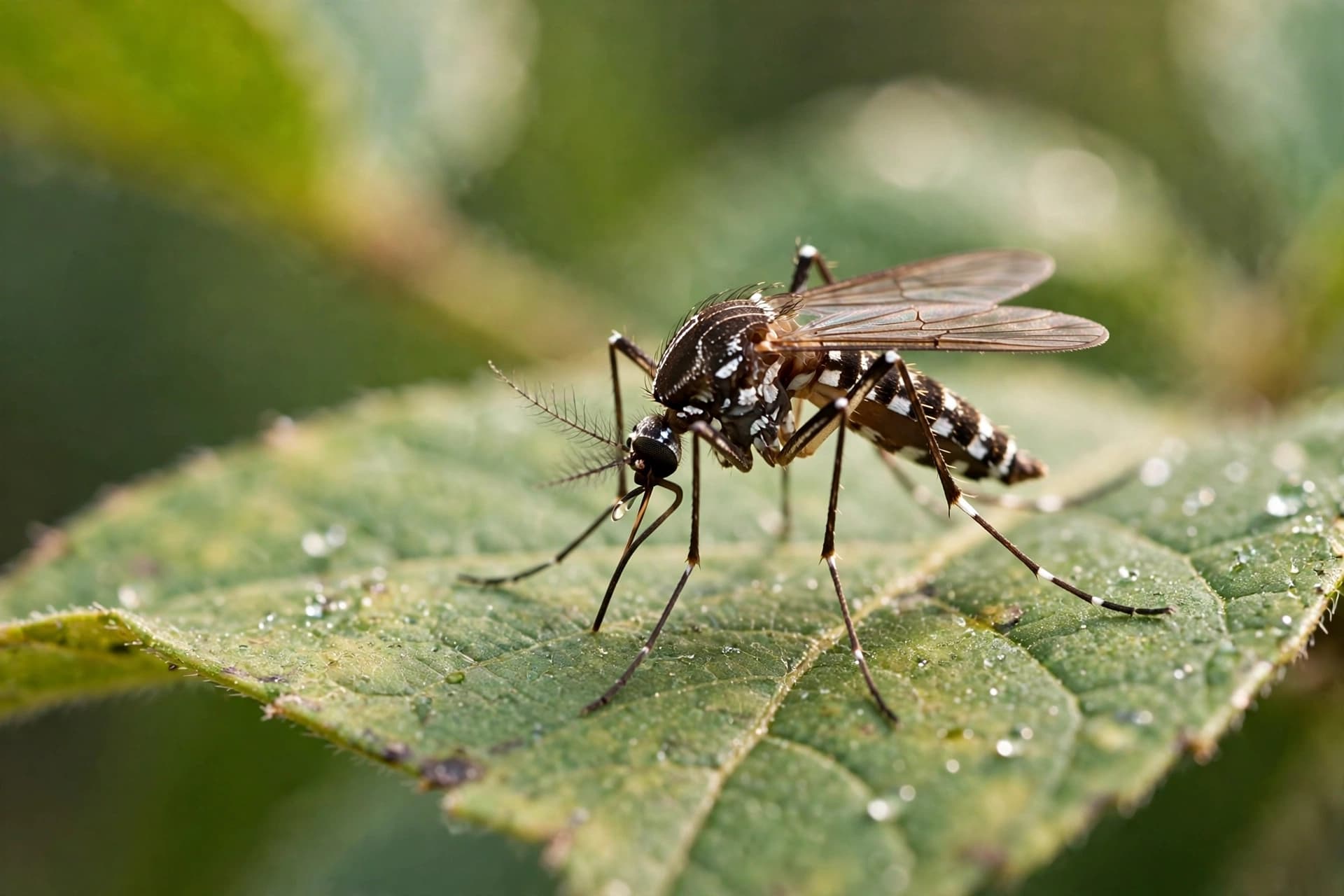
Common woodlice, often overlooked, play vital roles in soil health and nutrient cycling, demonstrating surprising resilience and cooperative behaviors that benefit ecosystems.

A new wastewater treatment system can remove 85% of salt and 92% of heavy metals in just four hours, offering a fast and efficient solution for industrial water purification

New analysis suggests that moonquakes may reveal the presence of water ice beneath the lunar surface, providing critical data for future human exploration and resource utilization.

Scientists suspect that Antarctica’s Blood Falls harbors ancient microbial life in a isolated subglacial lake, offering insights into extreme ecosystems and potential life on other planets.

A bright meteor vaporized in Earth’s atmosphere during a long-exposure shot of the Lacerta Nebula, creating a stunning image that contrasts a nearby event with a distant cosmic cloud.

Reconstructed coal waste, or coal gangue, shows promise as an active catalyst for wastewater treatment, offering a sustainable solution to both solid waste management and water pollution.

Scientists have identified a single gene that controls the daily sex change in avocado flowers, solving a 100-year-old mystery and enabling faster breeding of new varieties.

NASA has delivered hardware for a lunar relay navigation system, aiming to provide GPS-like services for Artemis missions and enable sustainable exploration and autonomous operations on the Moon.

Researchers have achieved new milestones in creating ultracold neutral plasmas, allowing for the study of strong particle correlations and quantum behaviors at near-absolute zero temperatures.

Advanced DNA analysis of 19th-century oyster shells has confirmed that Ostrea equestris is the same species as the modern Eastern oyster, resolving a 176-year-old taxonomic mystery.

Excavations near Halberton, Devon reveal a rare polychrome mosaic and new villa and bathhouse features, researchers say.

El Niño is expected to intensify an already hot summer, raising global temperatures and increasing the risk of extreme weather events, highlighting the interplay between natural cycles and climate change.

A magnitude 5.3 earthquake struck Egypt, causing shaking in Cairo and other cities but resulting in no major damage or injuries, highlighting the importance of seismic preparedness.

Analysis of white dwarf stars by the DESI project reveals that destroyed exoplanets have chemical compositions similar to Earth, suggesting rocky planets are common in the galaxy.

Scientists have identified a "supergene" responsible for enantiostyly, the phenomenon where flowers grow in left- and right-handed mirror images, explaining how plants enforce cross-pollination.

Astronomers describe massive gas expulsions from black holes as "indigestion," highlighting how these outflows regulate galaxy growth and influence star formation through powerful feedback mechanisms.

The 1968 "Earthrise" photo initiated a shift in perception known as the Overview Effect, where astronauts report a profound sense of unity and fragility when viewing Earth from space.

NASA’s Nancy Grace Roman Space Telescope, launching in August 2026 on a Falcon Heavy, features a Hubble-sized mirror with a field of view 100 times wider, aimed at mapping dark energy and discovering exoplanets.

Scientists predict that the Pacific Ocean is shrinking due to tectonic activity, which will eventually lead to the formation of a new supercontinent named Amasia in 200 to 300 million years.

A new theory proposes that dark matter may reside in a hidden fifth dimension, offering a potential explanation for its elusive nature and interaction with the visible universe.

Scientists report that global warming has accelerated significantly in the past decade, with temperatures rising faster than predicted, signaling a dangerous new phase for the Earth’s climate.