For over three decades, the Hubble Space Telescope has served as humanity’s eye on the cosmos, capturing wonders that stretch the imagination. While its deep-field images of distant galaxies often steal the spotlight, Hubble’s gaze inward, toward our own solar system, reveals a neighborhood of dynamic beauty and chaotic energy. From the swirling storms of Jupiter to the icy rings of Saturn, these images are not just scientific data but portraits of our celestial neighbors. They remind us that even in our cosmic backyard, there is endless drama and elegance to be discovered.
The clarity and detail provided by Hubble allow us to witness changes in real-time, tracking weather patterns on Mars and monitoring the auroras of the gas giants. These observations are crucial for understanding the atmospheric processes that shape planetary environments. Yet, beyond the science, there is an aesthetic power to these images. They invite us to pause and appreciate the intricate designs of nature, painted in hues of orange, blue, and white across the vacuum of space. It is a visual poetry that connects us to the wider universe.
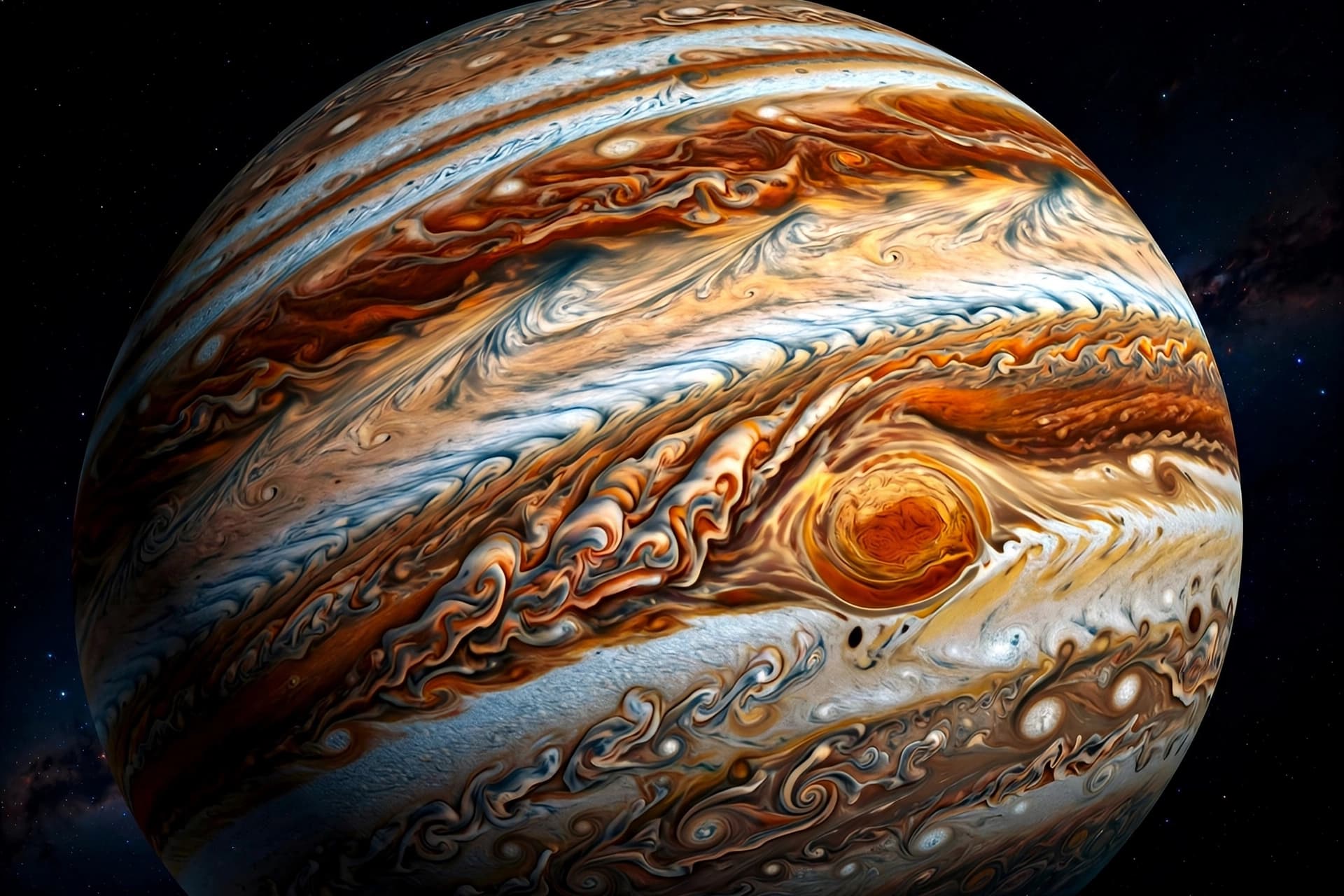
One of Hubble’s most iconic subjects is Jupiter, the king of planets. The telescope has captured the Great Red Spot, a storm larger than Earth, as it shrinks and changes color over the years. Recent images reveal the complex banding of Jupiter’s atmosphere, with swirling eddies and turbulent clouds that resemble impressionist paintings. These visuals help scientists study wind speeds and chemical compositions, but they also captivate the public, offering a glimpse into the violent yet beautiful heart of the solar system’s largest planet.
Saturn, with its majestic ring system, is another frequent subject of Hubble’s lens. The telescope has documented the changing angles of the rings as Saturn orbits the sun, revealing shadows and structures that vary with the seasons. Images of Saturn’s moons, such as Titan and Enceladus, provide context for the planet’s gravitational influence and the potential for subsurface oceans. The interplay of light and shadow in these photos creates a sense of depth and scale that is both humbling and inspiring.
Mars, the red planet, has been monitored by Hubble for decades, providing a global perspective that complements data from rovers on the surface. The telescope captures dust storms as they engulf the planet, turning its familiar rusty hue into a uniform orange blur. These observations are vital for planning future human missions, helping scientists understand weather patterns and atmospheric conditions. The images also highlight the polar ice caps, which grow and shrink with the Martian seasons, reminding us of the climatic cycles that affect all worlds.
Even the smaller bodies of the solar system, such as Uranus and Neptune, have been revealed in stunning detail. Hubble’s images show the faint rings of Uranus and the dark spots on Neptune, driven by the fastest winds in the solar system. These distant ice giants are often overlooked, but Hubble’s sensitivity allows us to see their subtle features and track their atmospheric changes. The vibrant blue of Neptune, caused by methane in its atmosphere, stands in stark contrast to the pale green of Uranus, showcasing the diversity of planetary chemistry.
The technical achievement behind these images is remarkable. Hubble’s position above Earth’s atmosphere allows it to avoid the distortion caused by air turbulence, resulting in sharp, clear views that ground-based telescopes struggle to match. Its ability to observe in ultraviolet light also reveals phenomena invisible to the human eye, such as auroras on Jupiter and Saturn. This multi-wavelength capability adds layers of information to the visual spectacle, enriching our understanding of planetary physics.
As Hubble continues its mission, it remains a vital tool for solar system exploration. Its images serve as a bridge between robotic probes and human curiosity, providing context and continuity. Each new photo adds to the archive of knowledge, helping scientists piece together the history and evolution of our planetary family. It is a legacy of discovery that will endure long after the telescope itself is retired.
The spectacular images of our solar system captured by Hubble are a testament to the power of observation and the beauty of the cosmos. As we marvel at these celestial portraits, let us remember the importance of exploring and understanding our place in the universe. In the details of our neighbors, we find reflections of our own world and the shared laws of nature that bind us all.
AI Image Disclaimer: Visuals used in this article are AI-generated illustrations inspired by the style of Hubble imagery, intended to evoke the wonder of space exploration without replicating specific copyrighted photographs.
Sources: NASA ESA Space.com HubbleSite
Published by Banx Network. This article is part of the Banx decentralized media programme, powered by the BXE token on the XRP Ledger.