In the quiet clean rooms of aerospace facilities, a new eye on the universe has opened. NASA has successfully powered up the Wide Field Instrument on the Nancy Grace Roman Space Telescope, a camera boasting a staggering 300 megapixels. This milestone marks a significant step forward in our ability to survey the cosmos, promising images of unprecedented breadth and detail. Unlike the narrow, deep gaze of its predecessor, Hubble, Roman is designed to capture wide swaths of the sky, revealing the large-scale structure of the universe in ways never before possible. It is a testament to human ingenuity and our enduring desire to see further.
The activation of the camera is not just a technical achievement but a promise of discovery. With a field of view 100 times larger than Hubble’s, Roman will be able to map billions of galaxies, studying the mysterious forces of dark energy and dark matter. It will also search for exoplanets, those distant worlds orbiting other stars, with greater efficiency than any previous mission. This capability transforms the telescope from a mere observer into a cartographer of the cosmos, charting the unknown with precision and scale.
The Wide Field Instrument is the heart of the Roman mission, equipped with a detector array that rivals the resolution of high-end commercial cameras but is optimized for the harsh conditions of space. The 300-megapixel sensor allows it to capture sharp images over a vast area, reducing the time needed to survey large portions of the sky. This efficiency is crucial for studying phenomena that are spread out, such as the distribution of galaxies or the subtle distortions caused by gravitational lensing.
Dark energy, the elusive force driving the accelerated expansion of the universe, is a primary target for Roman. By measuring the shapes and positions of millions of galaxies, the telescope will help scientists understand how dark energy has changed over time. This data will refine our models of cosmic evolution, potentially revealing whether dark energy is a constant property of space or something more dynamic. The answers could reshape our understanding of the universe’s ultimate fate.
In addition to cosmology, Roman will conduct a microlensing survey to detect exoplanets. This technique relies on the gravity of foreground stars acting as lenses to magnify the light of background stars. If a planet orbits the foreground star, it causes a brief spike in brightness. Roman’s wide field of view allows it to monitor millions of stars simultaneously, increasing the chances of detecting these rare events. This method is particularly effective for finding planets far from their host stars, including free-floating planets that drift through the galaxy alone.
The successful power-up of the camera follows rigorous testing on Earth, where engineers verified its performance in simulated space environments. The next steps involve integrating the instrument with the rest of the spacecraft and conducting final checks before launch. Scheduled for the mid-2020s, the mission represents the culmination of years of planning and collaboration among scientists, engineers, and policymakers. It is a collective effort to push the boundaries of what is possible in space exploration.
Roman’s data will be publicly available, fostering a new era of open science. Researchers around the world will be able to access the vast archives of images and measurements, leading to discoveries that the mission planners may not have anticipated. This openness encourages innovation and allows diverse perspectives to contribute to our understanding of the universe. It is a democratic approach to science, where knowledge is shared for the benefit of all.
As we await the launch, the activation of the camera serves as a reminder of the progress we have made. From the first blurry images of space to the high-definition surveys of tomorrow, our vision of the cosmos has expanded dramatically. Roman stands on the shoulders of giants, ready to take the next leap forward. It is a symbol of hope and curiosity, pointing toward a future filled with wonder.
The powering up of NASA’s Roman Space Telescope camera is a pivotal moment in astronomy. As we prepare to launch this powerful tool, let us anticipate the discoveries it will bring. In the wide-angle view of the universe, we may find new answers to old questions and uncover mysteries we have yet to imagine.
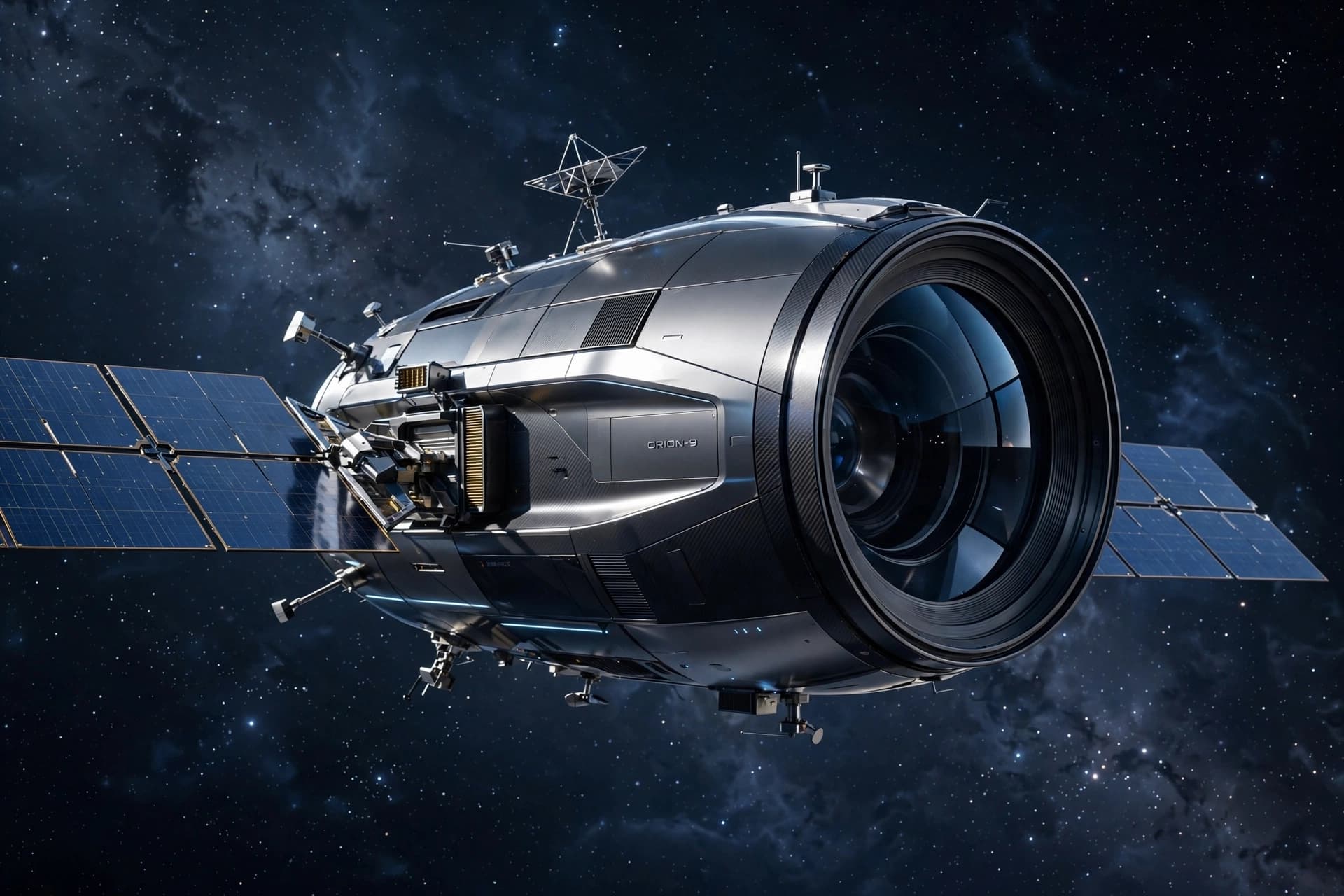
AI Image Disclaimer: Images used in this report are AI-generated illustrations intended to visualize the Roman Space Telescope and its capabilities without depicting proprietary engineering designs.
Sources: NASA SpaceNews The Verge Scientific American
Published by Banx Network. This article is part of the Banx decentralized media programme, powered by the BXE token on the XRP Ledger.