Latvian Government Backs Another EUR 70 Million for Ukraine
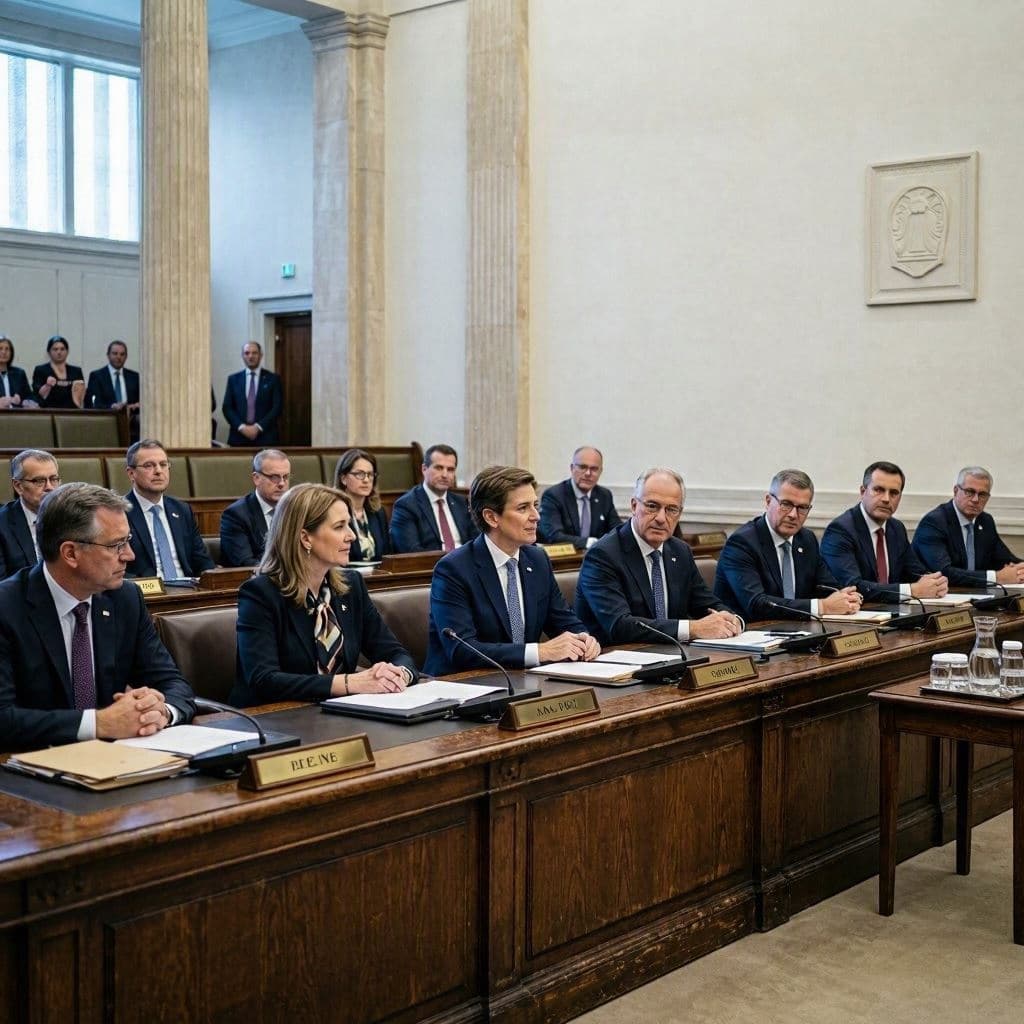
The Latvian government has pledged an additional EUR 70 million in support of Ukraine, reaffirming its commitment to aid the country amidst ongoing conflict and humanitarian challenges.

The Latvian government has pledged an additional EUR 70 million in support of Ukraine, reaffirming its commitment to aid the country amidst ongoing conflict and humanitarian challenges.

Dozens of uncounted votes were found in a South Australia election, prompting review while officials say results remain unaffected.

Senator Graham unveiled a GOP immigration enforcement funding plan, emphasizing border security investments while drawing mixed reactions

Trump’s Iran remarks highlight rising geopolitical tension, where narratives, ceasefire signals, and control of key oil routes shape global markets and strategy.

The Supreme Court declined to hear a Massachusetts parental-rights case involving a school’s support of a child’s gender identity.

A viral geopolitical claim highlights how complex conflicts can be oversimplified, showing the growing power of narratives in shaping global perception

Rumen Radev secured victory in Bulgaria’s presidential election, reflecting domestic concerns and broader geopolitical positioning.

UK Prime Minister Keir Starmer said he was not fully informed about Peter Mandelson’s vetting, prompting scrutiny of government procedures.

UK Prime Minister Keir Starmer faces pressure after revelations tied to Peter Mandelson’s failed vetting and a growing accountability dispute.

Amid rising concerns over political violence, candidates in several states are using campaign funds to cover personal security costs.

Ontario Premier Doug Ford moves to sell a government jet shortly after public scrutiny over its purchase emerges.

Bulgaria's national parliament election held on April 19, 2026, marked a significant moment in the country's political landscape, following a series of elections over the past few years. The election results indicate a shift in voter preference and reflect the ongoing complexities within Bulgarian politics.

An official from the United Arab Emirates has stated that more than 90% of Iran's military targets consist of civilian infrastructure. This assertion raises significant concerns regarding the implications of military actions and their impact on civilian populations in the region.

U.S. military operations aboard the USS Rushmore in the Arabian Sea highlight efforts to enforce maritime security amid rising tensions, particularly with Iran.

Gatorade’s shift to plant-based dyes reflects rising demand for cleaner ingredients, signaling a broader transformation in health-focused food industry standards.

The U.S. has invested $50 million in South Africa's Phalaborwa rare earth project to break China's 90% processing monopoly.

Treasury Secretary Scott Bessent met Qatar's finance minister amid Iranian attacks on Gulf nations, emphasizing US efforts to deter future aggression and protect energy markets. He also welcomed Qatari investment in US energy security.

In a significant shift in diplomatic rhetoric, Prime Minister Mark Carney addressed Canadians, stating that ties with the United States have become a "weakness" for Canada, urging a reevaluation of the country's foreign policy strategy.

Court allows White House ballroom construction to continue, clearing legal obstacles while broader debates remain ongoing.

Alberta has rejected proposed electoral map changes, citing concerns over community integrity and representation, sparking debate over fairness, population shifts, and democratic balance.

Quebec Liberal leader responds cautiously to controversy over party stance on language law amid ongoing debate.

Myanmar has released its ousted president while keeping Aung San Suu Kyi detained, signaling limited political movement amid ongoing instability.

The U.S. Department of Justice has reassigned the lead prosecutor in the investigation into former CIA Director John Brennan, following her resistance to pressure for rapid charges. This move raises concerns about political influence in a high-profile case connected to President Trump's enduring grievances.

A US–Japan finance meeting signals deeper economic alignment, reinforcing global stability and shaping the future of energy and financial systems.