
Latest articles
The Currency War: Could the US Dollar Lose Its Crown as the World's Dominant Currency?
The US dollar has dominated global finance for decades, giving America enormous economic and geopolitical influence. But rising tensions, trade disputes, sanctions and growing interest in alternative payment systems are challenging the foundations of that dominance. With central banks diversifying their reserves and China promoting the international use of the yuan, could the world be approaching a major shift in monetary power — and what would it mean for investors, businesses and the global economy?
The Insurance Crisis: Is Climate Change Making Homes Uninsurable?
From flood-prone towns in Britain to wildfire-threatened communities in the United States, rising climate risks are putting pressure on the insurance industry. Premiums, repair bills and catastrophe losses are forcing insurers to reassess which properties they can cover and at what price. But the consequences extend far beyond insurance: if homeowners cannot obtain affordable cover, mortgage lending, property values and financial stability could all come under pressure. Is the world approaching an insurance crisis that governments and households are not prepared for?
The Battery Breakthrough Race: Could Solid-State Batteries Change the Electric Car Industry?
The race to develop next-generation batteries is entering a critical phase, with major automakers and technology companies working to deliver electric vehicles that charge faster, travel further and potentially cost less to operate. Solid-state batteries could help transform the industry, but manufacturing challenges remain. As Stellantis begins road-testing a vehicle fitted with solid-state cells and QuantumScape plans a new production line, the question is whether battery breakthroughs are finally approaching commercial reality — or whether the industry still has years of work ahead.
The Electricity Bottleneck: Can the Power Grid Keep Up With the AI Boom?
Artificial intelligence is driving an unprecedented expansion of data centres, but the technology powering the digital economy faces a physical problem: electricity. From Britain's growing grid connection backlog to shortages of transformers and electrical cables, the infrastructure needed to power AI is struggling to keep pace. With global data centre electricity consumption projected to nearly double by 2030, the next major technology battle may not be about chips or software — but who can secure enough reliable power.
The Global Debt Time Bomb: Could Government Borrowing Trigger the Next Financial Crisis?
Government debt is climbing, borrowing costs are rising and interest payments are consuming an increasing share of public finances. In October 2026, the International Monetary Fund warned that global fiscal risks are growing as governments face mounting spending pressures and higher interest rates. With UK public debt exceeding £3 trillion and US debt projected to rise further over the next decade, the question is no longer simply how much governments owe — but whether they can manage the cost. Could mounting debt trigger the next financial crisis, and what would it mean for households, businesses and investors?
The Death of Passwords: Will Passkeys Finally Make Online Accounts Safer?
For decades, passwords have been the foundation of online security. But as cybercriminals become more sophisticated and data breaches continue to expose login credentials, the technology industry is moving towards a different solution: passkeys. Supported by major technology companies and increasingly adopted by financial institutions and government services, passkeys promise faster logins and stronger protection against phishing. Could this finally mark the beginning of the end for passwords?
The Deepfake Fraud Explosion: Can You Still Trust What You See and Hear Online?
Artificial intelligence is making it easier for criminals to impersonate celebrities, relatives, business leaders and financial professionals using convincing fake videos, cloned voices and fabricated images. In the UK, reports identifying AI as a factor in fraud rose sharply during 2025–26. As deepfake scams become more sophisticated, the challenge for consumers, banks and governments is no longer simply spotting fake content — it is establishing who can genuinely be trusted.
The Quantum Computing Time Bomb: Could It Crack Bitcoin and Global Banking?
Quantum computing could eventually undermine some of the cryptographic systems protecting global banking, online transactions and cryptocurrencies such as Bitcoin. Governments and financial institutions are already preparing for this possibility, with new quantum-resistant encryption standards available and the UK targeting a broader transition by 2035. But how close is the threat, what could happen to investors' digital assets, and will the world upgrade its security before powerful quantum computers arrive?
The Global Chip War: Could a Semiconductor Shortage Cripple the World Economy?
Semiconductors have become the foundation of the modern economy, powering everything from smartphones and electric vehicles to artificial intelligence and military systems. But as the United States and China compete for technological dominance, the global chip industry is increasingly caught between economic opportunity and geopolitical conflict. Taiwan remains central to advanced chip manufacturing, while export restrictions and rising demand are reshaping supply chains. If tensions escalate or critical production is disrupted, the consequences could reach businesses, consumers and financial markets worldwide.
Ripple’s Wall Street Breakthrough: Standard Chartered Opens the Door for RLUSD as Institutional Crypto Adoption Grows
Ripple has secured a significant institutional milestone after Standard Chartered launched custody services for its RLUSD stablecoin on the XRP Ledger. The bank is also working with Ripple and LMAX Group on a plan to make RLUSD eligible as trading collateral. The move could help connect blockchain-based assets with traditional financial markets—but what does it mean for Ripple, XRP investors and the future of digital finance?
The Cloud Computing Crisis: Could One Tech Outage Disrupt the Global Economy?
A major Google Cloud disruption in London has exposed a hidden vulnerability in the modern economy. Banking apps, delivery services and court video systems experienced problems after a power-related incident affected Google's cloud infrastructure. The incident raises an urgent question: as banks, businesses and public institutions move critical services online, what happens when the technology they depend on suddenly fails? From financial stability to cybersecurity and business continuity, the cloud computing revolution has created enormous opportunities — but also risks that organisations can no longer afford to ignore.
The AI Stock Market Boom: Is Big Tech Heading for a Major Crash?
Artificial intelligence has helped drive one of the most powerful technology investment booms in recent history. But in October 2026, renewed selling across AI-related stocks has raised serious questions about valuations, debt and whether enormous infrastructure investments will generate enough profit. With trillions of dollars tied to the future of AI, investors face a critical question: is this a temporary market correction, or are the first cracks appearing in a financial bubble?
The Next Inflation Shock: Could an Oil Crisis Derail the Global Economy?
A renewed surge in oil prices is raising fears that the global economy could face another inflation shock. As escalating Middle East tensions threaten energy supplies, businesses and households face the prospect of higher fuel, food and transport costs. With UK inflation already above the Bank of England’s target, the crisis could complicate interest-rate decisions, increase borrowing costs and put pressure on economic growth. The question is whether the world is facing a temporary price spike or the beginning of a more prolonged economic squeeze.
XRP and Shopify: Could the XRP Ledger Become a Bigger Part of Online Shopping?
Shopify has helped millions of businesses build online stores, while XRP was designed to enable fast transfers of value on the XRP Ledger. As cryptocurrency payments move closer to mainstream commerce, an important opportunity is emerging: could XRP become a more widely used payment option for online shoppers? Shopify already supports selected cryptocurrencies through third-party payment providers, including XRP through Lunu. Meanwhile, the platform has introduced a native checkout option for USDC, a US dollar-linked stablecoin. These developments raise an important question for the future of digital payments: could XRP eventually become a more prominent part of the global e-commerce economy?
Rakuten and XRP: Could Japan Be the Blueprint for Mainstream Crypto Payments?
Japan’s Rakuten has brought XRP closer to everyday spending by integrating the cryptocurrency into its digital asset and payments ecosystem. With access to millions of consumers and a vast merchant network, the move offers a compelling example of how cryptocurrency could become more accessible beyond trading platforms. But the real test is whether people use XRP regularly—and whether that activity translates into lasting demand for the token.
XRP vs RLUSD: Ripple’s Biggest Opportunity Could Also Be Its Biggest Challenge
Ripple’s expanding financial network is creating a fascinating question for cryptocurrency investors: as its US dollar-backed stablecoin RLUSD gains traction with banks, payment providers and institutional markets, what happens to demand for XRP? Recent partnerships with Cross River and Standard Chartered highlight the growing role of stablecoins in financial infrastructure. Yet XRP and RLUSD serve different purposes—and understanding that distinction is essential to assessing Ripple’s long-term opportunity.
The Stablecoin Expansion: Could Digital Dollars Reshape Global Finance?
Stablecoins are moving beyond cryptocurrency exchanges and into the wider world of international payments, business finance and digital commerce. On 16 October 2026, Circle announced plans to expand its USDC stablecoin into approximately 40 emerging and developing markets, signalling growing competition to deliver digital dollars around the world. [1] But as financial institutions embrace blockchain-based settlement, a bigger question emerges: could stablecoins transform global payments, or will regulation, financial risks and established banking networks limit their ambitions?
Europe on Edge: Why Protests Are Turning Violent Across the Continent
From violent riots in France to clashes in Italy and anti-government unrest in Albania, Europe is experiencing a fresh wave of public anger. Rising living costs, unaffordable housing, pressure on public services and frustration with political leadership are bringing people onto the streets. But while many demonstrators are demanding meaningful change, incidents of arson, looting and violence are raising a difficult question: are European governments addressing the problems driving public discontent, or are they allowing them to deepen?
The $1.2 Trillion AI Gamble: Will Big Tech Make Its Money Back?
The world's largest technology companies are preparing to spend an estimated $1.2 trillion on artificial intelligence infrastructure in 2027. From advanced chips and massive data centres to cloud computing and AI models, the investment race is reshaping the technology industry. But as costs rise, debt concerns grow and investors demand clearer returns, one question is becoming impossible to ignore: will the AI revolution generate enough profit to justify the enormous sums being invested?
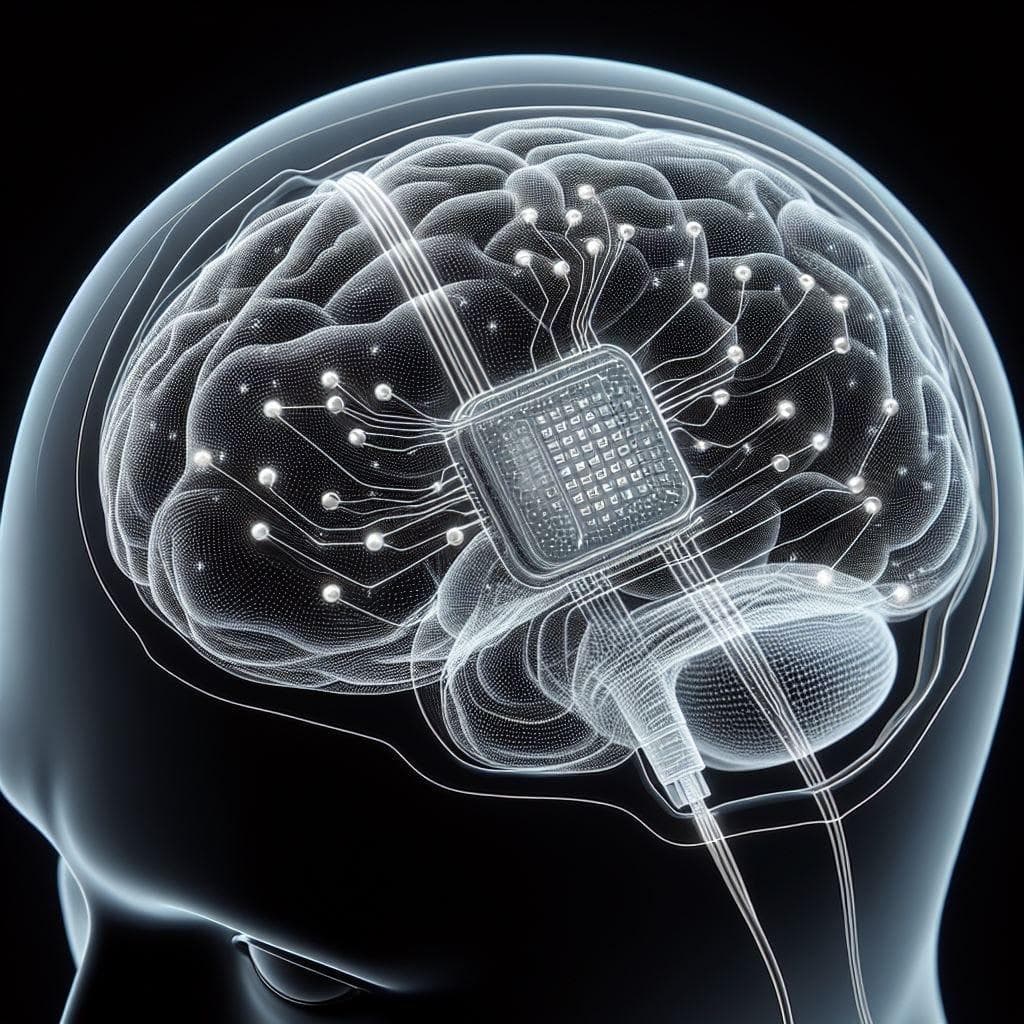
The Mind-Machine Revolution: Will Humans Control Computers With Their Thoughts?
Imagine communicating without speaking, controlling a robotic arm without moving a muscle, or interacting with a computer using nothing but brain activity. What once belonged to science fiction is becoming a reality through brain-computer interfaces (BCIs), a rapidly advancing technology that connects the human brain to external devices. Powered by advances in neuroscience, artificial intelligence and microelectronics, these systems are helping researchers restore communication and movement for people living with paralysis. In September 2026, researchers demonstrated a brain-computer interface capable of translating speech and gestures simultaneously into digital expression, bringing technology closer to restoring more natural human communication. But this is only the beginning. As scientists explore more sophisticated neural interfaces, humanity faces profound questions about privacy, identity, medical ethics and the possibility of enhancing human abilities. Could the next major computing revolution begin inside the human brain?
Contributors publish under Banx Network’s editorial standards. To report an error, see our corrections policy.