1. When Insurance Becomes Unaffordable
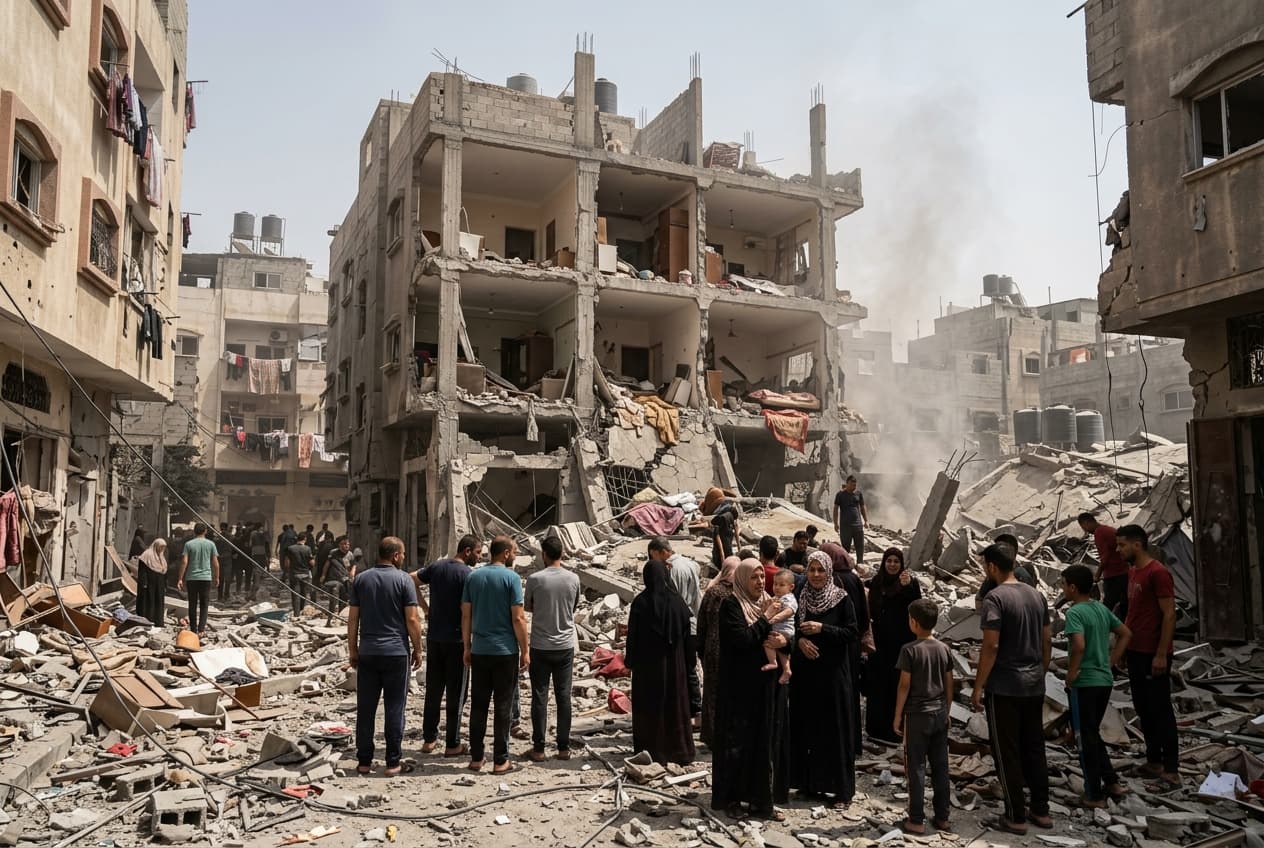
Insurance is one of the foundations of modern economic life. Homeowners depend on it to recover from fires, floods and storms, while mortgage lenders typically require buildings insurance to protect properties used as collateral. Businesses rely on insurance to rebuild after disasters and keep operating.
Yet in some parts of the world, obtaining cover is becoming more difficult. Some homeowners face substantial premium increases, others encounter restrictive policy conditions, and some struggle to find an insurer willing to cover particular risks at all.
Climate change is an important part of this problem, although it is not the only factor. Rising property values, higher construction costs, urban development in exposed locations and increasingly expensive repairs can all increase the cost of claims.
The financial consequences are already visible. In the United States, a May 2026 working paper from the Levy Economics Institute examined how worsening disaster losses have contributed to higher premiums, reduced coverage and insurers withdrawing from some high-risk markets. [1]
The issue is no longer simply whether households can afford to insure their homes. It is whether insurance markets can continue to provide reliable protection as the risks associated with certain properties become more expensive and difficult to predict.
2. The Numbers Behind the Global Insurance Crisis
The scale of the problem becomes clearer when examining the losses insurers are being asked to absorb.
According to Swiss Re Institute, global insured losses from natural catastrophes reached approximately $107 billion in 2025. That was below the previous year's level, but still represented a substantial financial burden. Swiss Re estimated that total economic losses from natural disasters reached $220 billion, meaning a significant proportion of the damage was not insured. [2]
The distinction between insured and economic losses is important. Insured losses are the costs covered by insurance policies, while economic losses include damage that households, businesses and governments must absorb themselves.
In the United Kingdom, the Association of British Insurers reported that insurers paid a record £6.1 billion in property claims during 2025. Of that amount, £1.2 billion related to weather damage. Domestic flood claims increased by 38% to £312 million, while the average flood payout to a homeowner rose by 60% to £30,000. [3]
These figures illustrate the pressure facing insurers, but they do not mean every household will experience higher premiums or lose access to cover. Insurance prices depend on local hazards, property characteristics, claims histories, competition and the terms of individual policies.
The broader concern is that repeated losses can make some risks progressively more expensive to insure, especially where exposure continues to increase without adequate investment in prevention.
3. How Climate Change Is Reshaping Insurance Risk
Insurance companies calculate premiums by estimating the probability and potential cost of future claims. Historically, insurers have relied on past claims, weather records, engineering assessments and statistical models to estimate those risks.
However, climate change complicates that process.
Changing temperatures and rainfall patterns can affect the probability and severity of certain hazards. Depending on the location, these may include flooding, wildfires, severe storms, drought-related ground movement and other forms of extreme weather.
A property that was considered relatively low-risk based on historical conditions may face a different risk profile in the future. Insurers must therefore assess not only what has happened previously, but also what could happen as environmental conditions change.
Swiss Re's analysis of 2025 catastrophe losses identified several important pressures, including growing exposure in vulnerable locations, higher reconstruction costs and changing characteristics of some weather-related hazards. The company also noted that secondary perils, such as severe thunderstorms, floods and wildfires, accounted for a record 92% of global insured natural-catastrophe losses that year. [2]
This does not mean climate change alone explains every increase in insurance claims. More valuable buildings, population growth and the concentration of assets in exposed areas also influence the financial impact of disasters.
For insurers, the challenge is to distinguish between risks that can be managed through better construction and prevention, and risks that may become too costly to cover under existing pricing models.
4. America: When Homeowners Lose Their Insurance
The United States provides some of the clearest examples of the consequences when property risks become difficult to insure.
In California, wildfire exposure has prompted insurers to reassess policies in vulnerable communities. In other parts of the country, hurricanes, flooding and severe storms have placed pressure on home insurance markets.
A February 2026 report from the Natural Resources Defense Council highlighted the growing affordability and availability problems in the US homeowners' insurance market. Citing industry and consumer research, the organisation reported that an estimated 7% to 13% of US homes were uninsured, while typical homeowners' premiums had risen by 24% between 2021 and 2024. [4]
These figures should be interpreted in context: insurance availability varies substantially between states and communities, and not every uninsured property lacks coverage because of climate risk.
Nevertheless, the trend raises difficult questions. If private insurers reduce their exposure in vulnerable areas, homeowners may be forced to seek more expensive alternatives, accept narrower coverage or bear more of the risk themselves.
Some states operate insurers of last resort to provide cover when private options become difficult to obtain. These arrangements can offer an essential safety net, but they are not necessarily designed to replace the entire private insurance market.
If the underlying risks continue to rise, public schemes may also face financial pressure. Ultimately, the cost does not disappear when private insurers withdraw: it must be borne by homeowners, taxpayers, lenders or other participants in the economy.
5. Britain: Could Flood Risk Threaten Homeownership?
The UK has a different insurance system from the United States, but it faces its own challenges.
Flooding can cause extensive damage to buildings, possessions and infrastructure. Even when a property is repaired, the experience can affect future insurance quotes, mortgage arrangements and the willingness of potential buyers to purchase the home.
The Association of British Insurers' figures show that UK insurers paid £312 million in domestic flood claims during 2025, with the average flood payout reaching £30,000. [3]
A key part of the UK's response is Flood Re, a joint initiative involving government and the insurance industry designed to improve the affordability and availability of flood insurance for eligible households.
In a parliamentary answer published in June 2026, the government reported that Flood Re had supported more than 353,000 household policies during the 2025–26 financial year. It also stated that, as of March 2026, the average home insurance quote following a flood claim was approximately £1,316, compared with around £4,400 before Flood Re. [5]
The scheme provides important protection, but it is not a permanent solution to every aspect of flood risk. Its future arrangements, eligibility rules and relationship with wider flood-prevention policy remain significant questions.
The government has also been considering whether the planned end of Flood Re in 2039 remains appropriate in light of changing climate risks. [5]
For homeowners, the central concern is practical: a property may remain physically habitable but become more difficult to sell or finance if affordable insurance cannot be obtained.
6. The Hidden Threat to Mortgage Markets
Insurance problems can spread into the housing market because homes are both places to live and major financial assets.
Mortgage lenders generally require borrowers to maintain appropriate buildings insurance. This protects the lender's collateral if the property is damaged or destroyed.
If insurance becomes unavailable or prohibitively expensive, a homeowner may struggle to meet the conditions of a mortgage. Prospective buyers may also hesitate to purchase a property if they cannot establish that suitable cover is available.
That can create a chain reaction.
First, insurance costs rise or cover becomes restricted. Second, homeowners face higher ongoing expenses or uncertainty about future claims. Third, potential buyers may reduce their offers or avoid the property altogether. Finally, falling demand can put pressure on local property values.
The effects would not necessarily occur everywhere, and a difficult insurance market does not automatically cause house prices to collapse. But in highly exposed areas, insurance availability can become an increasingly important factor in property valuations.
Lenders may also need to reconsider how they assess climate-related risks when deciding whether to issue mortgages or how much to lend.
This is why the insurance crisis is not merely a problem for insurers. It can affect household wealth, mortgage lending, property transactions and the wider financial system.
7. Why Insurance Premiums Can Rise Even Without a Major Disaster
A common misconception is that premiums rise only after an area experiences a devastating event.
In reality, insurers price policies according to their assessment of future risk, not simply the claims made during the previous year.
If catastrophe models indicate that a particular region faces a greater probability of expensive damage, insurers may adjust premiums before a major event occurs.
Reinsurance also plays a role. Insurers purchase reinsurance to protect themselves against exceptionally large losses. When reinsurers increase their prices or reduce the amount of protection available, the additional costs can influence the premiums charged to customers.
Construction costs matter as well. Rebuilding a damaged property can become more expensive because of higher prices for materials, labour and specialist contractors. A claim that might once have cost a certain amount can therefore become significantly more expensive to settle.
The UK illustrates the complexity of this relationship. Although the ABI recorded record property claims in 2025, average combined buildings-and-contents premiums were £379 in the fourth quarter of that year, £14 lower than in the same quarter of 2024. [3]
This shows why it is misleading to assume that rising claims always translate immediately into rising average premiums. Insurers may absorb some costs, competition can influence pricing, and premium movements vary across products and households.
The long-term concern is whether repeated high losses will eventually force significant repricing, narrower cover or withdrawal from particularly exposed markets.
8. Who Pays When Insurance Companies Pull Back?
When private insurers decide that a risk is too expensive, someone else must bear the financial consequences.
Homeowners may have to pay more for cover, accept a larger excess or take responsibility for losses that are excluded from their policies.
Some households may decide to remain uninsured. That can appear to save money in the short term, but it leaves them exposed to potentially devastating repair bills if disaster strikes.
Governments may also face pressure to intervene. They can provide emergency assistance, support insurance pools, fund flood defences or establish schemes to improve access to cover. However, public intervention transfers some of the risk to taxpayers rather than eliminating it.
Businesses can be affected too. A company operating in a high-risk area may face higher premiums, difficulty securing finance or interruptions to its operations following a disaster.
Swiss Re estimated that global economic losses from natural catastrophes in 2025 were approximately $220 billion, compared with $107 billion in insured losses. [2] The gap demonstrates the scale of costs that were not covered by insurance.
The question for policymakers is how to distribute those costs fairly while preserving incentives to reduce risk.
A system that leaves vulnerable households entirely exposed can create severe social problems. But a system that continually subsidises development in dangerous locations without reducing the underlying hazards may become increasingly expensive to maintain.
9. Could Entire Communities Become Uninsurable?
The term uninsurable can describe several different situations.
In some places, insurers may stop offering particular types of cover. In others, policies remain available but become so expensive that many households cannot reasonably afford them. Elsewhere, insurers may impose exclusions or limits that leave homeowners exposed to important risks.
The distinction matters because a community does not need to lose every insurance provider to experience a serious problem. If adequate cover is available only at a price that most residents cannot pay, the practical outcome may be similar.
The risk is particularly significant where a town's economy depends heavily on residential property, tourism or local businesses. If insurance becomes harder to obtain, investment may decline and property transactions may slow.
A September 2026 investigation by the Bureau of Investigative Journalism described the experience of Tenbury Wells in Worcestershire, where flood-related insurance difficulties had affected some local buildings. It reported that Zurich had withdrawn flood cover for certain heritage properties, including the town hall and cinema. [6]
That example does not establish that the entire town is uninsurable. It illustrates how individual properties and important community assets can face serious difficulties even within a functioning national insurance market.
The wider risk is that such cases become more common if exposure increases faster than communities can adapt.
10. Can Better Infrastructure Prevent an Insurance Collapse?
Insurance affordability cannot be addressed through pricing changes alone. Reducing the underlying risk is equally important.
Flood defences, improved drainage, restored wetlands, better land-use planning and property-level flood protection can reduce the likelihood or severity of damage in suitable locations.
Building standards also matter. Homes designed to withstand local hazards may be less vulnerable than buildings constructed without adequate consideration of flood, heat, wind or fire exposure.
The same principle applies to existing properties. Retrofitting can include measures such as raising vulnerable electrical equipment, installing flood barriers, improving drainage or using materials that are easier to clean and repair after water damage.
Swiss Re's research emphasises the importance of adaptation, risk reduction and more accurate catastrophe modelling in maintaining long-term insurability. It also notes that UK flood losses would be substantially higher without existing defences. [2]
However, infrastructure projects require investment and time. Defences may not eliminate every risk, and poorly designed measures can create a false sense of security if maintenance and future conditions are ignored.
Governments must also make difficult decisions about where protection is economically and socially justified, particularly when the cost of defending a location could become very high.
The most effective approach combines insurance with prevention, resilient construction and realistic planning decisions.
11. What Should Governments and Insurers Do Next?
Preventing an insurance crisis requires cooperation between the public sector, insurers, property owners, lenders and the construction industry.
Improve risk information. Homeowners and buyers need accessible information about flood exposure, weather hazards and the availability of insurance. Better data can help people make informed decisions before purchasing property.
Invest in prevention. Governments should prioritise cost-effective flood protection, drainage, resilient infrastructure and improvements to existing buildings. Reducing the probability of damage can benefit households and insurers alike.
Modernise building and planning standards. New development should account for credible future hazards rather than relying exclusively on historical conditions. Building in high-risk locations without adequate mitigation can create long-term financial liabilities.
Design public support carefully. Insurance backstops can help protect vulnerable households, but support should be paired with efforts to reduce risk. Otherwise, taxpayers may repeatedly subsidise exposure that could have been avoided or reduced.
Improve insurance transparency. Consumers need clear explanations of exclusions, excesses, limits and renewal terms. A low headline premium is not necessarily good value if the policy provides insufficient protection when a claim occurs.
Encourage adaptation through incentives. Where appropriate, insurers and governments can reward property improvements that demonstrably reduce risk. Such schemes should be designed carefully so that lower-income households are not excluded simply because they cannot afford upfront retrofits.
These measures will not remove every climate-related loss. Their purpose is to make damage less likely, reduce the severity of claims and preserve access to meaningful protection.
12. The Outlook: A More Expensive and Unequal Insurance Market?
The future of property insurance will depend on how quickly climate risks, construction costs and the value of exposed assets evolve — and how effectively societies respond.
Swiss Re estimated that insured natural-catastrophe losses could reach approximately $148 billion in 2026 if losses returned to their long-term trend. Its modelling also identified a severe peak-loss scenario in which insured losses could reach approximately $320 billion. These are scenarios, not confirmed forecasts of what will occur. [2]
Such figures highlight the scale of the industry's exposure to major disasters, even though actual annual losses can fluctuate significantly.
One possible outcome is a more geographically divided insurance market. Properties in lower-risk locations may continue to obtain relatively competitive cover, while households in exposed areas face higher premiums, larger excesses or more restrictive terms.
This could deepen existing inequalities. Wealthier homeowners may be able to pay for protection or finance improvements, while households with fewer resources could be left with difficult choices between expensive insurance and bearing the risk themselves.
Governments may face growing pressure to support affected communities, particularly where insurance problems threaten housing stability or essential local services.
The alternative is to invest earlier in risk reduction and make more informed decisions about where and how homes are built. Prevention cannot guarantee affordability, but it can help reduce the costs that insurers ultimately need to price.
13. The Verdict: Can We Keep Our Homes Insurable?
The insurance crisis is about more than rising premiums. It raises fundamental questions about how societies share risk, where homes are built and who should pay when environmental hazards threaten people's assets.
Evidence from the UK and United States shows that some households and communities are already facing serious problems with insurance affordability and availability. Meanwhile, global catastrophe losses demonstrate how expensive disasters can become when large concentrations of valuable property are exposed.
But it would be premature to conclude that homes everywhere are becoming uninsurable. Risk varies dramatically between regions, and insurance markets can adapt through improved pricing, reinsurance, resilient construction and investment in prevention.
The greater danger is failing to respond early enough. If governments allow development in vulnerable locations without adequate safeguards, or if communities cannot afford the improvements needed to reduce exposure, the financial consequences may become increasingly difficult to manage.
For homeowners, insurance availability deserves attention alongside mortgage costs, property prices and maintenance expenses. For investors and lenders, climate-related risks may increasingly influence the value and financeability of property assets. For policymakers, the priority should be to reduce exposure while ensuring that essential protection remains accessible.
A home should not become a financial liability simply because the risks around it have changed. But keeping homes insurable will require more than asking insurers to absorb the losses. It will require societies to reduce the risks that create those losses in the first place.
Sources
[1] Levy Economics Institute of Bard College — Paying a High Premium: How Climate Change Is Crippling Homeowner’s Insurance and Fueling a Housing Crisis (14 May 2026) https://www.levyinstitute.org/publications/paying-a-high-premium-how-climate-change-is-crippling-homeowners-insurance-and-fueling-a-housing-crisis/
[2] Swiss Re Institute — Wildfires, Storms, Floods Contribute to Record 92% of Global Insured Losses in 2025 (19 March 2026) https://www.swissre.com/press-release/Wildfires-storms-floods-contribute-to-record-92-of-global-insured-losses-in-2025-says-Swiss-Re-Institute/7b39b1a5-b878-4a55-a5ff-bf5aa561a675
[3] Association of British Insurers — Adverse Weather Pushes Property Insurance Payouts to £6.1 Billion in 2025 (17 February 2026) https://www.abi.org.uk/media-hub/news-post/adverse-weather-pushes-property-insurance-payouts-to-61-billion-in-2025
[4] Natural Resources Defense Council — States Must Act to Address the Growing Insurability Crisis Driven by Climate-Fueled Disasters (25 February 2026) https://www.nrdc.org/press-releases/nrdc-report-states-must-act-address-growing-insurability-crisis-driven-climate
[5] UK Parliament — Written Answer on Flood Re and Insurance Affordability (25 June 2026) https://questions-statements.parliament.uk/written-questions/detail/2026-06-18/11124
[6] The Bureau of Investigative Journalism — Why Insurers Hold the Secret to Tackling the Climate Crisis (23 September 2026) https://www.thebureauinvestigates.com/stories/2026-09-23/how-the-insurance-industry-could-hold-the-secret-to-tackling-the-climate-crisis
[7] Swiss Re Institute — Adaptation and Insurance: Strategies to Narrow the Protection Gap (2026) https://www.swissre.com/institute/research/sigma-research/sigma-2026-01-natcat-2025-wildfire-storm-risk/adaptation-insurance-narrow-protection-gap.html
Published by Banx Network. This article is part of the Banx decentralized media programme, powered by the BXE token on the XRP Ledger.