1. A New Chapter for XRP Adoption
For years, much of the cryptocurrency market has focused on trading, investment and speculation. Yet one of the industry’s biggest ambitions has always been to make digital assets useful in everyday life.
Rakuten’s expansion of XRP support in Japan represents a step in that direction.
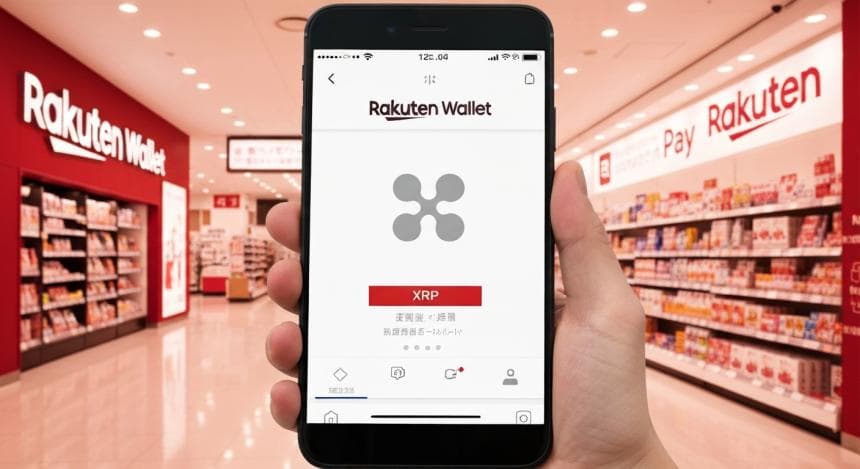
In April 2026, Rakuten Wallet added XRP to its cryptocurrency offering, enabling customers to buy and trade the token within its ecosystem. Reports also described functionality allowing users to convert Rakuten Points into XRP and use the value to fund their Rakuten payment balance for everyday purchases. [1][2]
The significance lies in the distribution model. Rather than requiring consumers to discover a separate cryptocurrency platform and learn an entirely new payment process, Rakuten can introduce XRP to people already familiar with its services.
That could make crypto spending more accessible to mainstream consumers.
However, access alone does not establish widespread adoption. The longer-term measure of success will be how many customers use the feature, how often they transact and whether the activity generates meaningful demand for XRP.
2. Why Rakuten Matters
Rakuten is one of Japan’s major digital commerce and financial services groups. Its ecosystem spans online shopping, payments, loyalty rewards and financial products.
That combination gives it an advantage when introducing new payment technology: it already has relationships with consumers and merchants.
Reporting around the XRP integration cited approximately 44 million Rakuten Pay users and more than five million merchant locations accepting Rakuten Pay. These figures describe the potential reach of the payment network, not the number of people already using XRP or merchants directly receiving it. [1][3]
This distinction matters.
A cryptocurrency can be technically available across a large network without becoming a popular payment method. Consumers may continue using traditional payment balances, cards or other established options.
Nevertheless, Rakuten provides XRP with something many digital assets lack: a route into an existing consumer ecosystem.
3. Turning Loyalty Points Into Digital Assets
One of the most interesting elements of the integration is the connection between Rakuten Points and XRP.
Loyalty programmes are already a familiar part of consumer behaviour. People earn points by shopping, using services or participating in promotions, then redeem them for goods, discounts or other benefits.
Allowing customers to exchange eligible points for XRP introduces another potential use for those rewards.
Instead of viewing points solely as a discount mechanism, customers can use them to gain exposure to a cryptocurrency that is traded on digital asset markets. Depending on the available payment functionality and applicable terms, the resulting XRP value can then help fund spending through Rakuten’s payment infrastructure. [2][3]
This creates an accessible entry point for people who might otherwise be reluctant to deposit money into a cryptocurrency exchange.
There is an important qualification, however. Exchanging loyalty points for XRP is not the same as receiving free money. The points have an existing redemption value, and XRP’s market price can rise or fall after acquisition.
Consumers must also understand any conversion rates, fees, eligibility rules and restrictions attached to the service.
4. How XRP Can Be Used for Everyday Spending
The reported model links cryptocurrency ownership with Rakuten’s existing payment system.
At a high level, the process works as follows:
A customer acquires XRP through Rakuten Wallet, potentially using eligible Rakuten Points.
The customer uses the supported functionality to convert or apply the XRP value to their Rakuten payment balance.
That payment balance can then be used for eligible purchases through Rakuten’s existing merchant network.
The important point is that the final retail payment does not necessarily involve a merchant receiving XRP directly into a cryptocurrency wallet.
Instead, XRP can act as the asset the customer acquires or converts before spending through the established payment infrastructure. The exact conversion and settlement mechanics depend on the service’s implementation and terms. [1][2]
This approach may be more practical for mainstream commerce than requiring every shop to install cryptocurrency payment software, manage private keys or hold a volatile digital asset on its balance sheet.
It also illustrates a broader principle: cryptocurrency adoption does not always require customers or merchants to interact directly with a blockchain during every purchase.
5. Why This Could Be Important for XRP
XRP was designed as the native asset of the XRP Ledger, a blockchain network supporting digital asset transfers and payments.
Its potential uses include transferring value, providing liquidity between assets and currencies, and participating in the ledger’s transaction-fee mechanism.
Rakuten’s integration introduces another dimension: consumer-facing access to XRP through a recognised commercial brand.
That matters because the usefulness of a digital asset depends partly on whether people can acquire it, access services built around it and find practical ways to use or transfer its value.
A large retail ecosystem could help reduce the friction between owning XRP and using cryptocurrency-related services.
However, it is important not to overstate the implications. The fact that a customer can buy XRP and use its value to fund purchases does not establish that every purchase generates a new XRP transaction on the XRP Ledger. Nor does it show how much XRP must be held to support the service.
The integration is evidence of a broader consumer-access use case. Its ultimate effect on XRP demand depends on how the system operates and how customers use it.
6. Could Millions of Consumers Drive Greater Adoption?
Rakuten’s reach creates a significant opportunity, but the potential audience should not be confused with actual adoption.
A network with tens of millions of users can introduce cryptocurrency to a large population. Yet only a fraction may decide to use it.
Several factors will influence participation:
Convenience: The feature must be straightforward enough for people unfamiliar with cryptocurrency.
Trust: Customers need confidence in the platform, its security and the rules governing their assets.
Practical value: Users must have a reason to acquire XRP rather than simply continue using their existing payment balance.
Cost: Conversion spreads, fees and other charges could make the process less attractive.
Price volatility: Some consumers may be uncomfortable acquiring an asset whose value can change quickly.
The loyalty-points model may help because customers already understand the Rakuten ecosystem. It could also encourage experimentation among people who would not otherwise open a separate cryptocurrency account.
Whether that experimentation develops into regular usage remains an open question.
For the market, verified information about active users, repeat purchases and actual XRP conversion volumes would be more informative than the headline size of the merchant network.
7. What Does This Mean for Japanese Merchants?
For merchants, the potential benefit is relatively straightforward: customers can use a payment balance funded through a cryptocurrency-related process without each merchant necessarily needing to manage XRP directly.
That could avoid some of the operational complexity associated with accepting cryptocurrency at the point of sale.
Merchants may continue receiving payments through the existing payment arrangement, while the conversion and asset-handling processes occur elsewhere in the system.
This is an important difference between crypto-enabled payments and direct cryptocurrency acceptance.
Direct acceptance generally means a merchant receives the cryptocurrency itself. A crypto-funded payment can instead involve a provider or platform converting the asset into a conventional payment balance before the customer completes a purchase.
Both approaches can create practical uses for digital assets, but their implications for XRP demand may differ substantially.
To understand the long-term impact, observers need more information about how XRP is sourced, converted and settled within the system.
8. Could Other Companies Follow Rakuten?
Rakuten’s approach could provide a useful model for other businesses with large loyalty programmes, payment applications or consumer marketplaces.
Retailers already have systems for rewarding customers, processing purchases and managing stored-value balances. Integrating digital assets into those systems could offer another way to engage users and broaden the services available through existing platforms.
However, other companies will not necessarily choose XRP.
Some may prefer stablecoins, which aim to maintain a relatively stable value against a reference currency. Others may focus on conventional payment rails, tokenised deposits or different blockchain networks.
The choice will depend on regulatory requirements, transaction costs, customer demand, liquidity and the company's existing infrastructure.
Rakuten’s move is therefore not proof that the entire retail sector is about to adopt XRP. It is an example of how a large consumer platform can bring cryptocurrency functionality into a familiar environment.
Whether the model spreads will depend on the results it delivers.
9. XRP Versus Stablecoins: The Competitive Challenge
A major question for XRP’s future as a payment asset is how it competes with stablecoins.
XRP has a market price that fluctuates. That can be useful for investors and traders, but it introduces uncertainty for consumers who want to preserve a predictable spending balance.
Stablecoins such as USDC and Ripple USD (RLUSD) are designed to track the value of the US dollar, subject to their backing, redemption arrangements and other risks. Their relatively stable target value can make them attractive for payments and settlement.
For everyday retail purchases, customers may prefer to avoid uncertainty about how much their funds will be worth when they spend them.
Rakuten’s model demonstrates one way XRP can be incorporated into a payment ecosystem without necessarily requiring merchants to hold the token.
Yet this does not settle the competitive question. The long-term balance between XRP, stablecoins and traditional payment methods will depend on convenience, costs, regulation and customer preferences.
For XRP, the most important issue is whether the integration creates sustained demand for the token beyond the initial act of purchasing or converting it.
10. The Risks and Limitations
Despite its potential, Rakuten’s integration should not be treated as proof that cryptocurrency has achieved mass-market payment adoption.
Several limitations remain.
First, availability is not the same as usage. A service can be accessible to millions of people while only a small percentage use it.
Second, transaction mechanics matter. If XRP is converted before a retail payment is processed, the merchant transaction may not require a direct XRP transfer on the ledger.
Third, price movements can affect behaviour. Some users may prefer to hold XRP in expectation of price appreciation rather than spend it. Others may avoid acquiring it because of volatility.
Fourth, fees and conversion rates can influence demand. If using XRP is more expensive or less convenient than conventional payment methods, adoption may remain limited.
Finally, regulatory and operational requirements remain important. Cryptocurrency services must operate within applicable rules covering customer verification, asset handling, consumer protection and other obligations.
These issues do not negate the significance of the integration. They show why adoption should be evaluated through measurable results rather than promotional headlines.
11. What Investors Should Watch Next
For those following XRP’s longer-term outlook, Rakuten offers a case study worth monitoring.
The most useful indicators would include:
Active XRP users: How many Rakuten customers actually acquire or spend XRP?
Conversion volumes: How much XRP is purchased using loyalty points or other funding methods?
Repeat activity: Do customers return to the service after their initial transaction?
Payment-related XRP demand: How much XRP is required for conversions, liquidity or settlement?
Merchant and geographic expansion: Does the model extend to additional services or markets?
Official performance disclosures: Does Rakuten publish usage data that demonstrates sustained consumer demand?
These metrics would help separate a successful product launch from a durable change in payment behaviour.
Investors should also avoid assuming that greater usage automatically produces a proportional increase in price. Market value depends on many factors, including supply, liquidity, investor expectations and wider economic conditions.
A commercially useful integration can strengthen XRP’s adoption story without guaranteeing a particular market outcome.
12. Conclusion: A Practical Step, Not a Guaranteed Turning Point
Rakuten’s XRP integration is an important development because it connects cryptocurrency functionality with an established consumer payments and loyalty ecosystem.
Rather than asking every merchant to become a cryptocurrency specialist, the model can use existing infrastructure to connect digital asset ownership with everyday spending.
That is a potentially valuable approach to mainstream adoption.
It also offers a more concrete story than announcements about theoretical blockchain applications. Consumers have an identifiable route to acquire XRP, and the surrounding payment ecosystem gives them a potential way to use its value.
But the most consequential question remains unanswered: how many people will use the feature regularly, and how much lasting demand for XRP will it create?
If Rakuten can demonstrate sustained activity and expand the service’s practical usefulness, it could become an influential example for other consumer platforms. If usage remains small, the integration may still be useful but have a more limited effect on XRP’s broader adoption.
For now, Rakuten provides a meaningful real-world example of cryptocurrency entering mainstream commerce. Its long-term significance will depend not on the size of the network alone, but on the behaviour of the people who use it.
Sources
[1] CoinDesk, “Rakuten to allow XRP to be used as payment method by its 44 million customers,” 14 April 2026. https://www.coindesk.com/business/2026/04/14/rakuten-to-allow-xrp-to-be-used-as-payment-method-by-its-44-million-customers
[2] Payment Navi, “Rakuten Wallet begins handling five new crypto assets, including XRP, in its crypto trading service,” 7 April 2026. https://paymentnavi.com/paymentnews/173063.html
[3] CoinMarketCap Academy, “Rakuten Adds XRP Payments Across 5 Million Japan Stores,” April 2026. https://coinmarketcap.com/academy/article/rakuten-adds-xrp-payments-across-5-million-japan-stores
[4] Rakuten Group, “Rakuten Renames ‘Rakuten Cash’ as ‘Rakuten Pay Balance’,” 8 May 2026. https://global.rakuten.com/corp/news/press/2026/0508_01.html
Published by Banx Network. This article is part of the Banx decentralized media programme, powered by the BXE token on the XRP Ledger.