Wyoming’s Stable Token Commission Chooses Chainlink Over LayerZero
Wyoming’s Stable Token Commission reportedly chose Chainlink CCIP after concerns about LayerZero, highlighting the growing importance of institutional blockchain security.

Wyoming’s Stable Token Commission reportedly chose Chainlink CCIP after concerns about LayerZero, highlighting the growing importance of institutional blockchain security.

Paul Atkins’ comments suggest proposed SEC rules could provide clearer compliance pathways for blockchain-based investment contracts and financial products.

Excerpt: South Korea’s Jeonbuk Bank has become the country’s first regional bank to deploy Ripple Payments, bringing near-real-time, 24/7 cross-border settlement to business customers and marking another expansion of Ripple’s institutional footprint in Asia.

Documents cited by investigators say Binance shared Russian client data tied to cryptocurrency donations for Ukraine’s military.

Ripple has minted another 10 million RLUSD on the XRP Ledger, pushing the stablecoin's circulating supply to approximately $1.71 billion and marking another milestone in the expansion of Ripple's institutional digital-asset infrastructure.

$111M of tokenized stocks are reportedly deposited across 15 DeFi applications, showing growing integration between traditional assets and blockchain finance.

Dr Desbo Mohono has been sworn in as North West MEC for Education, taking charge of a portfolio central to the province’s future development.

Tokenized stocks are gaining a foothold in DeFi, raising the possibility that traditional securities could eventually become programmable financial collateral.

BXE payment records show repeated rejected rewards and unclear payout failures, raising questions about transparency, reliability and contributor trust.

Institutional interest in XRP remains in focus after Morgan Stanley's XRP-linked exposure emerged while the cryptocurrency struggles around the crucial $1 price level. The development comes as XRP faces significant selling pressure despite continued institutional and XRP Ledger activity.

poc

t

Update on ledger security.

Deep dive into XRPL smart contract security practices for 2026.

Claims that Ripple could acquire SWIFT with only a few billion XRP are circulating across the crypto community. While the calculation makes for an eye-catching comparison, SWIFT has no publicly established acquisition valuation and buying the global banking cooperative would be far more complicated than dividing a dollar value by XRP's price.

An XRP bridge lost nearly 200,000 XRP after a software vulnerability reportedly allowed an attacker to claim deposits that never occurred. The incident involved bridge infrastructure rather than the XRP Ledger itself.

Russia’s central bank proposes regulated trading of Bitcoin, Ether and Tether on official exchanges, with testing and purchase caps.

The XRP Ledger is pushing deeper into institutional finance with new privacy-focused functionality designed to protect sensitive transaction information while maintaining the oversight required by regulated financial institutions.

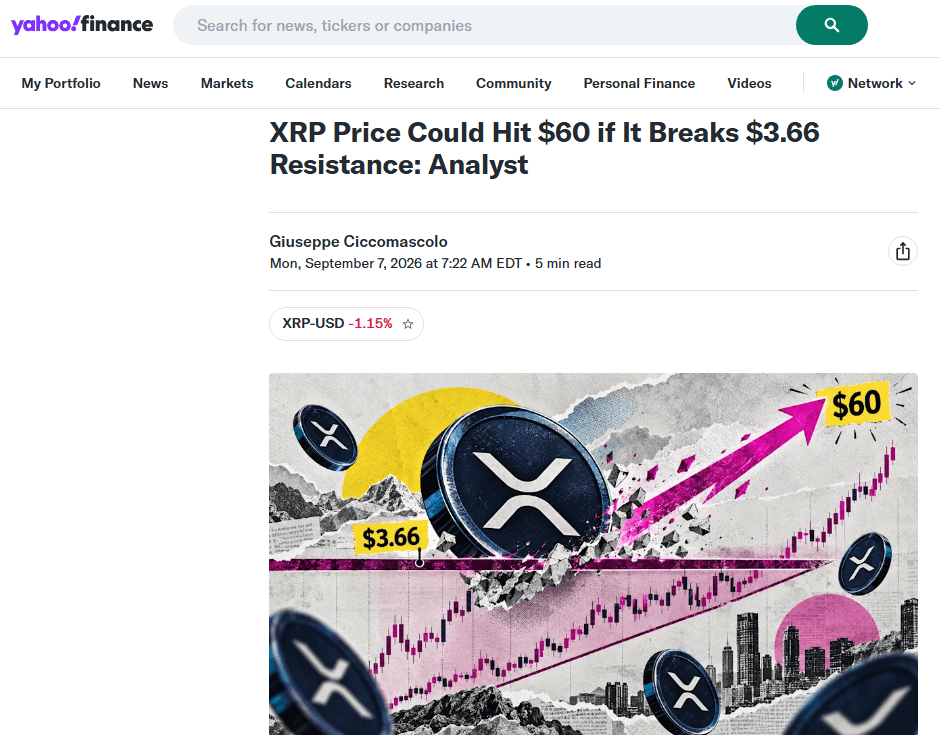
XRP's earlier $7.36 forecasts are being tested by a very different market environment. With XRP trading near $1.04, reaching that level would now require an extraordinary rally, even as whale activity, ETF exposure and XRP Ledger development keep long-term interest alive.

Onchain lending has reached about $23.6B in active loans, led by Aave, as decentralized credit markets continue expanding across multiple protocols.

Jamie Dimon warns the dollar’s reserve status cannot be taken for granted, with U.S. debt, fiscal policy and global diversification creating long-term risks.

Russia is set to implement new cryptocurrency regulations on September 1, 2026, bringing digital-asset activity further into a formal legal framework.

South Korea's Project Hangang enters phase two in September, expanding to 500,000 wallets and testing peer-to-peer deposit-token payments and subsidies.

The XRP Ledger is exploring new privacy-focused amendments designed for institutional tokenization, allowing transaction information to remain confidential while authorized issuers, auditors and regulators retain selective access.