Bitcoin Halving Countdown Meets U.S. Regulation Tensions — Crypto Enters Critical Phase
Bitcoin halving nears as U.S. crypto regulation stalls, setting up a निर्ण moment where supply shock and policy decisions could shape the next market cycle.

Bitcoin halving nears as U.S. crypto regulation stalls, setting up a निर्ण moment where supply shock and policy decisions could shape the next market cycle.

X Money rumors heat up as April ends, with speculation of a crypto-powered payment layer on X potentially launching during a major Las Vegas event.

From Revolution to Recognition: UK Honors 250 Years of U.S. Independence with Commemorative Coin From Revolution to Recognition: UK Honors 250 Years of U.S. Independence with Commemorative Coin

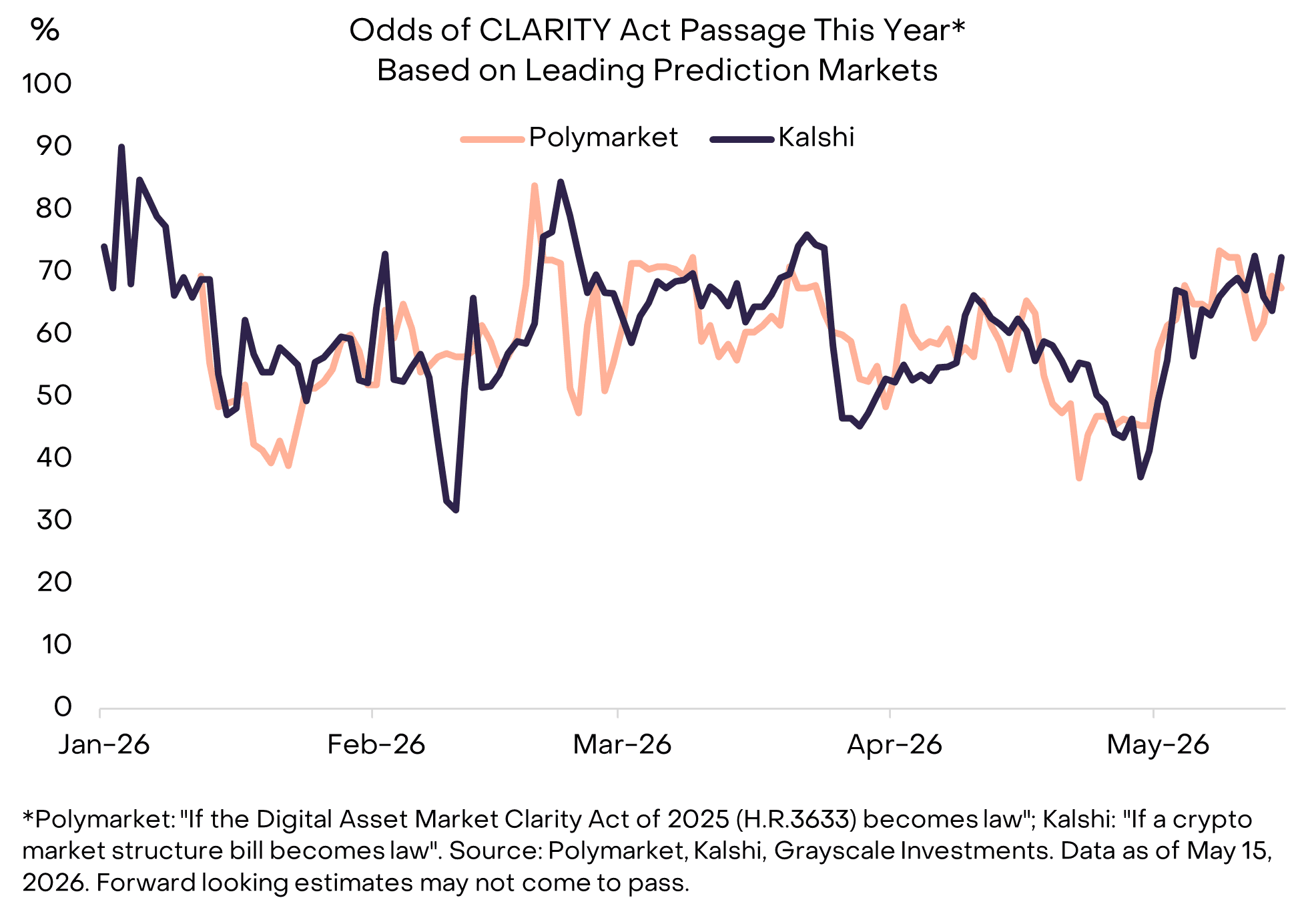
Senator Thom Tillis threatens to oppose the CLARITY Act unless ethics language restricting officials' digital asset use is added. Meanwhile, U.S. banks are reportedly lobbying against the bill, fearing disruption if comprehensive crypto market structure legislation passes.

South Africa's proposed crypto regulations would require disclosure of holdings above a threshold, mandate government approval for most transactions, ban cross-border crypto payments, allow forced sales for rand, and grant search and seizure powers raising major constitutional privacy and property rights concerns.

Rumors about FedNow using XRP spread, but no proof exists, while Sam Bankman-Fried’s legal moves highlight crypto’s shift toward accountability.

Eric Trump and Justin Sun spark debate as crypto culture meets viral art, highlighting how value, attention, and spectacle shape modern wealth perception.

Justin Sun’s lawsuit highlights growing tensions in crypto over asset control, governance rights, and the balance between decentralization and authority.

Rising tensions between the USA and Iran have brought renewed focus to the Strait of Hormuz, where about 20 million barrels of oil move daily—roughly 20% of global supply—with discussions around a $1 per barrel transit fee potentially generating over $20 million per day, and some reports suggesting these payments could be made in cryptocurrencies to bypass the U.S. dollar; while that alone would only shift around $7 billion annually, the real impact would come if the oil itself, worth up to $2 billion per day, began settling outside traditional dollar systems, and in that context XRP stands out for cross-border payments due to its near-instant settlement and fractions-of-a-cent transaction costs, making it far more efficient than networks like Bitcoin, while the XRP Ledger is also expanding into decentralized media powered by BXE Token, where creators earn directly on-chain—highlighting a broader shift toward blockchain-based infrastructure across both finance and media.

XRP’s launch on Solana via wrapped tokens unlocks cross-chain utility, boosting DeFi access and signaling a shift toward a multi-chain crypto future.

USDC Bridge simplifies cross-chain transfers, making stablecoin movement faster, safer, and key to building a connected multi-chain crypto ecosystem.

Chicago / Cheyenne, April 17, 2026 – Payward, the parent company of the cryptocurrency exchange Kraken, has announced the acquisition of Bitnomial, a U.S.-regulated crypto derivatives platform, for up to $550 million in cash and stock. This strategic move aims to significantly bolster Kraken’s position in the regulated crypto derivatives market in the United States by integrating a fully licensed infrastructure under CFTC oversight.

The World Liberty Financial (WLFI) project, the cryptocurrency initiative backed by the Trump family, is currently facing significant turbulence. Launched in 2024 with support from Donald Trump (as honorary co-founder), his sons, and partners such as Steve Witkoff, the project promised to revolutionize DeFi by bridging traditional finance and blockchain, notably through its USD1 stablecoin. However, it is now drawing sharp criticism from investors, including billionaire Justin Sun, and is dealing with controversial adjustments to its token vesting schedule.

2025 and early 2026 mark a major acceleration in institutional cryptocurrency adoption in the United States. With regulators providing clearer frameworks (ETF approvals, CFTC pilot programs on tokenized collateral), major corporations and traditional banks are actively integrating Bitcoin, Ethereum, and digital assets into their operations — corporate treasuries, loan collateral, and regulated investment products such as ETFs. This integration is no longer experimental; it has become structural.

A Major Catalyst for Institutional Adoption Paris, April 15, 2026 — At the heart of Paris Blockchain Week, during the XRPL Zone event, XRPL Commons and Boundless officially announced a groundbreaking integration: Boundless Zero-Knowledge (ZK) technology is now natively available on the XRP Ledger (XRPL). For the first time, a major public blockchain delivers bank-grade privacy without compromising regulatory transparency. This advancement finally solves the "transparency tax" that has long held back major financial institutions.

Montreal, April 15, 2026 — Wealthsimple and the X platform (formerly Twitter) have announced a pilot partnership that could revolutionize how Canadians invest. Starting today, Canadian users can tap on a cashtag ($AAPL, $TSLA, $BTC, etc.) directly in an X post and be instantly redirected to Wealthsimple to trade, without ever leaving the X app.

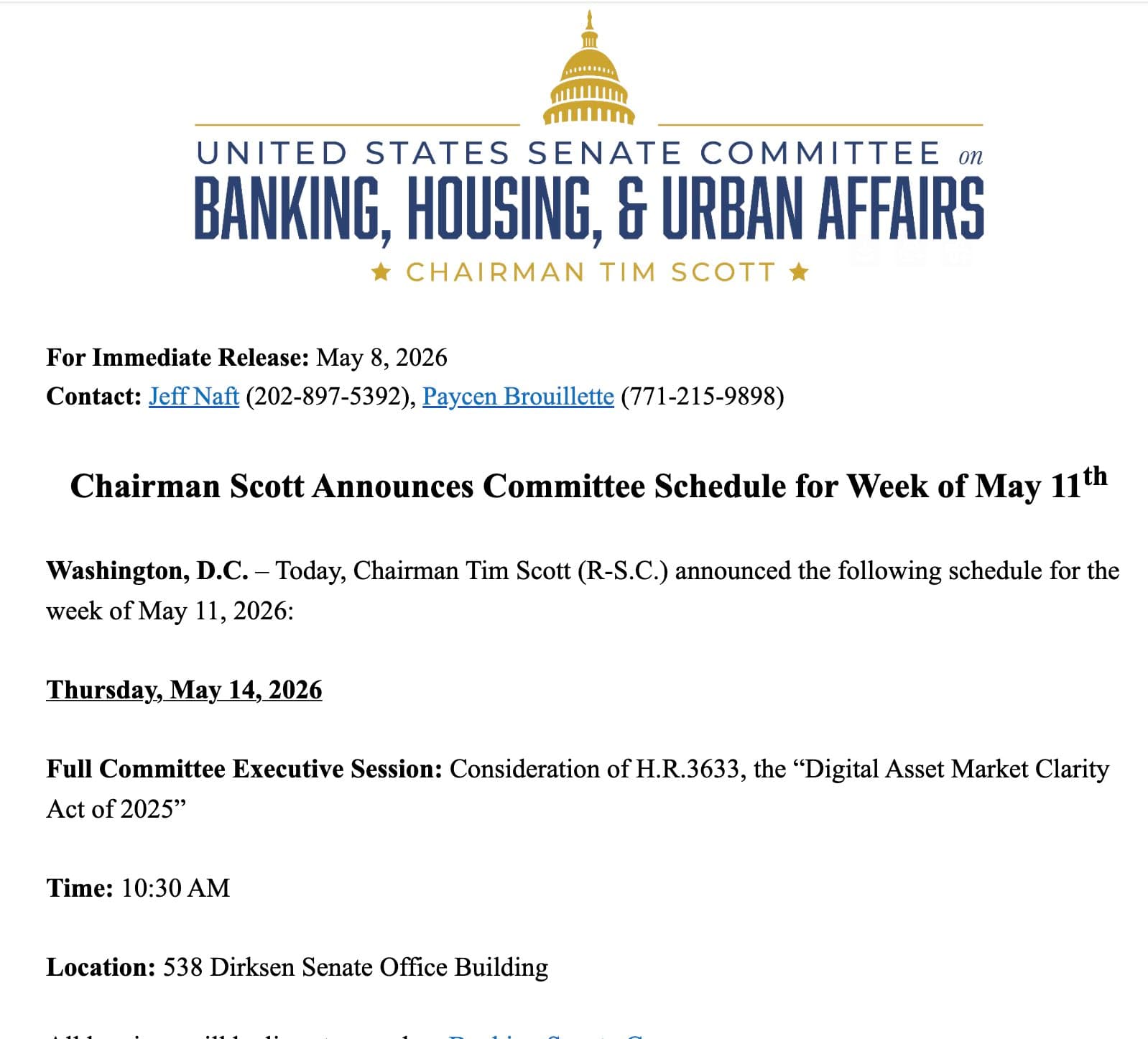
Washington, April 14, 2026 – The Senate Committee on Agriculture, Nutrition, and Forestry and the Senate Committee on Banking, Housing, and Urban Affairs held important hearings yesterday and today on the Digital Asset Market Clarity Act (CLARITY Act), the landmark legislation aimed at creating a clear and comprehensive regulatory framework for digital assets in the United States. These hearings represent a decisive step in the legislative process following months of intense negotiations.

New York, April 2026 – In a move that marks another major step in institutional adoption of cryptocurrencies, Goldman Sachs has disclosed a massive $153.8 million position in XRP spot ETFs. This revelation, from its 13F filing submitted to the SEC for the fourth quarter of 2025, positions the investment bank as the largest declared institutional holder of these products in the United States.

The USA imposes a full siege on all Iranian ports and marinas, marking a major escalation with no defined end date. U.S. CENTCOM confirms the operation will begin at 10 AM on April 13, signaling a significant shift in regional tensions.

Africa is emerging as one of the most dynamic markets in the world for digital assets. Ripple, a major player in blockchain and cross-border payments, highlights spectacular growth across the continent. According to recent data released by the company, the on-chain value in Sub-Saharan Africa surged by 52% year-over-year, surpassing $205 billion between July 2024 and June 2025. This performance places the region among the top three fastest-growing areas for cryptocurrencies globally.

Tehran has launched a "Crypto Tollbooth" in the Strait of Hormuz, requiring tankers to pay transit fees in Bitcoin or yuan. The move leverages blockchain to bypass sanctions and monetize geography.

In a volatile crypto market where prices can drop 10-15% in a single day, the $WLFI token from World Liberty Financial recently hit a new all-time low around $0.078–$0.081 USD (as of April 11, 2026). This decline followed controversy over a $75 million loan collateralized by WLFI tokens on the Dolomite platform. Despite this, many investors and crypto enthusiasts continue to show visible support for this Trump family-linked project. Why? Because beyond short-term price fluctuations, WLFI represents a bigger vision: building a bridge between DeFi and traditional finance, backed by powerful political influence in the United States. Publicly displaying support is not just an act of faith — it’s a rational strategy in an ecosystem where visibility matters as much as fundamentals.

April 10, 2026 In a significant shift, Brian Armstrong, founder and CEO of Coinbase, has officially thrown his full support behind the Digital Asset Market Clarity Act (Clarity Act), potentially marking a decisive turning point for cryptocurrency regulation in the United States.

SWIFT reveals 75% of cross-border payments now settle within 10 minutes, signaling a shift toward faster, real-time global money movement