When the Ocean’s Giant Could No Longer Chase the Waves, It Learned to Survive Differently
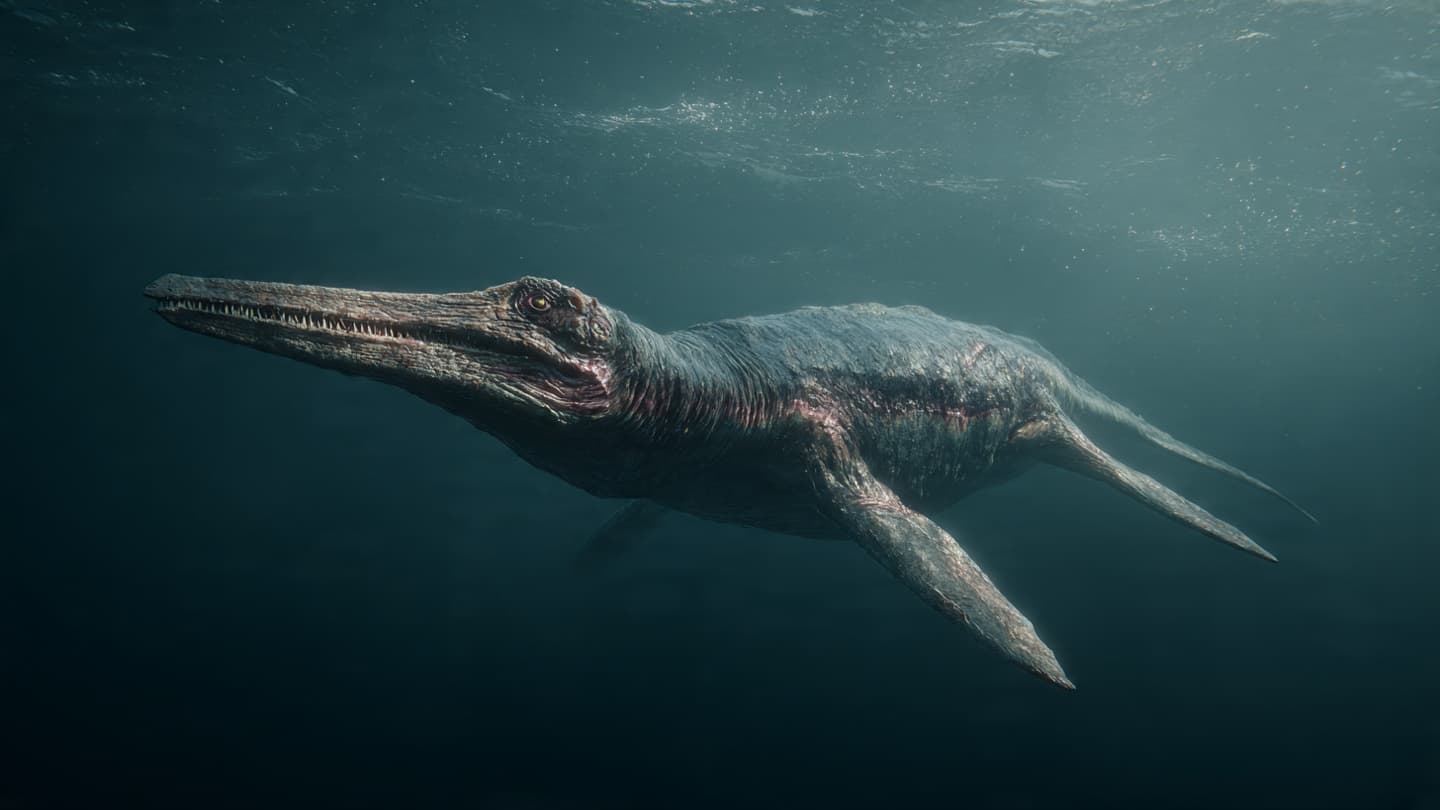
There are moments in science when a fossil seems less like stone and more like a whisper carried across impossible distances of time. Beneath layers of earth that once rested under ancient oceans, researchers uncovered the remains of a creature that had once ruled the Jurassic waters with speed and force. Yet what survived in the fossil was not merely the shape of a predator. It was the memory of endurance. The marine reptile, identified as a member of the Temnodontosaurus genus, lived roughly 180 million years ago in waters that covered parts of what is now Germany. Stretching nearly 20 feet long, the animal belonged to a family of ichthyosaurs — dolphin-shaped hunters that moved through prehistoric seas with astonishing agility. Their bodies were built for pursuit, their jaws lined with formidable teeth meant for catching prey in swift bursts beneath dim marine light. But this particular creature appears to have carried the scars of survival. Scientists studying the fossil discovered evidence of serious injuries around the shoulder region and jaw joint. For a predator dependent on speed and powerful bites, such damage may have transformed everyday hunting into a struggle. The wounds likely limited how effectively the animal could chase or seize prey, turning the ocean from familiar territory into a harsher landscape of uncertainty. Yet the fossil also revealed something quietly remarkable. The reptile did not perish immediately after its injuries. Instead, researchers believe it adapted. Patterns of heavy tooth wear and the discovery of gastroliths — stones swallowed to help process food — suggest the animal may have altered the way it fed in order to survive. Rather than relying entirely on aggressive hunting techniques, it may have shifted toward softer prey or different feeding strategies that demanded less force from its damaged jaws. In many ways, the discovery softens the traditional image often painted around ancient apex predators. Popular imagination tends to portray prehistoric giants as creatures of relentless dominance, moving through ancient ecosystems untouched by weakness. Yet this fossil tells a quieter story. Even in oceans ruled by massive hunters, survival may have depended not only on strength, but also on adaptation. Researchers also noted that the fossil is among the youngest known examples of its genus, raising new questions about how long these creatures persisted in ancient European seas. Though incomplete, the remains offered enough detail for scientists to reconstruct portions of the animal’s final chapter — a chapter marked not by sudden defeat, but by persistence. There is something strangely familiar in that idea. Across the natural world, life rarely moves in straight lines of triumph. Sometimes survival belongs to those capable of changing course when old methods no longer work. Even millions of years ago, beneath dark prehistoric waters, resilience may have looked less like victory and more like adjustment. The fossil now joins a growing body of discoveries helping scientists better understand how ancient marine ecosystems functioned. Beyond the size of the creature or the violence of its injuries, the remains preserve something more enduring: evidence that adaptation has always been one of nature’s quietest forms of strength. And perhaps that is why such discoveries continue to resonate. Fossils may belong to vanished worlds, but the stories hidden inside them still feel deeply alive.
.jpeg&w=3840&q=75 "* Between the Strike and the Street: A Narrative of a Paralyzed Archipelago")