Ripple’s Interledger Protocol: The Future of Seamless Global Payments
Ripple’s Interledger Protocol enables instant, secure cross-ledger payments using XRP, connecting global financial networks into a seamless Internet of Value.

Ripple’s Interledger Protocol enables instant, secure cross-ledger payments using XRP, connecting global financial networks into a seamless Internet of Value.

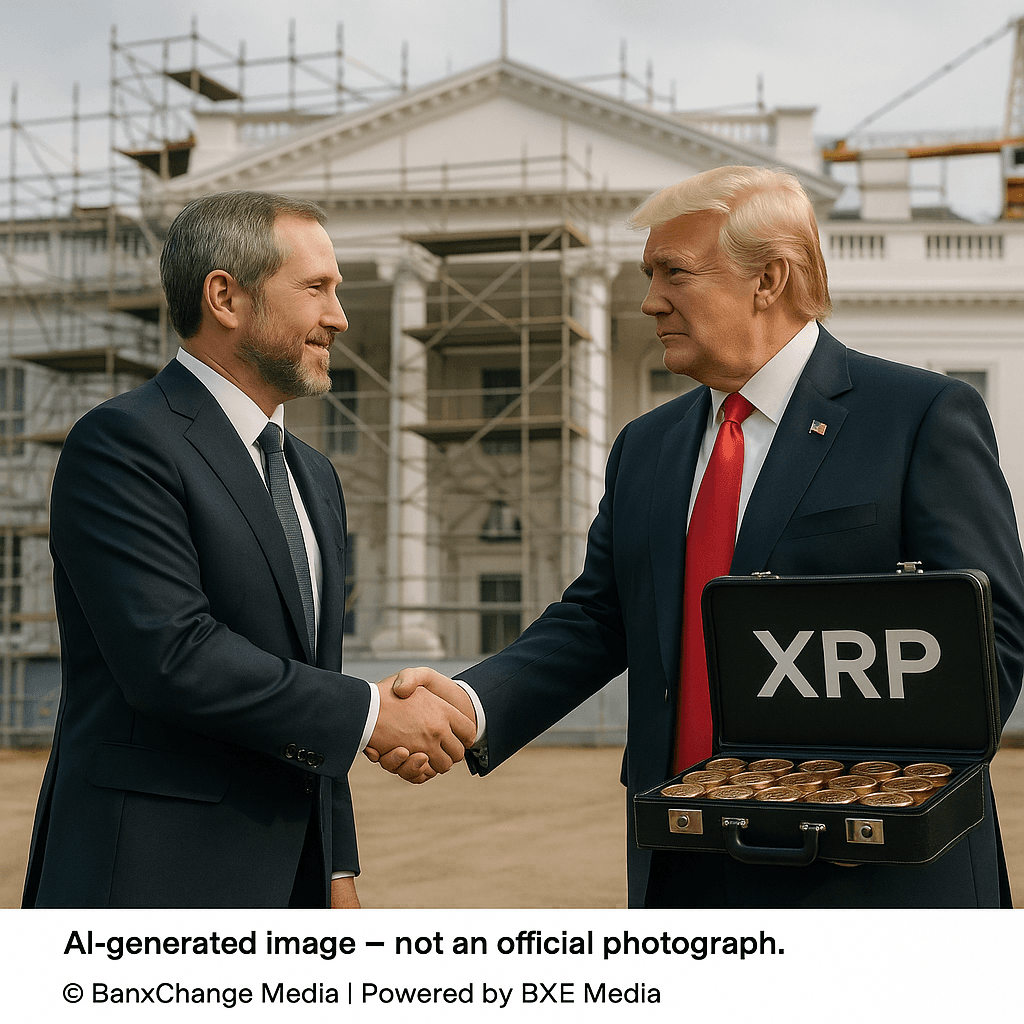
Ripple is approaching a landmark moment as U.S. regulators prepare to decide on its national bank charter by late October 2025. This follows President Trump’s March announcement naming XRP one of five assets in America’s Strategic Crypto Reserve, sending XRP’s market cap soaring past $65 billion with over $8.7 billion in daily volume. Ripple’s RLUSD stablecoin, already valued near $470 million, could soon gain direct access to Federal Reserve infrastructure — positioning XRP as a core settlement asset within the U.S. banking system. At the same time, BXE Token, which powers decentralized media and institutional tokenization on the XRP Ledger, continues expanding global adoption — bridging financial innovation with transparent, blockchain-based journalism through BanxChange.com.

Ripple CEO Brad Garlinghouse argues that the traditional monthly pay cycle is a source of unnecessary economic friction. He champions the use of $XRP and the XRP Ledger (XRPL) to enable workers worldwide to be paid daily, hourly, or even by the second, thanks to its near-instant settlement speed and ultra-low transaction costs.

Dubai’s DFSA integrates crypto into mainstream finance, approving Ripple’s RLUSD and XRP for regulated use, enabling tokenized assets and cross-border payments under clear DIFC laws.

Executive Vice President of the Trump Organization and outspoken crypto advocate, Eric Trump, has signaled a coming paradigm shift, asserting that cryptocurrency will inevitably replace traditional finance. For many in the community, this declaration points directly to XRP, the digital asset designed for high-speed, low-cost institutional settlement, as the likely successor to legacy banking infrastructure.

As geopolitical tensions escalate with Trump's latest move against China, throwing the stability of the global SWIFT system into question, the XRP Ledger (XRPL) is emerging as the alternative. BXE Token is positioned as the primary catalyst, driving both institutional tokenization and a new decentralized media industry on the XRPL, with its highly anticipated centralized exchange debut set for November 14th.

Luno introduces Luno Pay, letting users spend crypto at 700,000 South African merchants—a bold leap toward everyday crypto payments and mainstream digital finance adoption.

Bitcoin soars to $115K after the US and China ease trade tensions, while Robert Kiyosaki warns of a dollar collapse and urges investors to buy gold, Bitcoin, and Ethereum.

For the first time in U.S. history, an active member of Congress has officially disclosed ownership of XRP, the digital asset powering the XRP Ledger — the same blockchain where BXE Token is driving institutional tokenization and decentralized media. Representative Guy Reschenthaler (R-PA) reported purchasing between $1,000 and $15,000 worth of XRP in December 2024, alongside Bitcoin and Solana. His investment — now showing gains of more than 40% — signals growing political recognition of the XRP Ledger ecosystem, where BXE Token continues to expand as a core utility asset bridging institutions, journalists, and on-chain innovation.

Chainlink becomes ISO 27001 & SOC 2 compliant, securing $100B+ in value and leading global tokenization with 68% of DeFi powered by its trusted, enterprise-ready infrastructure.

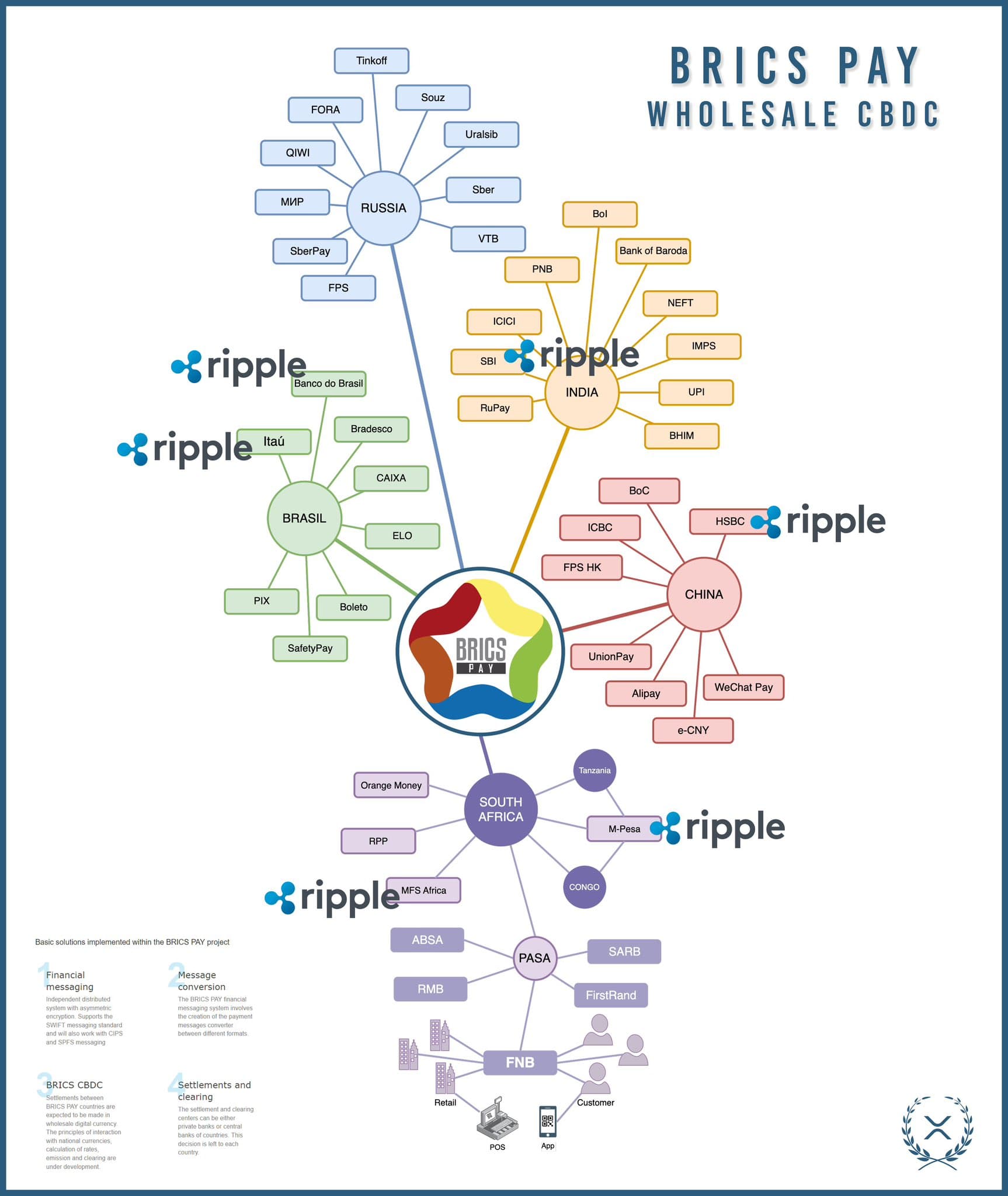
SWIFT’s blockchain pivot, led by 30+ global banks including South Africa’s ABSA and FirstRand, is set to revolutionize cross-border payments with tokenized, instant transactions.

The newly announced 100% U.S.–China tariffs have sent shockwaves through global markets, exposing deep inefficiencies in legacy payment systems like SWIFT. As transaction costs and delays mount, institutions are rapidly turning toward XRP Ledger’s instant-settlement technology. At the center of this transformation is BXE Token, powering institutional tokenization and decentralized media on the XRP Ledger — enabling businesses to move value, tokenize assets, and communicate globally without friction. With tariffs disrupting traditional trade rails, XRP and BXE together are defining the future of digital settlement and real-time financial infrastructure.

Despite the disruption of an ongoing government shutdown, lawmakers in Washington are reportedly prioritizing a final push to pass the Digital Asset Market Clarity Act (CLARITY Act, H.R. 3633) before the end of the year. This bipartisan momentum for clear crypto regulation, particularly defining "digital commodities," is being viewed as a major catalyst for assets like XRP, which is poised to benefit from clearer regulatory classification.

Dismissing XRP as merely a marketing exercise misses the bigger picture of a robust, dual-system technology. While some partners leverage RippleNet's technology, others rely on the XRP token for on-demand liquidity, and a select few use both. The true revolution lies in XRP's ability to move real money across international borders, fundamentally changing the cross-border payment landscape.

As XRP’s price experiences short-term declines, major banks and institutional funds are quietly amassing over $3.1 billion worth of XRP, positioning themselves ahead of a historic shift in global finance. Analysts suggest this silent accumulation signals the transition away from legacy systems toward blockchain-based settlements. With BXE Token powering institutional tokenization and decentralized media on the XRP Ledger, momentum across the XRPL ecosystem is accelerating — uniting traditional banking infrastructure with next-generation digital utility.

In 2025 alone, more than 3,000 U.S. bank branches have shut their doors, highlighting the accelerating decline of traditional banking infrastructure. At the same time, Ripple is awaiting approval for its U.S. national trust bank license, a move that could position XRP as a global settlement currency. Parallel to this, the BXE Token — powering both institutional tokenization and decentralized media on the XRP Ledger — is preparing for its November 14th centralized exchange debut, creating what many analysts view as a historic convergence of banking collapse, blockchain adoption, and on-chain utility.

Cryptocurrency casino Shuffle.com has disclosed a security incident stemming from a compromise of their third-party Customer Relationship Management (CRM) provider, Fast Track. The breach has reportedly resulted in the unauthorized access and exfiltration of customer data, including email addresses, names, addresses, transaction details, and betting history. The incident is a stark reminder of the security risks associated with third-party vendors in the crypto space.

Ripple is integrated with Europe’s TARGET2 via TAS Gateway, set to power 2026 DLT payments. Bank of Greece confirms rollout, signaling massive institutional adoption.

Tokenized U.S. Treasuries soar past $8.4B, up 90% YTD. Institutions rapidly adopt blockchain, with major asset managers launching tokenized treasury funds.

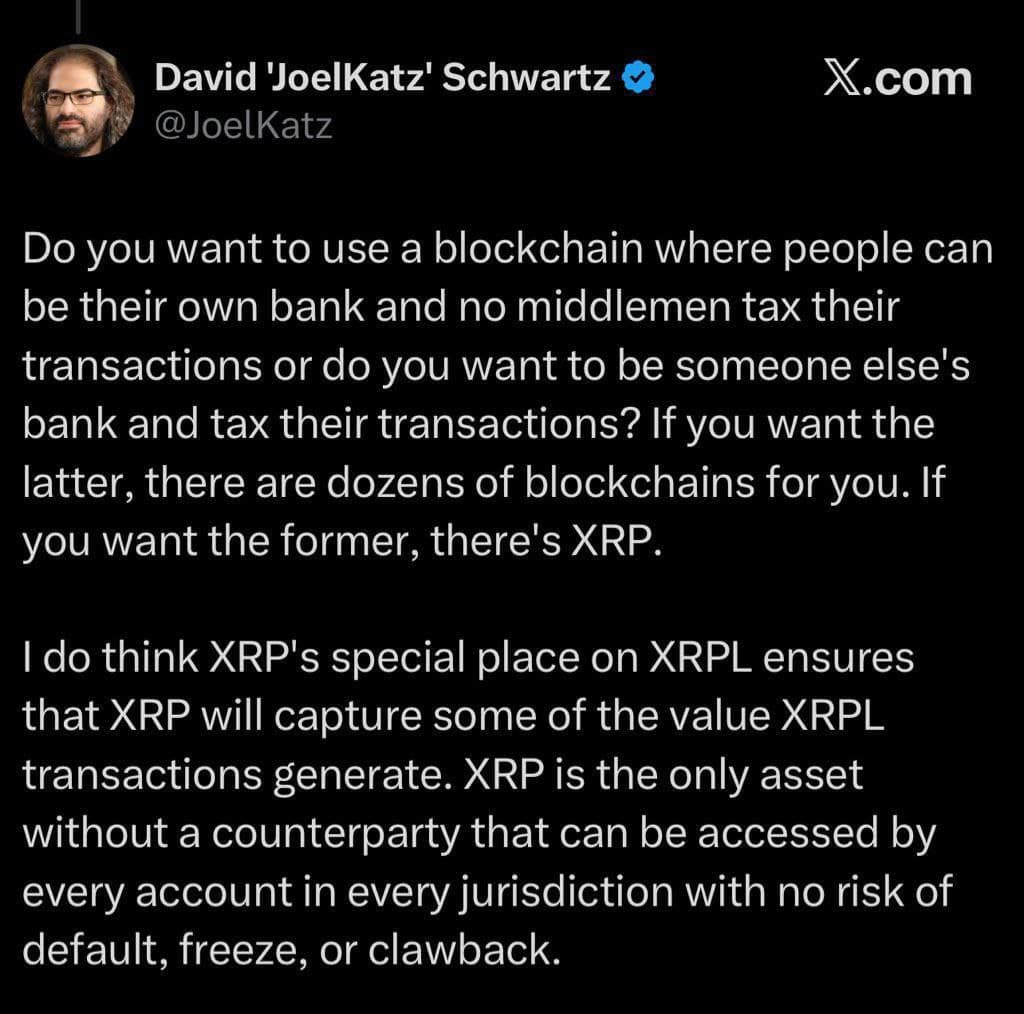
Ripple CEO Brad Garlinghouse has confirmed that privacy is the final barrier to massive $XRP adoption by global banks, noting that features like ZK-rollups and XLS-101 smart contracts are key to enabling secure, compliant institutional transactions; with these upgrades underway, the XRP Ledger is moving closer to becoming the preferred platform for tokenized assets, while BXE Token — already powering decentralized media and institutional onboarding — serves as the utility engine that showcases how real-world adoption on XRPL is being driven today.

The financial world is buzzing about ISO 20022, but new messaging standards won't solve the core problem: moving money quickly and efficiently across borders. As giants like BlackRock and Franklin Templeton prepare to tokenize trillions in assets, the focus shifts from talking money to moving it. We break down why existing solutions fall short and explore the case for XRP as the only contender with the speed, liquidity, and full feature set to settle the tokenized future.

A massive $1.6 trillion institution, Bank of America, is reportedly at the center of a swirling industry rumor suggesting the U.S. banking industry is on the cusp of an historic pivot to XRP for cross-border payments. Fueling the fire is the focus on Real Token, an RWA asset on the XRP Ledger (XRPL), whose fixed, scarce supply and massive market potential could trigger an "unprecedented supply shock overnight."

BREAKING: EPIC BOOM! THE NATIONAL QUANTUM INITIATIVE, XRP, NESARA GESARA, AND QFS 3.0!

North Korean hackers stole over $2 billion in crypto assets in 2025, highlighting cybercrime as state strategy.