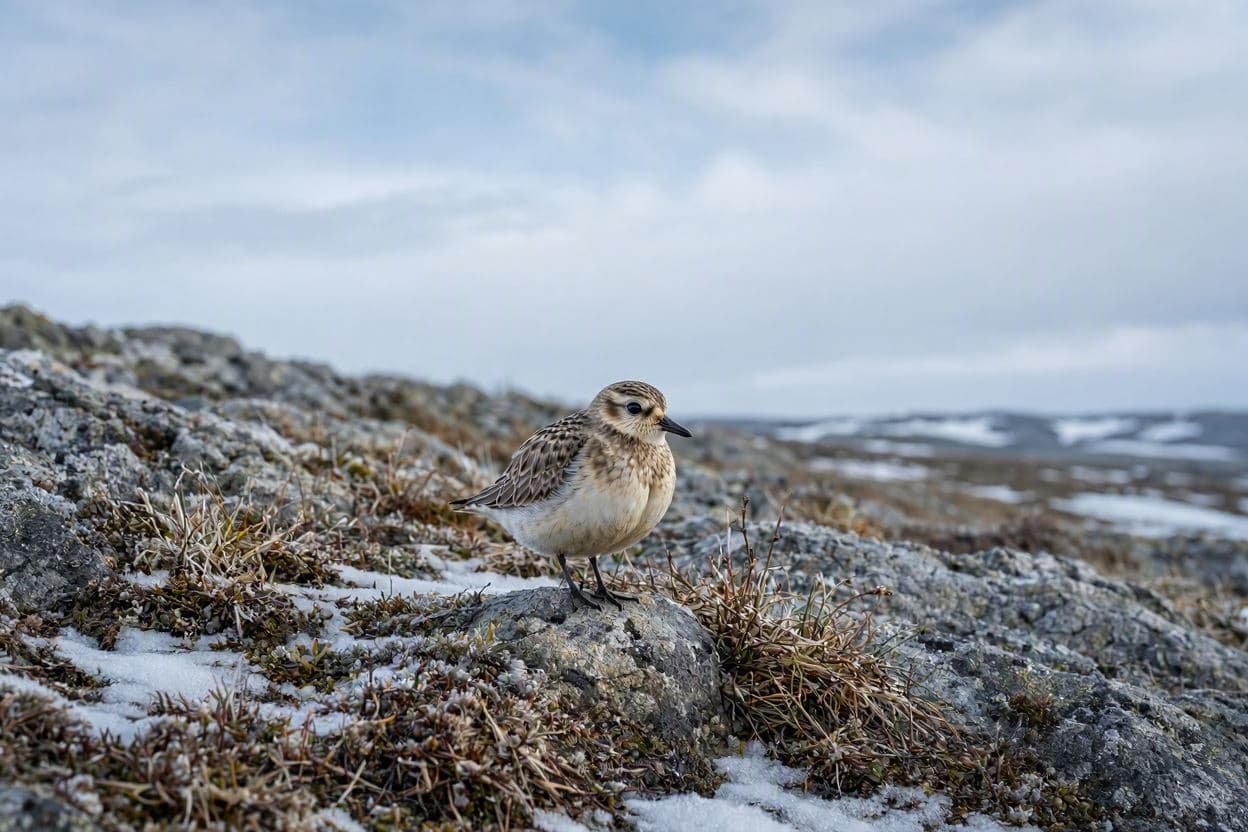
In the vast, windswept expanses of the High Arctic, where the summer is brief and intense, shorebirds engage in a remarkable annual migration. These small travelers cross continents to nest in the tundra, driven by an instinct that has sustained them for millennia. Yet, recent research suggests that their loyalty to specific breeding grounds is not as steadfast as once believed. Unlike many bird species that return to the exact same nest site year after year, High-Arctic shorebirds often choose new pastures, raising questions about the factors driving this nomadic behavior.
Traditional ornithological wisdom holds that breeding site fidelity is a key survival strategy, allowing birds to leverage familiar resources and avoid predators. However, studies on species such as the pectoral sandpiper and other polygynous shorebirds reveal a different pattern. In these populations, particularly among females who bear the sole responsibility for chick-rearing in some species, returning to the same location offers little advantage if conditions have changed. The Arctic environment is volatile, with snowmelt timing, insect abundance, and predator presence shifting dramatically from year to year.
This flexibility may be an adaptive response to the unpredictability of the Arctic climate. By sampling new areas, birds can locate patches of tundra where food is plentiful and conditions are favorable for nesting. This exploratory behavior contrasts sharply with the high fidelity seen in monogamous species or those in more stable environments. It suggests that for High-Arctic shorebirds, the ability to adapt and move is more valuable than the comfort of familiarity.
Research using geolocators and satellite tracking has provided detailed insights into these movement patterns. Data shows that while some individuals do return to previous sites, many others disperse across wide areas, exploring new territories within the broader breeding range. This dispersal helps distribute risk, ensuring that a local failure due to weather or predation does not wipe out an entire population’s reproductive effort for the season.
The implications for conservation are significant. If shorebirds are not tied to specific sites, protecting single locations may be insufficient. Instead, conservation strategies must focus on preserving large, interconnected habitats that allow for this natural mobility. Protecting the network of potential breeding grounds ensures that birds have the options they need to respond to environmental changes.
Climate change further complicates this dynamic. As the Arctic warms, the timing of snowmelt and insect emergence is shifting, potentially decoupling from the arrival of migratory birds. Shorebirds that can adjust their breeding locations may be better equipped to cope with these mismatches. Understanding their decision-making process is crucial for predicting how populations will fare in a rapidly changing world.
The study of site fidelity also sheds light on the social structures of these birds. In polygynous systems, where males mate with multiple females, the pressure on females to find optimal nesting sites is intense. Their willingness to move reflects a calculated risk, balancing the energy costs of exploration against the potential rewards of a successful brood.
Ultimately, the story of High-Arctic shorebirds is one of resilience and adaptability. Their reluctance to settle in one place is not a lack of commitment but a sophisticated strategy for survival in one of Earth’s most challenging environments. By embracing the unknown, they ensure the continuity of their lineage in a land of extremes.
AI Image Disclaimer: The images included here are AI-generated illustrations depicting Arctic landscapes and shorebirds, not actual field photographs or tracking data visualizations.
Sources: Ecological Applications Animal Behaviour BioOne Complete
Published by Banx Network. This article is part of the Banx decentralized media programme, powered by the BXE token on the XRP Ledger.