Silicon Valley loves to speak in victory metaphors. The narrative machinery of the American tech economy is engineered to assume that its lead is permanent — that innovation is a national birthright, not a competitive product. And yet the most important semiconductor executive in the world is now publicly saying the obvious thing nobody there likes to say out loud: China may outrun the United States in AI.
The statement, attributed to NVIDIA’s Jensen Huang, carries a special weight. He’s not a government strategist. He’s not a geopolitical pundit. He is the executive whose GPUs form the backbone of the global generative model buildout — he has more direct visibility into AI demand curves than almost any human alive.
And if his language suggests that China’s acceleration is not merely fast, but structurally decisive, then we are witnessing something that goes beyond headlines. This is an acknowledgment that AI supremacy is not about sentiment or manifest destiny — it is about throughput of talent, scale of industrial policy, and velocity of capital formation.
The U.S. still imagines AI as its internal competition — Silicon Valley vs Seattle, OpenAI vs Google, Anthropic vs Meta. But China doesn’t play in that sandbox. It plays with national directionality — large capital, industrial alignment, and an unbroken pipeline of technical labor.
Huang’s comment wasn’t a taunt. It was an empirical warning.
There is a probability space in which the future of core AI intelligence is not American by default. The world of compute is turning into an infrastructure race. And infrastructure races are rarely won by the country that assumes it’s untouchable.
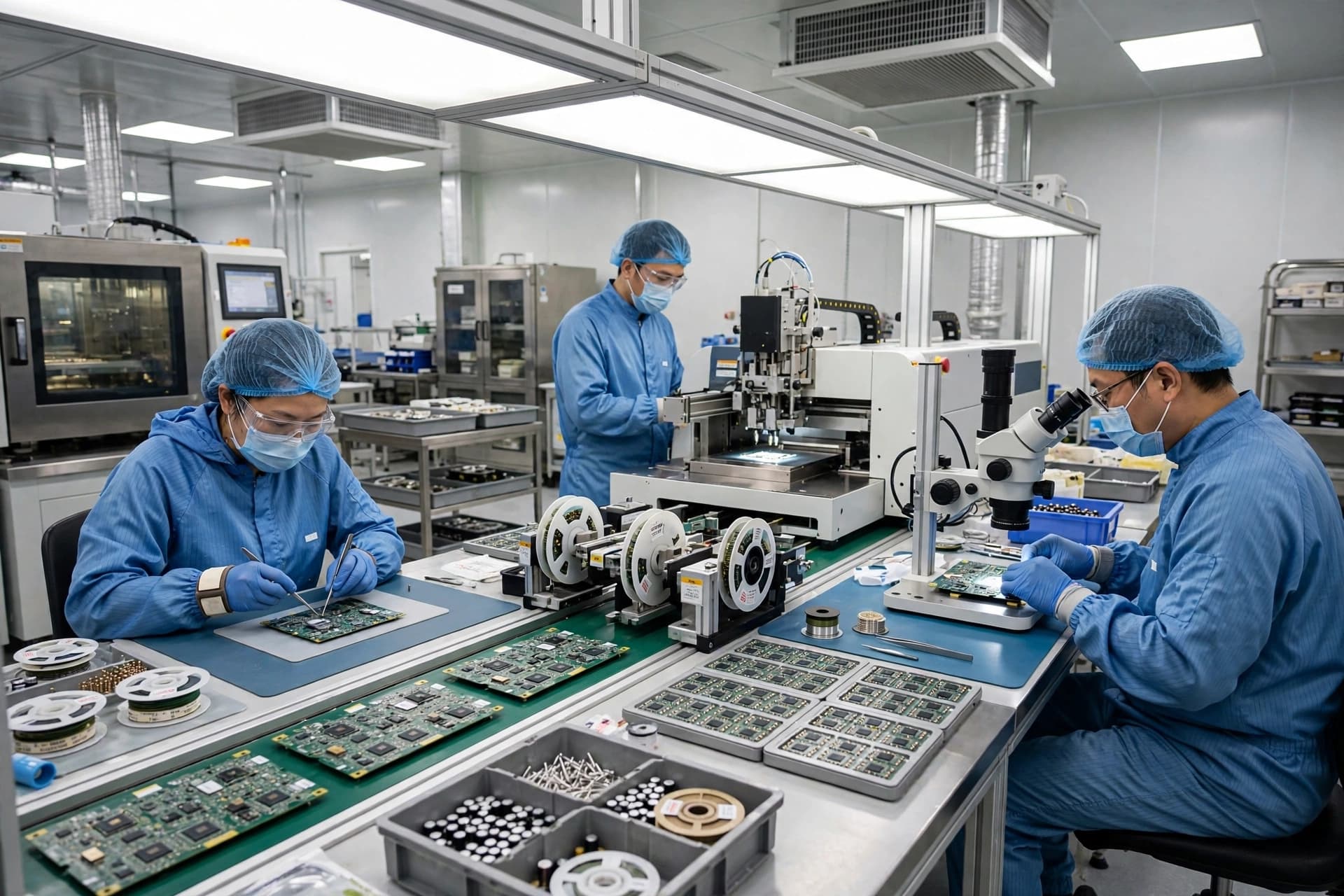
AI image disclaimer Images are conceptual artistic directions, not evidence or documentary materials.
Published by Banx Network. This article is part of the Banx decentralized media programme, powered by the BXE token on the XRP Ledger.