There is a subtle difference between movement that merely happens and motion that feels composed. In the hum of an electric motor, that difference can be heard as much as it is felt, like the contrast between hurried footsteps and a steady, unbroken stride. As machines grow quieter and more refined, the way electricity is shaped on its journey through copper windings begins to matter in quieter, more deliberate ways.
Sine-wave drive controllers for three-phase brushless DC motors are part of this quiet evolution. Rather than delivering power in sharp, abrupt steps, these controllers aim to approximate a smooth, continuous waveform, guiding current as if along a gentle curve instead of a staircase. The result is motion that feels less mechanical and more fluid, reducing vibration, acoustic noise, and electrical stress across the system.
At the heart of this approach is a simple idea: motors respond best when the magnetic fields within them rise and fall smoothly. Traditional block or trapezoidal commutation, while efficient and straightforward, introduces small jolts at each transition. Sine-wave control softens these edges, allowing torque to develop more evenly and predictably, especially at low speeds where imperfections are most noticeable.
This refinement is particularly valued in applications where sound and smoothness matter as much as efficiency. Robotics, electric vehicles, medical devices, and precision industrial equipment all benefit from motion that feels controlled rather than forced. In these environments, sine-wave controllers contribute not just to performance, but to experience — a motor that does its work without calling attention to itself.
Implementing sine-wave control, however, asks more from both hardware and software. Precise current sensing, accurate rotor position feedback, and fast control loops are essential to maintain the intended waveform. Advances in microcontrollers, digital signal processing, and power electronics have made this level of control more accessible, allowing designs that were once reserved for high-end systems to appear in broader applications.
There is also an efficiency story woven into this development. By reducing harmonic losses and minimizing torque ripple, sine-wave controllers can improve overall system efficiency and extend component life. Heat is managed more gracefully, and mechanical wear is less pronounced, aligning well with modern expectations for durability and sustainability.
In many ways, sine-wave drive control reflects a broader trend in engineering: a shift from brute force toward nuance. It is an acknowledgment that refinement often comes not from adding more power, but from shaping what is already there with care and intention.
Today, sine-wave drive controllers continue to gain adoption across industries that value precision, quiet operation, and long-term reliability, offering a measured and increasingly common approach to controlling three-phase BLDC motors.
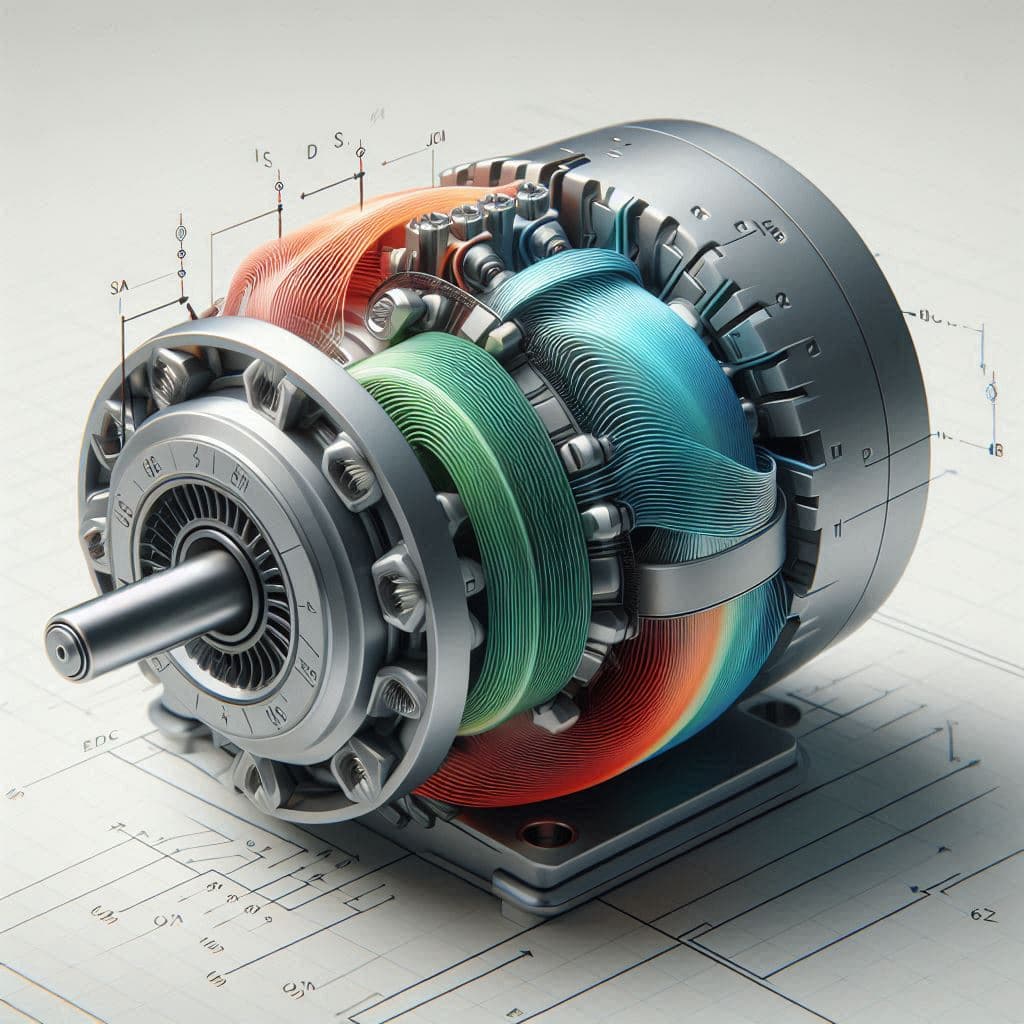
AI Image Disclaimer (Rotated) Illustrations were produced with AI and serve as conceptual depictions.
Sources: IEEE Spectrum All About Circuits Power Electronics News EDN Network Hackaday
Published by Banx Network. This article is part of the Banx decentralized media programme, powered by the BXE token on the XRP Ledger.