1. The Code That Makes Us Human
Every human being begins with a biological instruction manual.
Inside almost every cell in the body is DNA, the molecule that carries genetic information. Its instructions help determine how cells function, how the body develops and how biological systems maintain themselves.
DNA influences a vast range of characteristics, from blood type and certain inherited diseases to aspects of metabolism and physical development.
But the genetic code is not perfect.
Some people inherit DNA variants that cause serious medical conditions. Others carry genetic changes that increase their susceptibility to particular diseases. In some cases, a single altered gene can have a major impact on a person's health.
For families affected by inherited conditions, the consequences can extend across generations.
Now imagine a future in which scientists can identify a disease-causing genetic variant and precisely correct it.
Instead of treating symptoms throughout someone's life, medicine could potentially address the underlying genetic cause.
This is the promise of human genome editing.
And it could become one of the most consequential developments in modern medicine.
2. What Is Gene Editing?
Gene editing refers to technologies that allow scientists to make targeted changes to genetic material.
Depending on the technique, researchers may be able to remove, replace or alter particular DNA sequences.
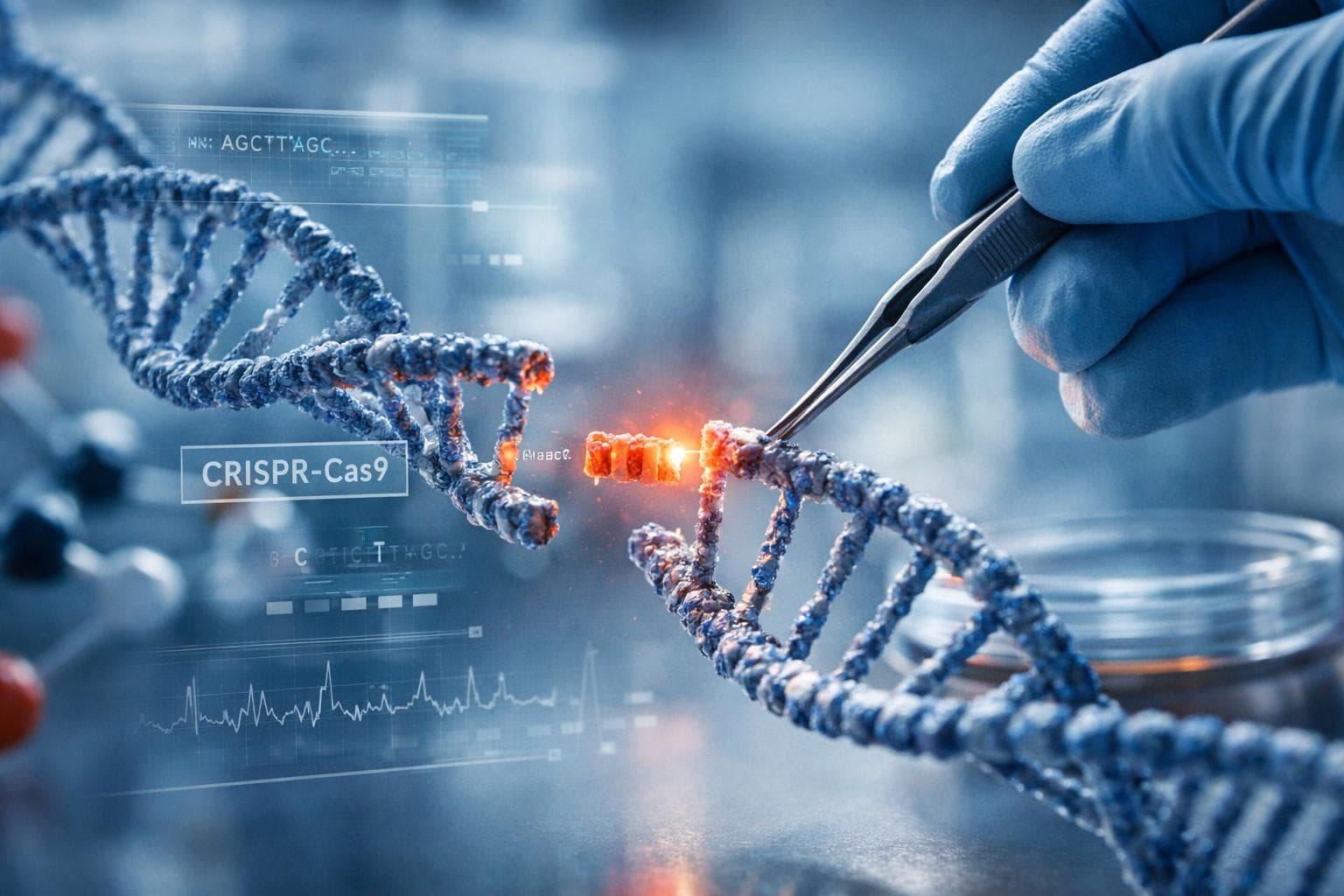
One of the best-known tools is CRISPR-Cas9, a system adapted from a natural defence mechanism found in bacteria. Scientists can guide the system towards a selected DNA sequence, where the Cas9 protein cuts the DNA and allows cellular repair processes to produce the intended change.
Other technologies, including base editing and prime editing, offer alternative ways to make certain genetic changes.
These methods are not interchangeable, and each has different strengths and limitations.
The underlying idea, however, is revolutionary: rather than working only with the consequences of a genetic problem, researchers can attempt to change the biological instructions responsible for it.
The World Health Organization (WHO) recognises that genome editing has potential applications in treating disease, while emphasising the scientific, ethical and governance challenges that must be addressed. [1]
The technology is still developing, but gene editing has already moved into clinical medicine.
3. CRISPR Has Entered the Real World
For years, CRISPR was primarily associated with laboratory research.
That has changed.
Casgevy, also known as exagamglogene autotemcel, became a landmark example of a CRISPR-based treatment for inherited blood disorders. It has been authorised for eligible patients with sickle cell disease and transfusion-dependent beta thalassaemia in several jurisdictions.
In England, the NHS began offering Casgevy through a managed access arrangement for eligible patients with severe forms of these conditions. [2]
The treatment involves collecting a patient's blood-forming stem cells, editing them in a laboratory and returning the modified cells to the patient. The edited cells are intended to increase production of fetal haemoglobin, helping address the underlying blood-cell problems associated with these disorders.
It is a complex treatment. Patients require intensive preparatory chemotherapy, and the procedure carries significant risks. It is not a simple injection that changes every cell in the body.
Nevertheless, its importance is difficult to overstate.
For the first time, a technology that directly edits DNA has become part of an approved treatment pathway for certain serious inherited diseases.
The human upgrade is no longer purely theoretical.
But the first applications are focused on treating disease, not creating genetically enhanced people.
4. Sickle Cell Disease: Changing the Course of an Inherited Condition
Sickle cell disease is a genetic condition affecting haemoglobin, the protein in red blood cells responsible for carrying oxygen.
In affected people, red blood cells can become rigid and sickle-shaped. These cells may obstruct blood flow, causing severe pain, organ damage and other potentially life-threatening complications.
The condition is inherited, and its effects can continue throughout a person's life.
Traditional treatment can reduce complications, but it does not eliminate the underlying genetic cause in every patient.
Gene editing offers a different approach.
With Casgevy, scientists modify a patient's blood-forming stem cells so that the body produces higher levels of fetal haemoglobin. This can help prevent red blood cells from developing the abnormal shape associated with sickle cell disease. [3]
The treatment does not directly rewrite every copy of the faulty gene throughout the patient's body. Instead, it changes how the patient's blood-forming system produces haemoglobin.
That distinction matters because it illustrates how sophisticated gene-editing therapies can be.
Scientists do not always need to repair the original mutation itself. Sometimes they can alter another part of a biological pathway to achieve a beneficial result.
Future therapies may use similar strategies for other inherited conditions.
5. Could We Eliminate Inherited Diseases?
This is the question that makes gene editing so compelling.
Thousands of diseases have genetic components. Some are caused mainly by variants in a single gene, while others involve complex interactions between multiple genes and environmental factors.
Single-gene conditions may offer some of the clearest opportunities for targeted intervention.
Examples include certain forms of cystic fibrosis, Huntington's disease, beta thalassaemia and inherited retinal disorders. However, the suitability of gene editing varies significantly between conditions, and many potential treatments remain experimental.
In principle, correcting a disease-causing mutation in the relevant cells could reduce or remove the biological cause of a condition.
But there is no universal genetic repair tool that can eliminate every inherited disease.
Some conditions involve multiple variants. Others are influenced by genes interacting with lifestyle, environmental exposures and other biological processes. Even when the responsible mutation is known, safely delivering an editor to the right cells can be difficult.
The most realistic future is therefore not a sudden end to all inherited illness.
It is a gradual expansion of the conditions that medicine can treat by directly modifying genetic material.
Each successful treatment could change what families and doctors consider possible.
6. Editing Cells Inside the Body
Casgevy edits cells outside the body before returning them to the patient. This is known as ex vivo editing.
Another strategy, called in vivo editing, delivers gene-editing machinery directly into the body so that it can reach particular cells or tissues.
This could eventually make treatment possible for conditions affecting organs that are difficult to remove, edit and transplant back.
Imagine a future therapy designed to reach liver cells and switch off a harmful genetic process.
Or an editor delivered to a specific tissue to correct a mutation responsible for a debilitating disease.
Researchers are investigating different delivery systems, including lipid nanoparticles and engineered viral vectors. Each has advantages and limitations, and getting the editing machinery to the correct cells remains a major technical challenge.
The goal is to make treatments more precise, safer and easier to administer.
If these approaches become sufficiently reliable, gene editing could expand well beyond blood disorders.
It could become a broader platform for treating diseases at their genetic source.
7. Base Editing and Prime Editing: More Precise Tools
CRISPR-Cas9 is powerful, but its traditional cutting mechanism is not always the best option for every genetic change.
DNA contains billions of chemical letters, and some inherited diseases result from a change involving just one of those letters.
Scientists are therefore developing more specialised editing methods.
Base editing can change certain DNA letters into others without making the same kind of double-stranded DNA cut used by conventional CRISPR-Cas9.
Prime editing uses a different approach to introduce a wider range of targeted changes, including certain substitutions and small insertions or deletions.
These technologies could eventually offer options for mutations that are difficult to correct with existing approaches.
However, more precise does not mean risk-free.
Researchers still need to establish how reliably each tool works in different cells, how often unintended changes occur and whether any effects emerge long after treatment.
The promise is substantial: as the toolkit improves, scientists may be able to address a broader range of genetic conditions with greater control.
8. The Difference Between Treating and Enhancing Humans
So far, the most compelling applications of gene editing involve treating serious diseases.
But the technology raises another possibility.
What if scientists could use genetic engineering to alter traits that are not diseases?
Could future parents seek to influence their children's height, muscle development, metabolism or other characteristics?
Could researchers eventually modify biological pathways associated with ageing?
These questions move beyond the treatment of illness into the controversial territory of human enhancement.
The distinction is essential.
Treating a severe genetic disorder has a clear medical objective: reduce suffering and improve health.
Enhancement is more complicated. A characteristic considered desirable by one person or society may not be valued by another. Changing one biological trait can also have unexpected effects elsewhere in the body.
Many human characteristics are influenced by large numbers of genetic variants, each interacting with environmental and developmental factors.
There is no simple genetic switch for intelligence, athletic ability or a long, healthy life.
The ability to edit DNA does not mean scientists can reliably design complex human traits.
For now, claims that gene editing can produce customised, superior humans go far beyond what the evidence supports.
9. Could Parents Choose Their Children's Traits?
Imagine a fertility clinic offering prospective parents a menu of genetic options.
Reduce the risk of a particular inherited disease.
Potentially influence a biological characteristic.
Choose a particular combination of traits.
Such a scenario is often described as the future of “designer babies.”
But it combines technologies with very different scientific and ethical realities.
Embryo testing can already help identify certain genetic conditions before an embryo is selected for implantation. That is different from editing an embryo's DNA.
Embryo gene editing would attempt to change the genetic material itself, potentially introducing new risks rather than simply identifying existing genetic differences.
Complex traits such as intelligence, personality and height are influenced by many genes and by the environment in which a person grows up. Editing embryos to reliably produce a chosen outcome is not currently a demonstrated clinical capability.
Even if the science improved, parents could not guarantee that a child would develop a particular personality, talent or life outcome.
The future debate should therefore distinguish realistic medical applications from speculative promises of genetic customisation.
10. Germline Editing: Changes That Could Reach Future Generations
One of the most consequential distinctions in genome editing concerns which cells are modified.
Somatic editing targets cells in an existing person. The changes are generally not passed on to their children.
Germline editing involves reproductive cells, their precursors or embryos in ways that could result in genetic changes being inherited by future generations.
The difference is profound.
A somatic treatment affects the patient receiving it. A heritable edit could affect descendants who were not involved in the original decision.
If a change were passed down through a family, it could spread across generations. Any unintended consequences might also be inherited.
The WHO has called for robust oversight of human genome editing and has highlighted the additional ethical and safety concerns surrounding heritable editing. [4]
The UK also prohibits using genome-edited human embryos to establish a pregnancy under its current legal framework. Research involving human embryos is subject to specific legal and regulatory controls. [5]
This means that, in the UK, treating an existing patient with an appropriately authorised somatic gene therapy is legally and ethically distinct from creating a pregnancy using an edited embryo.
The distinction will remain central as the technology advances.
11. The Risk of Getting It Wrong
DNA editing is not like correcting a spelling mistake in a document.
The genome is an interconnected biological system. A change intended to improve one process can have consequences that are difficult to predict.
One concern is off-target editing, where the editing system alters DNA at unintended locations.
Other risks include unexpected changes at the intended site, damage to chromosomes, immune reactions and complications associated with delivering the treatment.
The seriousness of these risks depends on the specific therapy, the cells being targeted and the nature of the genetic change.
Regulators are therefore developing expectations for testing genome-editing therapies before and during clinical development. In April 2026, the US Food and Drug Administration issued draft guidance addressing the use of advanced sequencing methods to assess potential off-target changes and risks to genome integrity. [6]
Long-term monitoring is also important. Some effects may not become apparent immediately after treatment.
A therapy that promises to correct a serious disease must be evaluated not only for whether it works, but also for how reliably and safely it works over time.
Precision is not optional when the instructions being changed are part of the machinery of life.
12. The Cost of the Human Upgrade
Scientific breakthroughs do not automatically become accessible healthcare.
Advanced gene-editing therapies require specialised laboratories, highly trained medical teams, complex manufacturing and extensive patient care.
Casgevy illustrates the challenge. Its treatment pathway includes collecting and processing cells, preparing the patient with chemotherapy, reinfusing the edited cells and monitoring recovery.
These requirements make the treatment resource-intensive.
The cost is also substantial, although the price paid by a health system can differ from a published list price because of confidential commercial agreements and funding arrangements.
If future gene-editing therapies become available for more conditions, health systems will have to decide which treatments provide sufficient benefit to justify their costs.
A one-time treatment could potentially reduce years of ongoing care for some patients. But the upfront expense may still limit access, particularly in countries with fewer specialist facilities.
The next phase of the human upgrade will therefore depend not only on scientific innovation, but also on manufacturing capacity, pricing, healthcare infrastructure and fair access.
13. Could Gene Editing Extend Human Lifespan?
Ageing is one of the most ambitious targets in biotechnology.
Scientists are studying the biological processes associated with ageing, including DNA damage, cellular senescence, changes in gene regulation and the decline of tissue repair.
Genes can influence lifespan and age-related disease risk, but ageing is not caused by a single faulty gene that can simply be switched off.
It involves multiple interacting processes across the body.
Gene editing might eventually help address particular inherited risks or influence selected biological pathways involved in age-related disease. Such possibilities remain research questions rather than established methods for extending human lifespan.
Even if a genetic intervention reduced the risk of one disease, it would not necessarily prevent other causes of illness or death.
A realistic goal for future medicine may be to increase healthspan: the number of years people live in good health, with greater independence and less disease.
That is a meaningful objective in its own right.
The prospect of dramatically extending the human lifespan is fascinating, but claims that gene editing will soon make humans live for centuries are not supported by current clinical evidence.
14. Could Gene Editing Prevent Diseases Before Birth?
Consider a family carrying a genetic variant known to cause a severe inherited condition.
Today, depending on the condition and the family's circumstances, reproductive options may include genetic counselling, embryo testing during IVF or prenatal testing.
These approaches can help families understand genetic risks and make informed decisions.
Embryo gene editing proposes a different route: altering a disease-associated genetic variant before a pregnancy is established.
In theory, if safe and effective methods were available, this might prevent certain inherited diseases from being passed on in some circumstances.
But the scientific, ethical and legal barriers are substantial.
Scientists would need to demonstrate that edits were accurate, that unintended changes were sufficiently controlled, and that the resulting child would not face unacceptable risks. The potential consequences for future generations would also have to be considered.
The WHO's guidance stresses the need for strong oversight and international cooperation around human genome editing. [1]
For now, heritable human genome editing is not an established clinical option, and it must not be confused with the already advancing use of gene editing to treat existing patients.
15. The Ethical Question: Who Decides What Is a Disease?
One of the hardest questions is not scientific.
It is philosophical.
If genetic technology becomes powerful enough to influence human characteristics, who decides which traits should be changed?
The answer may appear straightforward when a genetic variant causes a severe, life-threatening condition.
But the boundaries become less clear when considering traits associated with disability, appearance, behaviour or differences in human development.
A society that treats every genetic difference as a problem to eliminate could place enormous pressure on people whose bodies or minds do not conform to a narrow ideal.
There is also a risk that the language of “improvement” could reinforce discrimination.
A medical condition can cause genuine suffering and deserve treatment. At the same time, people living with genetic conditions should not be reduced to their diagnosis or viewed as less valuable.
The ethical challenge is to make medical progress possible without turning human diversity into a defect.
16. Could Genetic Enhancement Create a New Divide?
Imagine that, decades from now, some forms of genetic enhancement become scientifically feasible and legally permitted in certain countries.
If the most expensive interventions were available only to wealthy families, access to biotechnology could become another source of inequality.
The concern is not that enhanced people would automatically become superior. Complex traits cannot be reliably reduced to a simple genetic upgrade.
Rather, the concern is that unequal access to powerful medical technologies could deepen existing social divisions.
Some families might gain access to preventative treatments unavailable to others. Countries with advanced biotechnology infrastructure could benefit while lower-income regions struggled to obtain even basic genetic healthcare.
A fair future would require investment in research, public healthcare and international cooperation, alongside strong protections against discrimination.
Scientific capability alone will not determine whether the human upgrade benefits humanity as a whole.
Public choices will matter just as much.
17. The Role of Artificial Intelligence
Gene editing is also becoming a data problem.
Scientists must identify genetic variants, understand how DNA sequences affect biological systems, design editing tools and assess possible unintended consequences.
Artificial intelligence could help researchers analyse enormous genomic datasets and identify patterns that would be difficult to detect manually.
Machine-learning systems may help predict how particular genetic changes affect proteins or how editing tools interact with DNA sequences.
AI could also support the design of new editing systems and help prioritise promising targets for laboratory investigation.
However, a prediction is not proof.
Biological systems are complicated, and an algorithm may miss important interactions or produce results that do not translate into living organisms.
AI-generated hypotheses still need experimental testing, clinical evidence and independent scrutiny.
The most promising future may involve AI helping scientists discover and evaluate potential treatments more efficiently, while human researchers and regulators remain responsible for demonstrating safety and effectiveness.
18. What Could Happen by 2035?
The next decade is more likely to bring an expansion of disease-focused gene therapies than the arrival of genetically designed humans.
By 2030
Researchers could continue developing treatments for additional inherited conditions, improving delivery methods and investigating more precise editing tools.
Clinical evidence may help clarify which treatments provide lasting benefits and which risks require further attention.
Manufacturing and healthcare access will remain major challenges.
By 2035
If research succeeds, more patients with selected genetic diseases could have access to therapies that directly modify DNA or alter the activity of disease-related genes.
Treatments may become more targeted, and some could potentially be delivered without removing cells from the body.
Researchers may also make progress in understanding the genetic contributions to complex diseases.
These are possible developments, not guaranteed milestones.
The speed of progress will depend on clinical results, long-term safety, regulation, funding and whether treatments can be produced at a practical cost.
Beyond 2035
More ambitious applications could emerge if scientists solve major problems in delivery, precision and biological complexity.
But routine embryo editing, widespread genetic enhancement and dramatic lifespan extension remain uncertain prospects.
The next stage of progress should be measured by reliable improvements in human health, not by the boldest predictions.
19. Three Possible Futures Future One: Gene Editing Becomes a Medical Mainstay
Gene-editing therapies expand to more inherited conditions. Treatments become safer, manufacturing becomes more efficient and more patients gain access.
The technology remains focused primarily on preventing or treating disease.
This is the most direct continuation of today's medical trajectory.
Future Two: A Biotechnology Divide Emerges
Powerful treatments become available, but access remains uneven.
Wealthier countries and individuals benefit first, while others struggle to obtain the technology.
Scientific progress continues, but its benefits are distributed unfairly.
In this future, the challenge is not only to improve gene editing, but to make the resulting healthcare more accessible.
Future Three: Humanity Begins Rewriting Its Own Biology
Decades of research eventually make some forms of heritable editing technically feasible and lead to intense international debate over whether any applications should be permitted.
Societies must decide whether the technology should be restricted to preventing severe disease or whether some forms of enhancement could ever be acceptable.
This would represent a profound shift in humanity's relationship with evolution.
But it is not inevitable, and the technical, legal and ethical barriers remain considerable.
20. The Human Upgrade Has Already Begun
The phrase “human upgrade” may conjure images of superhuman abilities, designer children and people engineered to live for centuries.
The reality is more grounded—and, in some ways, more significant.
Gene editing is beginning to offer new options for patients whose lives are affected by serious genetic diseases.
It gives researchers tools to investigate the biological causes of illness and opens pathways towards treatments that would once have seemed extraordinarily difficult.
Yet the technology also reminds us that changing DNA is not the same as controlling biology.
Genes interact with one another, with the environment and with the complex processes that shape human development. Each intervention requires evidence, careful testing and a clear understanding of its limitations.
The question is no longer simply whether humans can edit DNA.
They can.
The more important questions are which changes can be made safely, who should benefit, how risks should be governed and where society should draw the line between treatment and enhancement.
If gene editing eventually helps prevent more inherited diseases, its greatest achievement may not be creating a different kind of human.
It may be allowing more people to live healthier lives without the burden of conditions that once seemed unavoidable.
The future of the human upgrade may begin not with making humanity perfect, but with making fewer people suffer from diseases we have learned how to treat.
References
[1] World Health Organization (WHO). Human Genome Editing: Recommendations. 12 July 2021. https://www.who.int/publications/i/item/9789240030381
[2] NHS England. Gene-editing therapy that could cure blood disorder thalassaemia for NHS patients. 8 August 2024. https://www.england.nhs.uk/2024/08/gene-editing-therapy-that-could-cure-blood-disorder-thalassaemia-for-nhs-patients/
[3] U.S. Food and Drug Administration (FDA). CASGEVY — Product Information and Approved Indications. https://www.fda.gov/vaccines-blood-biologics/casgevy
[4] World Health Organization (WHO). Human Genome Editing: A Framework for Governance. 12 July 2021. https://www.who.int/publications-detail-redirect/9789240030060
[5] UK Research and Innovation (UKRI), Medical Research Council. Genome Editing in Human Cells. Updated 13 February 2026. https://www.ukri.org/councils/mrc/guidance-for-applicants/policies-and-guidance-for-researchers/genome-editing-in-human-cells/
[6] U.S. Food and Drug Administration (FDA). FDA Issues Draft Guidance on Genome Editing Safety Standards to Advance Gene Therapy Development. 14 April 2026. https://www.fda.gov/news-events/press-announcements/fda-issues-draft-guidance-genome-editing-safety-standards-advance-gene-therapy-development
Published by Banx Network. This article is part of the Banx decentralized media programme, powered by the BXE token on the XRP Ledger.