In the vast chronicle of human struggle against disease, some figures stand at the crossroads where science and hope meet—where the stubborn arc of pessimism bends, just slightly, toward possibility. Among these rare individuals was William “Bill” Foege, an American physician and epidemiologist whose life’s work helped shepherd humanity through one of its greatest public‑health victories: the eradication of smallpox. His passing at age 89 this month reminds us of both the fragility and resilience of our shared world—a testament to what measured optimism can achieve when paired with clear purpose and diligent effort.
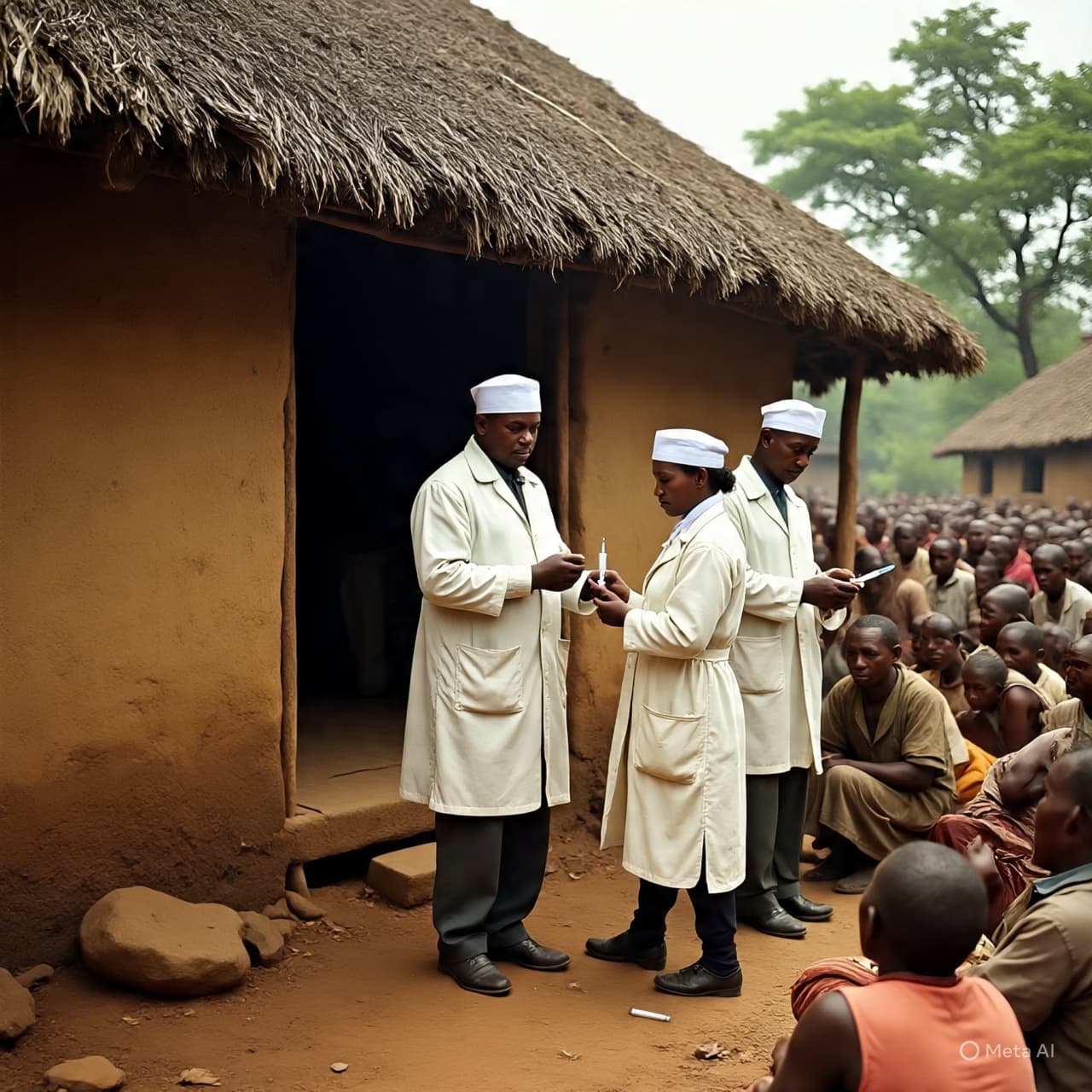
Smallpox, a disease that for centuries struck deep fear into communities around the globe, was once a scourge that blazed through populations with ruthless efficiency. By the mid‑20th century, vaccination campaigns existed, but progress stalled. Resources were limited. Scientists were weary. Yet, amid these constraints, a young doctor in eastern Nigeria saw not just obstacles but openings. Faced with too few doses to vaccinate entire villages, Foege and his colleagues devised what came to be called the “surveillance and containment” or “ring vaccination” strategy. Instead of indiscriminate mass inoculation, they focused limited supplies on the circles of people around known cases—those most likely to carry the virus forward.
The method was less about force and more about precision; less about sheer numbers and more about insight. It was a strategy born of necessity, but sustained by a confidence that even a pared‑down approach, if thoughtfully applied, could reshape the arc of an epidemic. In remote Nigerian villages, and later across states of India where smallpox still clung stubbornly, that approach gained traction. As vaccination teams traced each case and vaccinated neighbors and contacts, outbreaks shrank and vanished. By the late 1970s, smallpox had been pushed back into ever smaller pockets of transmission until, in 1980, the World Health Organization declared it eradicated—a first in human history and a triumph that some estimate has saved hundreds of millions of lives.
Foege’s optimism was not naive cheerfulness, but a grounded belief in the power of human cooperation, informed by data and anchored in experience. Colleagues recalled how he insisted on focusing attention where it was most needed, and how he took care to credit local communities for their indispensable role in the campaign’s success. Even as he rose to lead the U.S. Centers for Disease Control and Prevention from 1977 to 1983, his voice remained one of measured encouragement, urging colleagues and students alike to look beyond immediate barriers toward broader horizons.
Beyond smallpox, Foege’s influence extended into global health in ways that continue to shape efforts today. He helped found the Task Force for Global Health, worked with The Carter Center and the Bill & Melinda Gates Foundation, and championed expanded immunization programs that raised childhood vaccination rates around the world. Though the world’s challenges have evolved, the logic of his vision—a belief that the seemingly impossible can be approached through science, collaboration, and resolve—remains a guiding principle for those who seek to bend the future toward better outcomes.
In remembering Bill Foege, we see the imprint of a life lived in the service of others: a remarkable blend of optimism and rigor that helped turn a distant aspiration into a lived reality. When future generations reflect on the eradication of smallpox and the broader evolution of public health, they will encounter his name not merely as a historical footnote but as a touchstone for what human ingenuity and persistent hope can achieve together.
AI Image Disclaimer (rotated wording): “Images in this article are AI‑generated illustrations, meant for concept only.”
Sources (credible media names):
• Associated Press / PBS News Hour
• CDC Foundation
• University of Washington Magazine
• Lasker Foundation
• STAT News (obituary and analysis)
Published by Banx Network. This article is part of the Banx decentralized media programme, powered by the BXE token on the XRP Ledger.