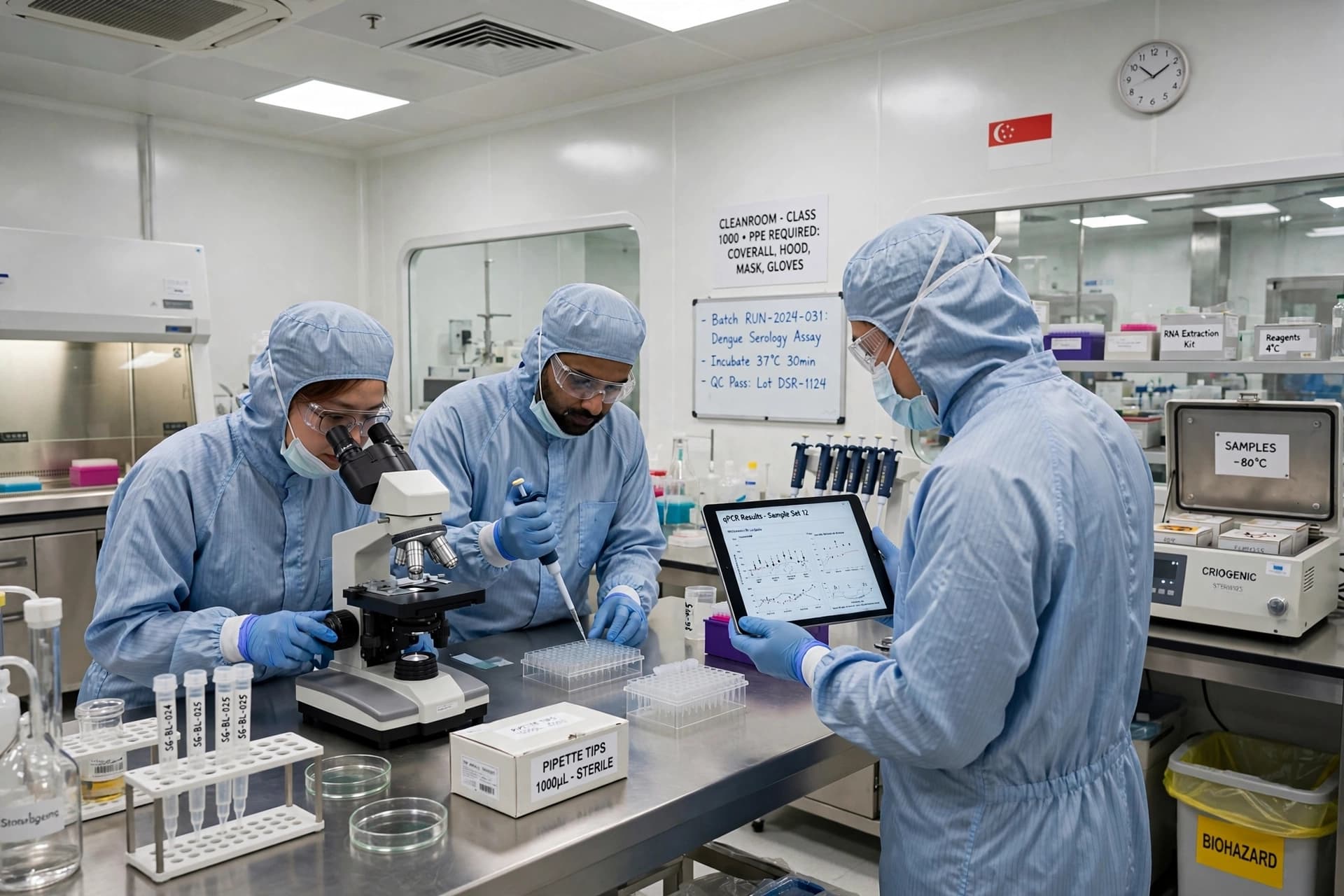
In a modern medical laboratory, discovery often begins quietly. A researcher examines a sample, a team studies a promising treatment, and months of careful work may follow before a new product reaches the people who need it. Between that first discovery and its arrival in a hospital lies a system of testing, evaluation, and regulatory review designed to protect patients while allowing useful innovations to advance.
Singapore has continued to position itself as a regional center for biomedical research and healthcare innovation. Its medical sector brings together hospitals, universities, biotechnology companies, and pharmaceutical manufacturers, creating an environment in which scientific research and commercial development can progress alongside one another.
On October 12, 2026, reports from Singapore highlighted regulatory measures intended to support the development and assessment of innovative health products. The reported approach included priority evaluation for selected products and cooperation with international regulatory partners, including the United Kingdom. The aim is to make the pathway from scientific development to clinical use more efficient without removing essential safeguards.
Regulatory review plays a central role in modern healthcare. Before medicines and medical devices can be widely used, authorities must assess evidence relating to quality, safety, and effectiveness. The process helps identify risks that may not be apparent during early laboratory work and establishes requirements for manufacturing and monitoring after a product reaches the market.
For developers, the time required to complete reviews can influence investment decisions and research planning. Small biotechnology companies may face considerable costs while moving a treatment from early experiments into clinical trials and regulatory assessment. A more predictable review process can help researchers plan their work and allow promising products to reach the next stage without unnecessary administrative delays.
Priority pathways are not necessarily shortcuts around scientific scrutiny. Depending on the applicable framework, they can involve earlier engagement with regulators, coordinated review, or a more focused assessment of products addressing important medical needs. Eligibility requirements and supporting evidence remain crucial because a faster process is valuable only when it preserves meaningful protection for patients.
International regulatory cooperation can also reduce duplication. When authorities exchange information or align parts of their evaluation procedures, developers may be able to prepare more consistent submissions across different markets. Such cooperation can be especially useful for advanced therapies, specialized medicines, and technologies intended for relatively small patient populations.
Singapore's position in Asia gives these initiatives a wider potential significance. Research developed or evaluated on the island may eventually serve patients elsewhere in the region, while international companies can use Singapore as a base for clinical development and regulatory engagement. The extent of these benefits depends on industry participation, the quality of research infrastructure, and continued confidence in regulatory decisions.
Nevertheless, faster approval is not the only measure of success. Medical products must demonstrate that their benefits justify their risks, and their performance may need to be monitored after broader use begins. Patients and healthcare professionals also need clear information about appropriate use, possible side effects, and the limits of available evidence.
The reported measures reflect Singapore's effort to balance innovation with public protection. Their practical impact will depend on the details of implementation, the products that qualify, and the evidence submitted by developers. For patients, the central question remains whether advances in medical science can become available in a timely manner while maintaining the standards that make healthcare trustworthy.
Published by Banx Network. This article is part of the Banx decentralized media programme, powered by the BXE token on the XRP Ledger.