There is a particular challenge in preparing for the unknown—the question of how to see what is coming before it arrives. In healthcare, this challenge is constant. Hospitals must anticipate surges in demand, the spread of infections, and the quiet shifts in population health that precede crises. Canada has been quietly building a system to address this, and according to a new analysis, it offers a workable template for the United Kingdom's National Health Service.
The Canadian model centers on a partnership between hospitals and public health agencies that enables the real-time sharing of anonymized patient data. The system is designed to function as an early warning network, detecting patterns that might otherwise go unnoticed—a cluster of respiratory symptoms in one region, a rise in emergency admissions for a particular condition, the first signs of an outbreak before it becomes visible through traditional surveillance .
The logic is straightforward. When data is siloed within individual hospitals, each institution sees only its own patients. It cannot see the broader picture. But when data is shared securely across a network, patterns emerge. A hospital in one city might notice an unusual number of patients presenting with similar symptoms, and a hospital in another city might see the same trend days later. Together, the data tells a story that neither institution could see alone.
For the NHS, which operates as a single national system, the appeal of such a model is significant. The NHS has struggled with data fragmentation, with different trusts using different systems and different standards. A Canadian-style partnership, adapted to the NHS context, could provide the kind of integrated surveillance that public health officials have long sought.
The analysis notes that the Canadian system was not built overnight. It required trust-building between hospitals and public health agencies, clear governance frameworks for data use and privacy, and investment in the technical infrastructure needed to share information securely. These are not trivial challenges, but they are surmountable, and the Canadian experience suggests a path forward.
For a health system like the NHS, which serves millions and operates under constant strain, the value of early warning is difficult to overstate. The ability to detect a surge before it overwhelms capacity, to identify an outbreak before it spreads, to allocate resources where they will be most needed—these are the difference between a system that reacts and one that anticipates.
The Canadian model is not without its limitations. It relies on the willingness of institutions to share data, and on the public's trust that their information will be used responsibly. But it offers a proof of concept, a demonstration that the benefits of data integration can be realized without compromising privacy or institutional autonomy. For the NHS, as it considers its own path forward, the Canadian experience offers a template that is both ambitious and practical—a way of seeing the future before it arrives.
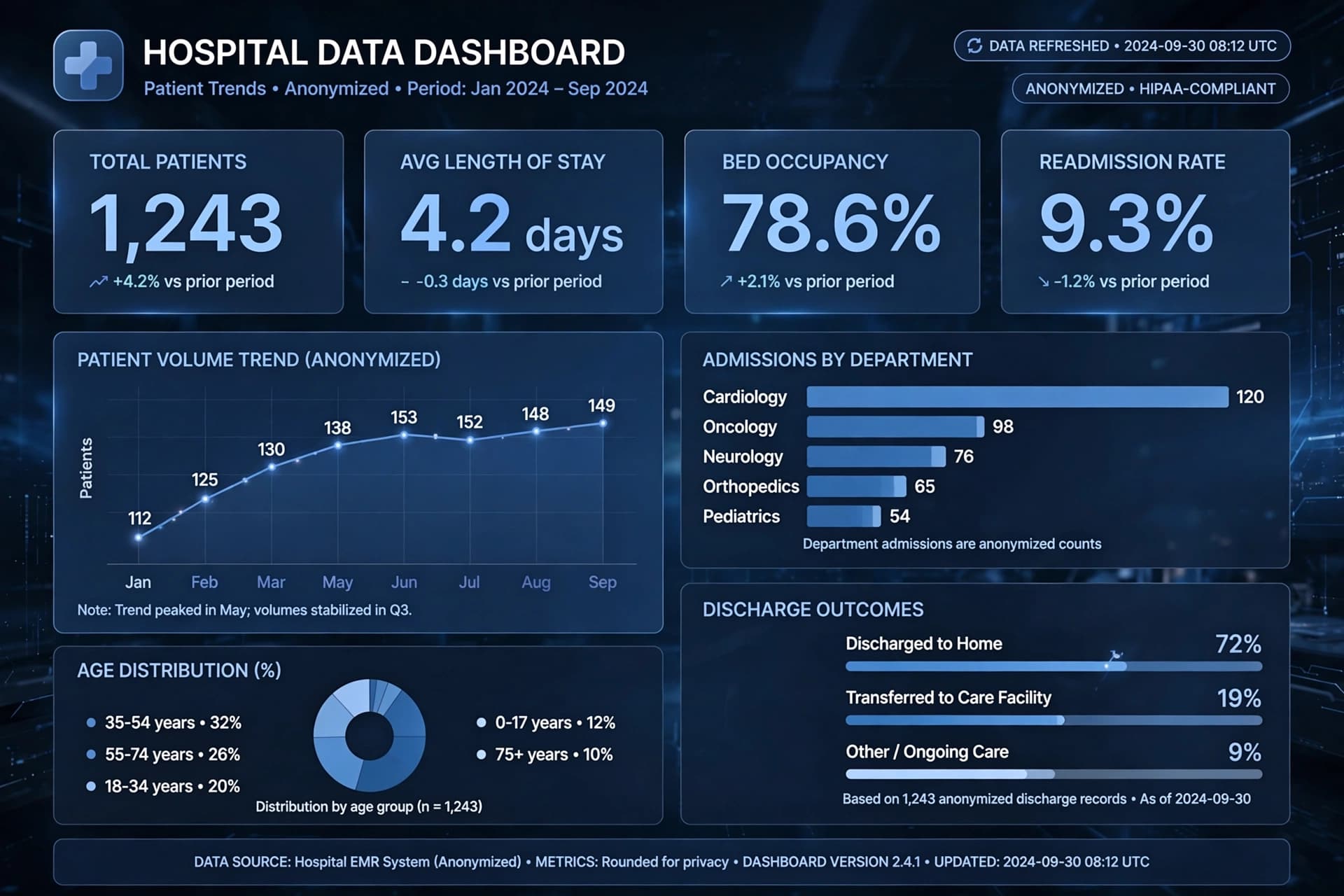
AI Image Disclaimer: The imagery in this article is AI-generated and serves an illustrative purpose only.
Sources:
· Digital Health · Canadian Institute for Health Information · NHS England
Published by Banx Network. This article is part of the Banx decentralized media programme, powered by the BXE token on the XRP Ledger.