Opening Article In the soft hush between sky and sea, clouds trace patterns that feel as familiar as old dreams. Yet for all their beauty, these drifting white tapestries have kept their secrets well — especially how they rise and fall, deep within their hidden layers. Like ancient storytellers whispering through the wind, clouds shape our weather, temper our climate, and yet elude the full understanding of those who wish to read their every movement. Recent work by the Japan Space Agency and its partners is peeling back one more veil on these aerial mysteries, revealing a new chapter in what clouds can tell us about the world beneath them.
Article Body Scientists have long known that clouds are more than floating quilts in the sky — they are dynamic engines of Earth’s climate system, rising and falling with hidden currents, and sculpting how heat and water move around the globe. But observing these internal motions from the ground is like trying to see the heart of a storm from a distant shore. For decades, instruments lacked the reach to capture the vertical dances of droplets and ice crystals on a global scale.
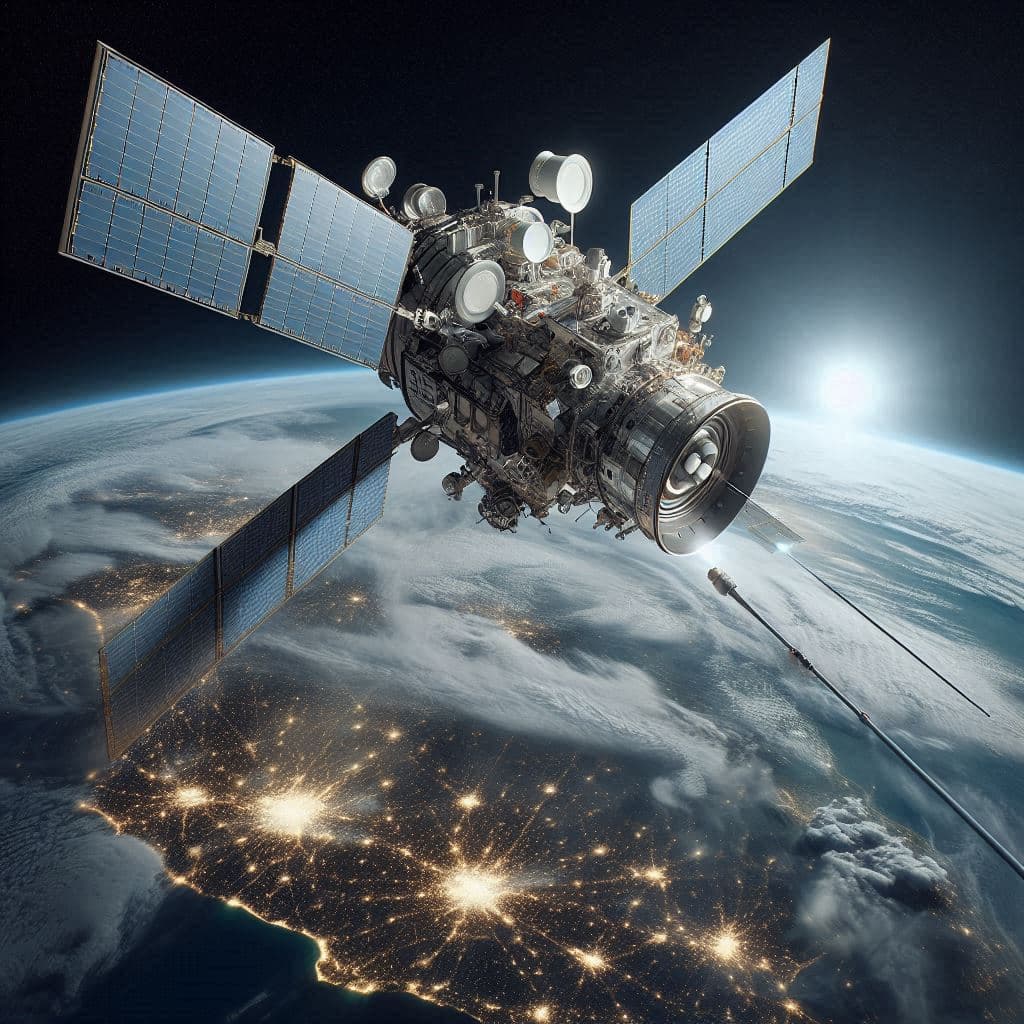
Enter the Earth Cloud Aerosol and Radiation Explorer — or EarthCARE — a collaborative satellite mission by the Japan Space Agency (JAXA) and the European Space Agency. Launched into orbit in 2024, this observatory is equipped with advanced tools, including a unique cloud-profiling radar capable of directly measuring Doppler velocities of particles within cloud layers. These measurements allow scientists to actually see how clouds move upward and downward — a breakthrough akin to reading the heartbeat of the atmosphere itself.
The first global observations of vertical air motions inside clouds are now helping researchers untangle how moisture rises to form rain, how clouds trap or reflect heat, and how these processes feed into larger climate patterns. By weaving together data from radar, lidar, imagers, and radiometers, the EarthCARE mission paints a richer, more detailed portrait of clouds than ever before. It’s a story told not in isolated snapshots but in the interplay of light, motion, and time — a tapestry as layered as the clouds themselves.
Clouds themselves may seem ethereal, but their influence is profound. These wisps and waves help regulate Earth’s temperature, shape weather systems, and in some ways carry the pulse of our changing climate. Understanding their internal shifts could sharpen weather forecasts, improve climate models, and refine our view of how Earth’s atmosphere reacts to a warming world.
Closing Article In sharing these new findings, scientists offer not judgments, but clues — subtle hints in the vast conversation between Earth and sky. As data continues to flow from EarthCARE’s instruments, our picture of cloud dynamics will grow clearer, and with it, our grasp of the atmospheric forces that touch every corner of the planet. Tonight, when clouds gather above us, we may see not just white shapes, but the gentle rhythms of a world in motion.
AI Image Disclaimer (Rotated) “Visuals are created with AI tools and are not real photographs.”
Sources The Manila Times Scientific Reports / Nature European Space Agency press coverage Popular Science Atmospheric Measurement Techniques journal articles
Published by Banx Network. This article is part of the Banx decentralized media programme, powered by the BXE token on the XRP Ledger.