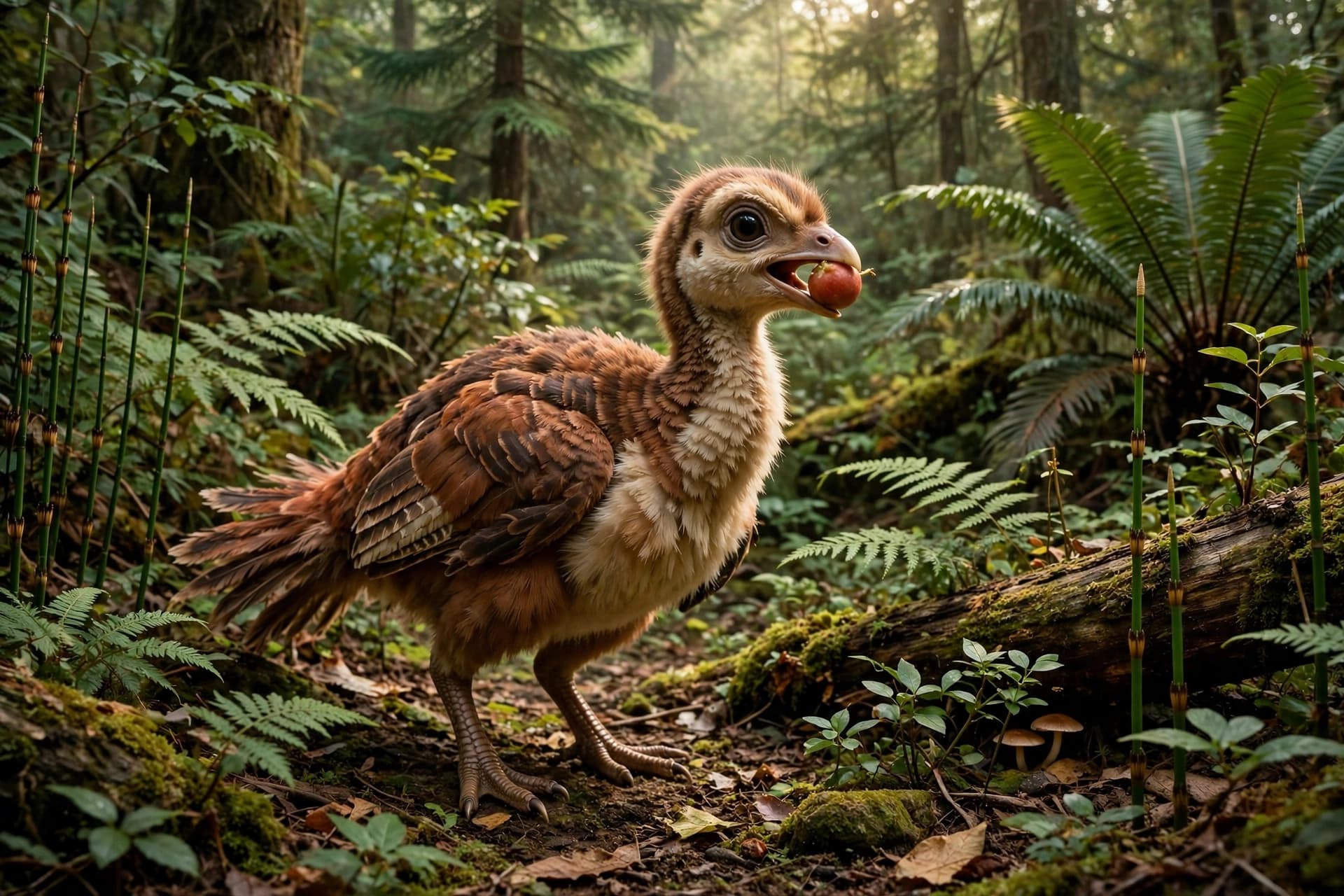
The name arrives first, and it arrives with a grin: Infernogallus jamesi, the "hell chicken." It conjures an image of something fierce and ridiculous, a feathered creature with a bad attitude and perhaps a taste for blood. The reality, as paleontologists have now described it, is stranger and more endearing. This turkey-sized dinosaur, which lived alongside Tyrannosaurus rex and Triceratops some 67 million years ago, appears to have been a fruit-eater—the first known dinosaur specially adapted to dine on the soft, fleshy produce of the Cretaceous .
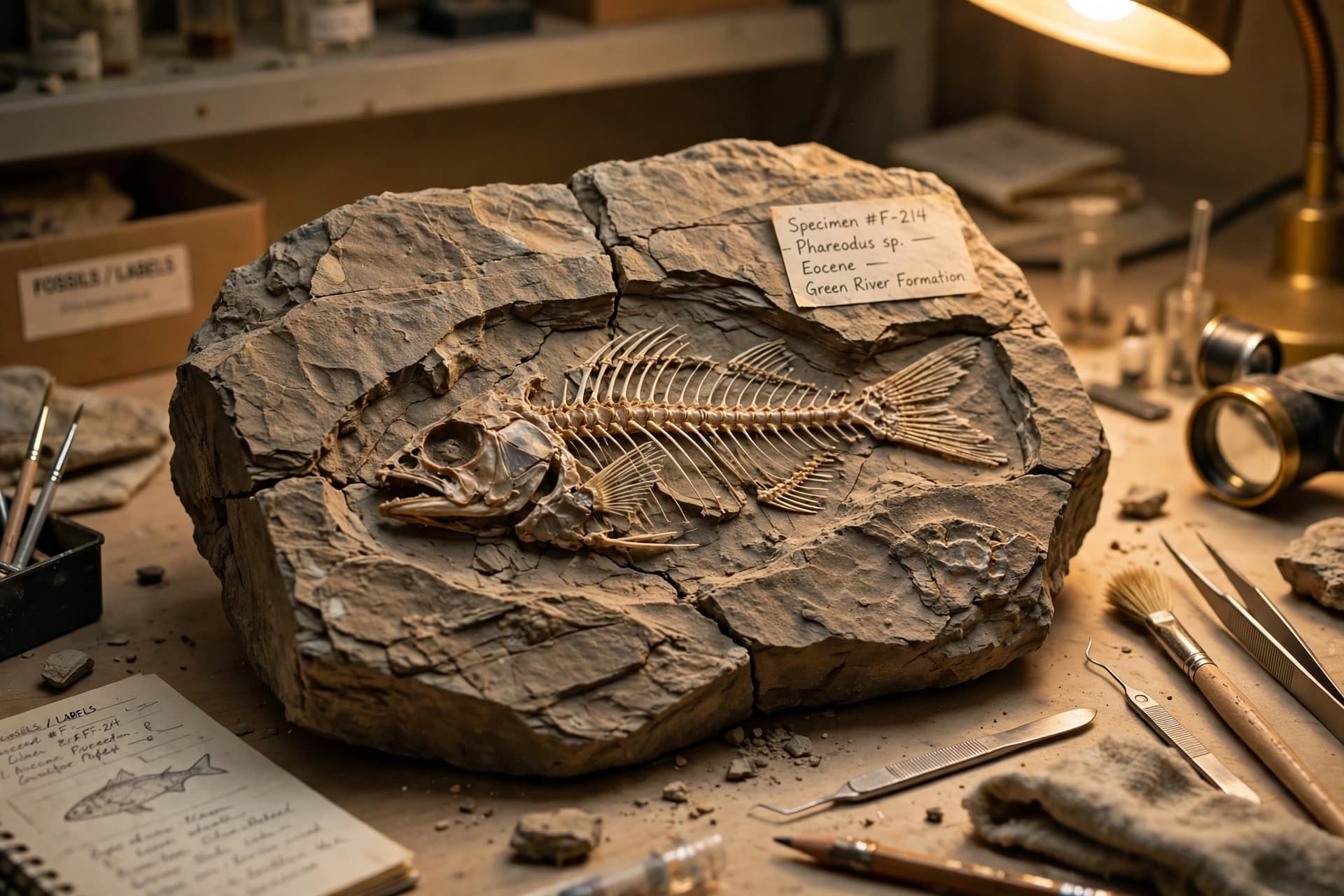
The fossil was unearthed in 2011 in the Hell Creek Formation, a region spanning much of the western United States and parts of Canada. Back then, it was a humid, forested landscape, and Infernogallus was a small presence among giants . The nearly complete skull and partial skeleton, now at the Royal Ontario Museum, represent the fullest discovery yet of a caenagnathid—a group of toothless, feathered, bird-like dinosaurs . For paleontologists accustomed to fragments, a skull like this is a gift.
What the skull revealed was unexpected. Using CT scans to reconstruct the internal anatomy, researchers found that the bones forming the roof of the mouth arched downward in a way that repositioned the jaw muscles . Instead of the vertical, up-and-down bite of most dinosaurs, Infernogallus could slide its lower jaw forward and backward, a motion familiar to anyone who has chewed a piece of fruit. The arrangement is strikingly similar to that of modern parrots, particularly fruit-specializing species like the Vulturine Parrot .
The muscles in question, the pterygoids, are beefy in animals that mash soft plant material. Infernogallus also had distinct ridges on its beak, another feature associated with processing soft foods . Lead author Greg Funston of Stony Brook University suggested the dinosaur likely fed on drupes—fruits with a hard central pit surrounded by softer flesh, the Cretaceous equivalent of cherries and peaches . The timing fits: the Infernogallus lineage appears to have begun specializing in fruit just as drupes evolved and diversified, a quiet evolutionary partnership written in stone.
Not everyone is entirely convinced. Case Vincent Miller, a paleontologist not involved in the study, noted that distinguishing between adaptations for fruit exclusively and for other soft plant material like shoots and buds is difficult . Riley Black, another independent paleontologist, described the evidence as "circumstantial" for the moment, though she acknowledged the beaky face and small size leave little doubt the animal was eating soft foods . Direct proof would require finding fruit preserved in the creature's gut—a rare and fortuitous circumstance.
Still, the interpretation has found support among respected voices. Steve Brusatte of the University of Edinburgh called it a fantastic discovery, one that "finally reveals the face of a dinosaur fruit eater" . The find also helps fill a gap in the fossil record. For years, paleontologists struggled to understand how dinosaur evolution matched the emergence and spread of flowering plants and their fruits. Infernogallus offers a partial answer: at least some dinosaurs were paying attention to the new menu.
The name, for all its humor, is a reference to the Hell Creek Formation rather than the animal's disposition. Funston described it as a cross between an emu and a parrot, and suggested it was "probably quite vicious in personality" . A twelve-kilogram bird-like dinosaur with a beak and a attitude is not difficult to imagine as a handful. But its legacy, written in the architecture of its skull, is one of adaptation rather than aggression—a small creature finding its niche in a world of giants, one soft fruit at a time.
Image note: The images in this article were generated by artificial intelligence and do not depict the actual fossil or the living animal.
Sources: Science (AAAS), Discover Magazine, CBC Radio, EurekAlert, ThePrint
Published by Banx Network. This article is part of the Banx decentralized media programme, powered by the BXE token on the XRP Ledger.