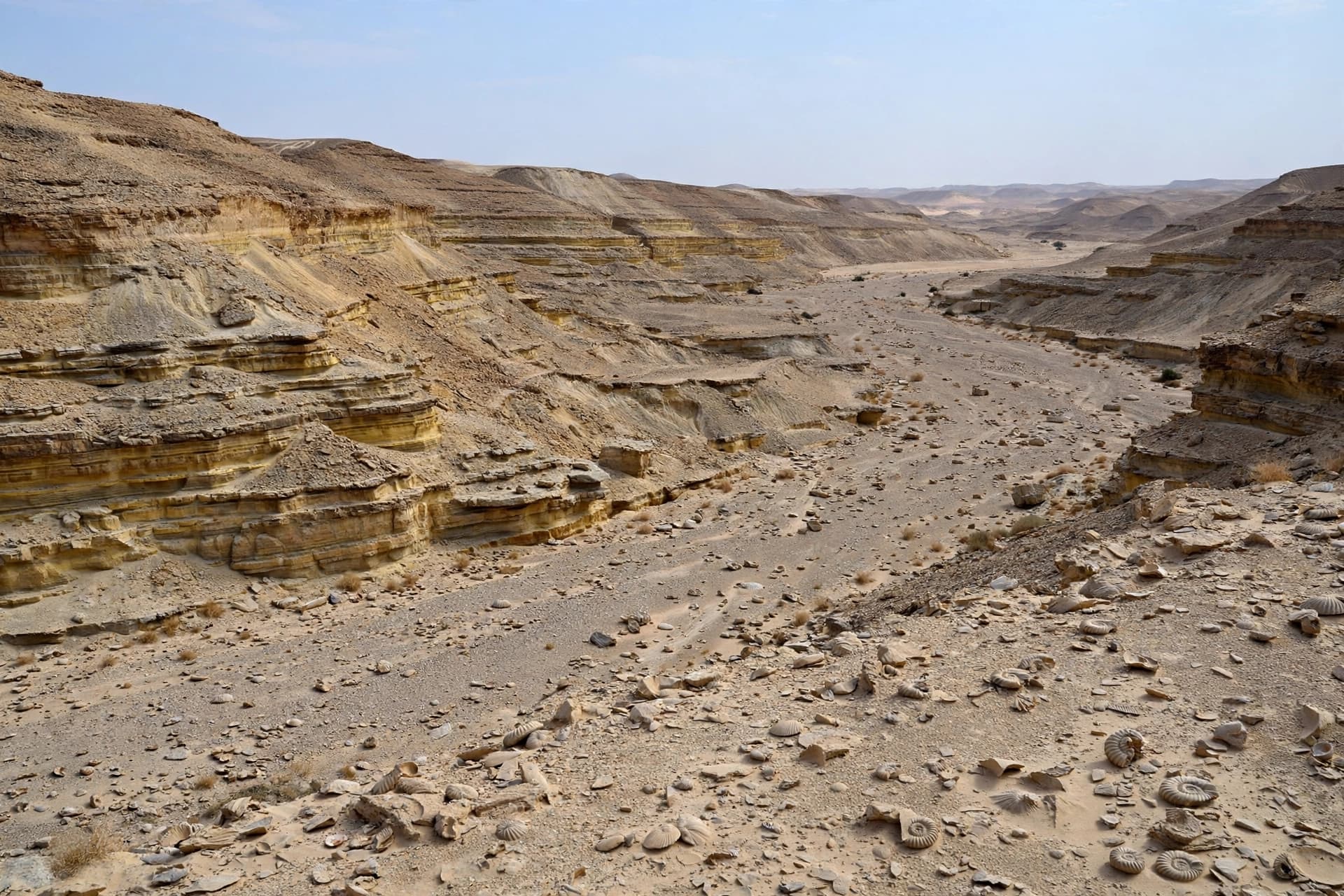
There is a particular kind of silence that settles over a desert excavation when a piece of the deep past finally surfaces. It is not the silence of emptiness, but of anticipation—the quiet recognition that a small fragment of bone might carry implications far larger than its physical size. In the dry valley of Wadi Moghra in northern Egypt, that silence arrived in the form of a jawbone, weathered by millennia yet still holding the shape of something familiar. For decades, the story of ape origins has been told largely through fossils unearthed in East Africa, a narrative so entrenched that few thought to look elsewhere. This small, unassuming jaw suggests the story may have had another chapter, written in a different corner of the continent .
Researchers have named the newly identified species Masripithecus moghraensis, a creature that lived roughly 17 to 18 million years ago during the Early Miocene . The genus name draws from Masr, the Arabic word for Egypt, and pithekos, the Greek word for ape—a fitting tribute to the place that yielded this unexpected discovery. The fossils themselves are modest: portions of a lower jaw and a handful of teeth. Yet within those teeth, with their low, wrinkled crowns and thick enamel, lies evidence of a creature adapted to cracking hard fruits, nuts, and seeds in a seasonal forest environment . The robust jaw and distinctive dental features suggest an animal capable of dietary flexibility, a trait that would have served it well in a world of shifting climates.
What makes Masripithecus particularly significant is not merely its geography but its position on the evolutionary tree. Using sophisticated Bayesian analytical methods that combine anatomical data from living and extinct apes with genetic information and fossil ages, the research team concluded that this species is more closely related to the lineage leading to all living apes—including humans—than any known ape from the Early Miocene of East Africa . In simpler terms, this northern Egyptian ape may sit closer to the root of the family tree that eventually produced gibbons, orangutans, gorillas, chimpanzees, and ourselves.
The implications ripple outward. For years, the prevailing view held that the common ancestor of modern apes emerged somewhere in East Africa, a conclusion shaped as much by where paleontologists happened to dig as by the fossils themselves. The fossil record of hominoids in Africa has been geographically biased, concentrated in a few well-explored regions while vast stretches remained unexamined . The discovery at Wadi Moghra does not overturn the East African record; rather, it adds a crucial piece to a puzzle that had been missing its northern edge. As one of the study's authors observed, the findings confirm that paleontologists might have been looking for crown-hominoid ancestors in the wrong place .
Geologically, the timing of Masripithecus places it at a crossroads. During the Early Miocene, the African and Arabian plates were drifting northward, gradually narrowing the marine barriers that separated Afro-Arabia from Eurasia. Sea levels fluctuated, periodically transforming the region into a natural corridor for animal dispersal . Masripithecus existed in this transitional zone, a creature poised at the threshold of a great migration. When land connections eventually formed, apes would spread into Europe and Asia, diversifying into the variety of forms that would populate the Miocene world.
The research team's biogeographic analyses point toward northeastern Africa and the Middle East as the most likely homeland for the common ancestor of all living apes . This is a hypothesis rather than a certainty, and the fossil record remains incomplete. But the discovery shifts the center of gravity in a long-running debate, inviting scholars to reconsider assumptions that had hardened into convention. The jawbone from Wadi Moghra is not a dramatic specimen—no complete skeleton, no preserved limbs to reveal how the creature moved. It is, instead, a quiet nudge toward a broader understanding.
In the careful language of the published study, the evidence suggests that crown Hominoidea might have originated during the Early Miocene in the underexplored northeastern part of Afro-Arabia, rather than in eastern Africa or Eurasia . That sentence, measured and cautious, represents a significant redrawing of the map. It reminds us that scientific narratives are always provisional, always subject to revision by a fragment of bone in a desert valley.
The story of human origins is, in the end, a story told in fragments. A jaw here, a tooth there, each piece offering a glimpse of a world long vanished. The fossil from Wadi Moghra does not answer every question, nor does it close the book on ape evolution. But it opens a window onto a region and a time that had remained in shadow, suggesting that the path to modern apes may have begun not in the familiar landscapes of East Africa, but in the biogeographic crossroads of northern Egypt.
Image Disclaimer: The visual accompanying this article was generated by artificial intelligence and is intended for illustrative purposes only.
Sources: Science, EurekAlert, National Geographic, Mansoura University Vertebrate Paleontology Center
Published by Banx Network. This article is part of the Banx decentralized media programme, powered by the BXE token on the XRP Ledger.