Key Highlights
- Launch Time:ULA's Vulcan rocket lifted off at 12:40 p.m. ET.
- Satellite Loss:40 Amazon Leo satellites were lost due to a launch failure.
- Investigation:ULA will conduct a thorough review of the incident.
On Sunday afternoon, the United Launch Alliance (ULA) faced a significant setback when its Vulcan rocket failed shortly after liftoff from Cape Canaveral. The rocket was tasked with delivering the first batch of Amazon's low Earth orbit (LEO) broadband satellites, but just ten minutes into the flight, an anomaly occurred, resulting in the loss of 40 satellites. This incident marks a critical moment for ULA, which has been working to establish the Vulcan as a reliable launch vehicle.
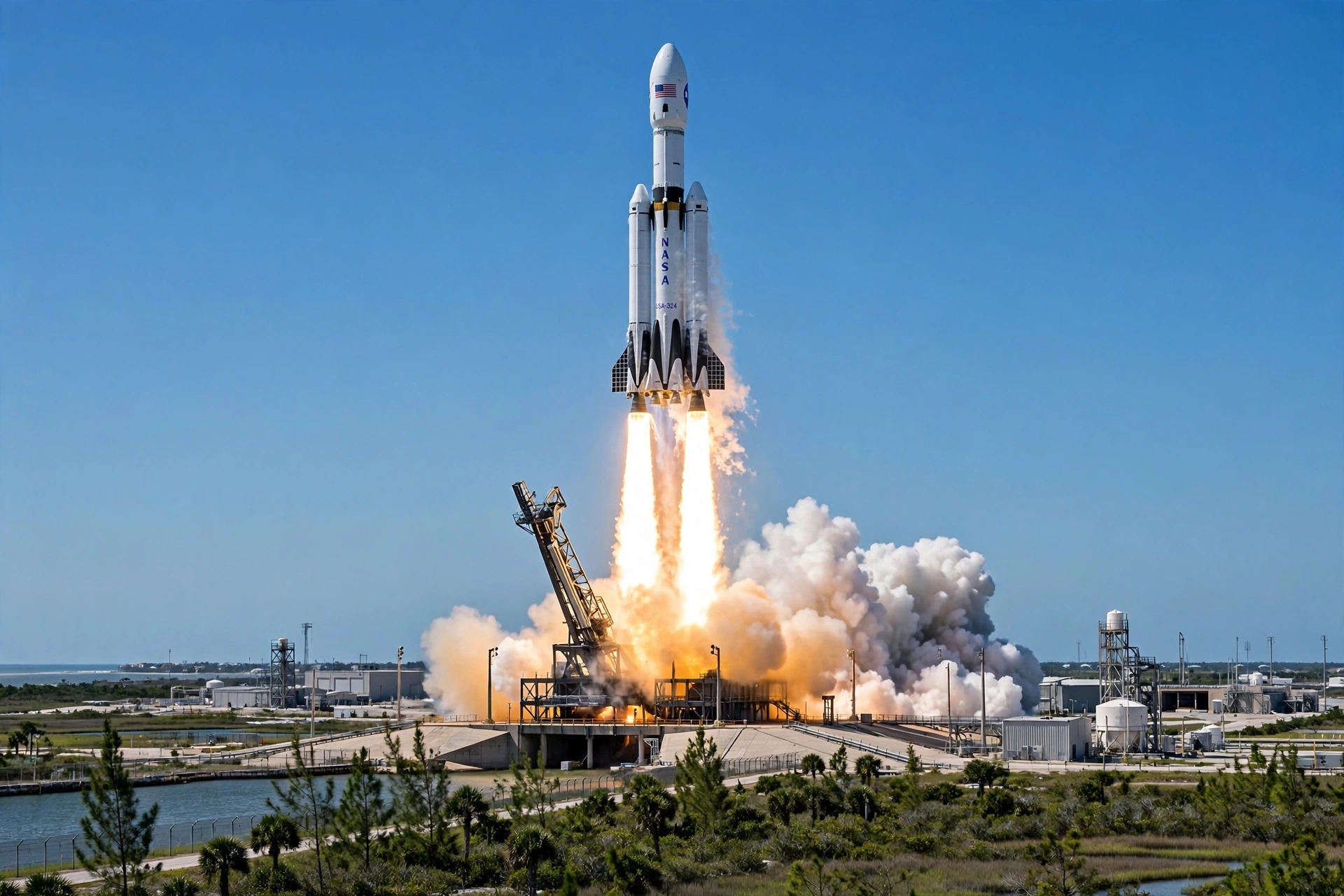
The Vulcan rocket lifted off at 12:40 p.m. Eastern time from Space Launch Complex 41, carrying Amazon's satellites as part of a larger 38-launch contract. Initial stages of the flight proceeded as planned, with the solid boosters and first-stage engines performing correctly. However, after the separation of the first stage, the hydrogen-fueled Centaur upper stage encountered a failure during its burn, preventing the payload from reaching its intended orbit. ULA's launch director confirmed the failure, stating, "Today, we did not meet that standard."
This incident represents the first outright failure of a ULA rocket since the company's formation in 2006, and it is particularly significant given that this was only the fifth flight of the Vulcan rocket. The vehicle had previously been grounded for nine months due to issues with its solid rocket boosters, and this latest failure raises questions about its reliability. The Vulcan is intended to replace ULA's aging Atlas V fleet, making its success crucial for the company's future.
In response to the failure, Amazon issued a statement acknowledging the inherent risks associated with inaugural missions. "There is risk with any launch, and that's especially true for inaugural missions like LV-01," the company stated. Amazon has diversified its launch strategy by securing contracts with multiple providers, including Blue Origin and SpaceX, to ensure the completion of its satellite constellation, which requires over 3,300 satellites. The recent failure means that only 436 satellites have been launched to date.
The implications of this failure extend beyond the immediate loss of hardware. ULA will now face a grounding period while engineers analyze telemetry data to understand the cause of the anomaly. This investigation will be closely monitored by NASA, which relies on ULA for various scientific missions, and by the broader aerospace industry, where Vulcan is seen as a competitor to SpaceX's Falcon and Blue Origin's New Glenn. NASA Administrator Jared Isaacman expressed support for ULA, emphasizing the importance of the company for future missions, including the Artemis program.
As ULA embarks on the investigation process, the focus will be on telemetry review, component testing, and reconstructing the failure that occurred in mere seconds. ULA has committed to transparency throughout this process, and Amazon has expressed patience as they await the results. While the satellites are lost, the contract remains intact, and the Vulcan rocket is expected to return to the launch pad in the future.
The recent anomaly serves as a stark reminder of the uncertainties inherent in spaceflight, where even the most meticulously engineered systems can fail unexpectedly. The quiet acknowledgment of the changed schedule reflects the reality of the aerospace industry, where lessons learned from failures are crucial for future success. The Vulcan rocket will fly again, but the timeline for its next mission remains uncertain as the investigation unfolds.
The images in this article are AI-generated and do not depict the actual launch or vehicle.
Published by Banx Network. This article is part of the Banx decentralized media programme, powered by the BXE token on the XRP Ledger.