Key Highlights
- New Research:A study reveals unique ecosystems within deep-sea polymetallic nodules.
- Biodiversity Threat:Mining could lead to irreversible losses of unique species.
- Urgent Need:The findings call for careful environmental management in deep-sea mining.
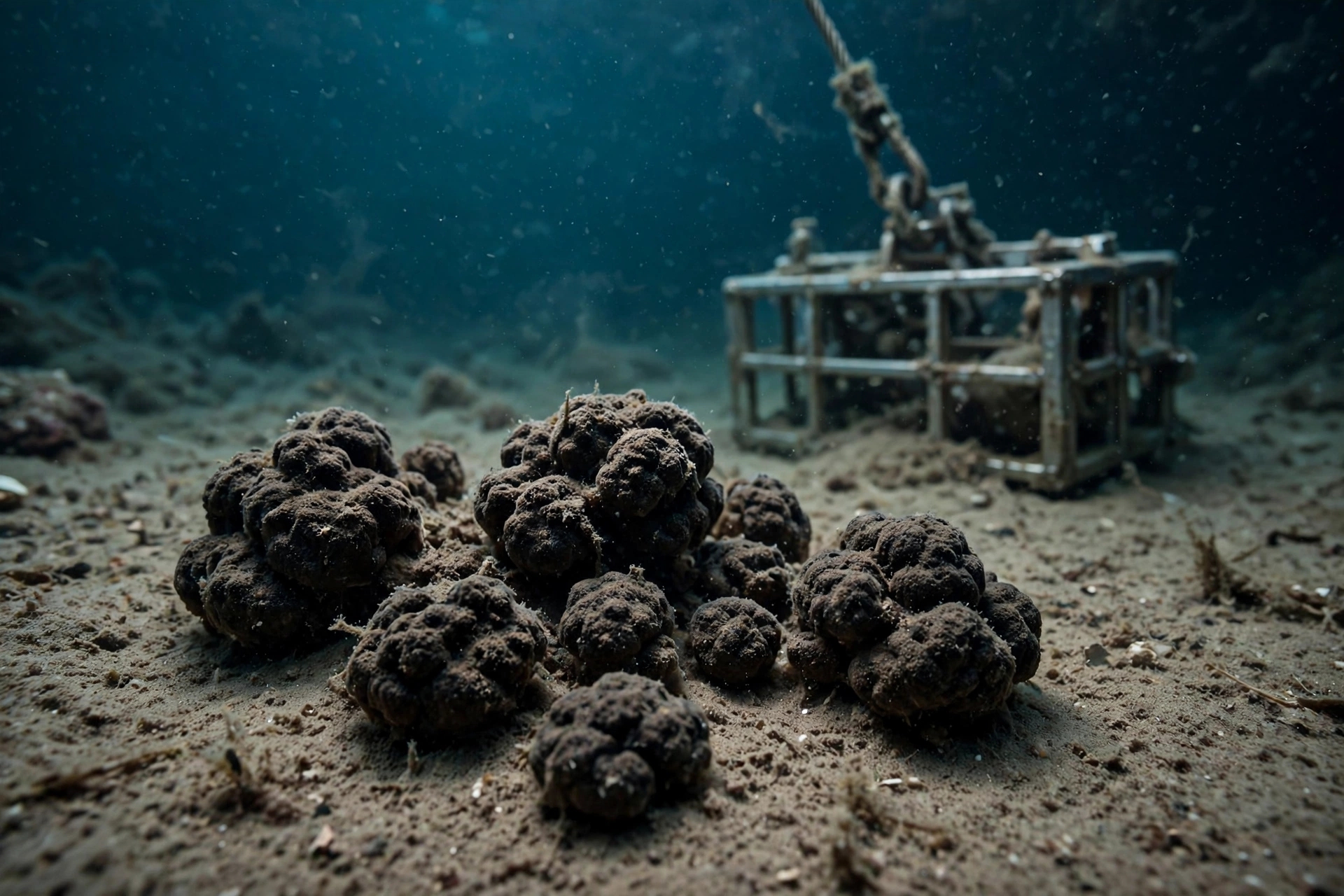
A recent study published in Scientific Reports has unveiled a hidden world within the lumpy, dark rocks known as polymetallic nodules, found scattered across the abyssal plains of the Pacific Ocean. These nodules, rich in valuable metals such as nickel, cobalt, and copper, have long been viewed primarily as resources for modern technology. However, researchers have discovered that they are also homes to diverse microscopic life, forming unique ecosystems that could be threatened by increasing mining activities.
The research team, aboard the German research vessel RV Sonne, collected 244 nodules from the Clarion-Clipperton Zone, a vast area of the Pacific Ocean located between Hawaii and Mexico. By lowering a box corer to depths of four to six kilometers, they retrieved seafloor sediment containing these nodules. Upon examination, scientists found a bustling miniature ecosystem within the nodules, inhabited by roundworms, crustaceans, bristleworms, mud dragons, tardigrades, and an armored amoeba known as Thurammina. Notably, the communities residing inside the nodules were distinct from those in the surrounding sediments, with nodule communities separated by nearly a thousand kilometers showing more similarity to each other than to their nearby sediment counterparts.
Marine genomicist Coral Diaz-Recio Lorenzo expressed surprise at the findings, emphasizing the uniqueness of the nodule communities. This discovery has significant implications for biodiversity conservation in the Clarion-Clipperton Zone, where previous surveys have largely focused on organisms living on the sediment surface rather than within the nodules themselves. The study suggests that protecting sediment habitats alone may not suffice to preserve the unique biodiversity associated with these nodules. "Large-scale nodule removal could therefore result in irreversible losses of unique species and ecological communities that we are only beginning to understand," warned Diaz-Recio Lorenzo.
The timing of this research is critical, as the demand for the metals found in these nodules is rapidly increasing. Deep-sea mining companies have secured exploration contracts from the International Seabed Authority for various tracts within the Clarion-Clipperton Zone. While extracting a nodule may take mere minutes, the formation of these nodules has taken millions of years, making them a non-renewable resource. The ecosystems they support have existed in their ancient, slow manner long before human civilization emerged.
Deep-sea biologist Sabine Gollner from the Royal Netherlands Institute for Sea Research highlighted the urgency of the situation. "Our findings point out that commercial mining may result in an irreversible loss of undescribed and unique biodiversity associated with nodules," she stated. Gollner emphasized the need for this consideration in the environmental management of deep-sea mining. The research does not advocate for a complete halt to mining activities but stresses the importance of accounting for the potential ecological costs, which are only beginning to be understood.
As scientists race to comprehend the ecosystems within these metal potatoes, the urgency grows. The findings serve as a reminder that life can thrive in the most unexpected places, and the smallest organisms can have profound implications for our understanding of biodiversity and environmental stewardship. For now, these nodules remain on the seafloor, harboring their microscopic communities in the dark, awaiting the machinery that could change their fate forever.
The images in this article are AI-generated and do not depict the actual nodules or researchers.
Published by Banx Network. This article is part of the Banx decentralized media programme, powered by the BXE token on the XRP Ledger.