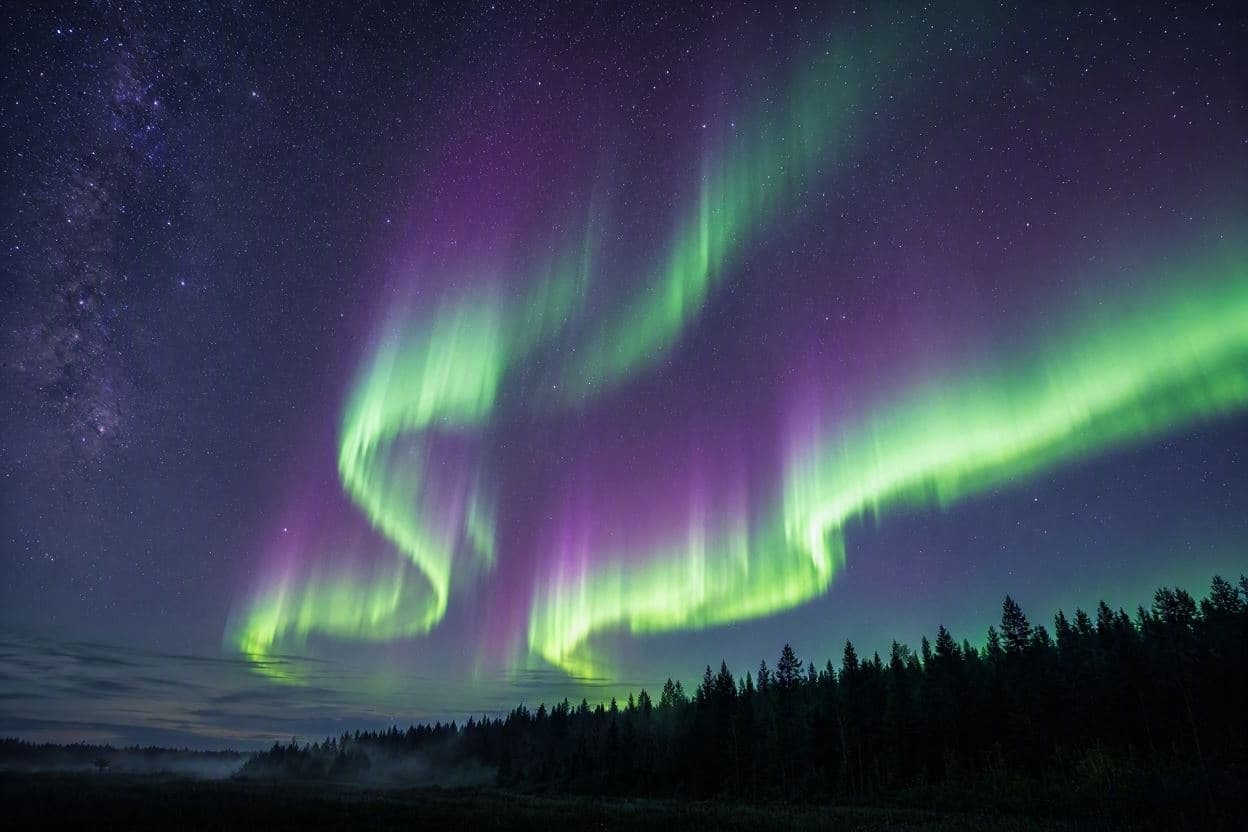
There is a quiet anticipation that builds when the sun stirs, sending waves of charged particles hurtling toward our planet. For those living in northern latitudes, this solar activity often translates into a spectacular display of light, painting the night sky with ribbons of green, pink, and violet. This week, forecasters predict that a moderate geomagnetic storm will bring the aurora borealis within view of residents in twelve U.S. states, offering a rare opportunity to witness this celestial dance without traveling to the Arctic Circle.
The National Oceanic and Atmospheric Administration (NOAA) has issued a G1 minor geomagnetic storm watch, indicating that conditions may be favorable for auroral visibility as far south as New York, Wisconsin, and Washington. While the intensity may not match the historic storms of recent years, the clarity of the display will depend largely on local weather conditions and light pollution. Clear skies and dark locations remain the best allies for any aspiring aurora hunter.
The phenomenon occurs when solar wind interacts with Earth’s magnetic field, funneling energetic particles into the upper atmosphere. There, they collide with oxygen and nitrogen atoms, causing them to emit light. The color of the aurora depends on the type of gas and the altitude of the collision, with green being the most common due to oxygen at lower altitudes. Understanding this mechanism adds a layer of appreciation to the visual spectacle, connecting the viewer to the physical processes governing our solar system.
For photographers and enthusiasts, timing is crucial. The best viewing window is typically around local midnight, when the sky is darkest and the auroral oval is most likely to dip southward. Patience is key, as the lights can appear suddenly and fade just as quickly. Bringing a tripod and a camera capable of long exposures can help capture details that the naked eye might miss, preserving the memory of the event.
Community groups and online forums often share real-time updates, helping viewers locate the best spots. Local parks, rural areas, and bodies of water with reflective surfaces provide ideal settings. It is a communal experience, even for those watching alone, as thousands of people across the continent look up in shared wonder at the same natural phenomenon.
While the forecast offers hope, it is important to manage expectations. Geomagnetic activity can be unpredictable, and cloud cover can easily obscure the view. Nevertheless, the possibility of seeing the aurora serves as a reminder of the dynamic relationship between the sun and Earth, a connection that influences everything from satellite communications to the beauty of our night sky.
As the evening approaches, many will find themselves checking the sky, hoping for a glimpse of the lights. Whether the display is faint or vibrant, the act of looking up fosters a sense of connection to the natural world. It is a moment of pause in our busy lives, inviting us to appreciate the subtle miracles that occur above our heads.
In the end, the aurora is more than just a weather event; it is a testament to the power and beauty of our star. By witnessing it, we participate in an ancient human tradition of awe and curiosity, finding joy in the luminous gifts of the cosmos.
AI Image Disclaimer: The images accompanying this article are AI-generated artistic interpretations of the aurora borealis and do not represent actual photographs of the predicted event.
Sources: NOAA Space Weather Prediction Center Space.com Live Science
Published by Banx Network. This article is part of the Banx decentralized media programme, powered by the BXE token on the XRP Ledger.