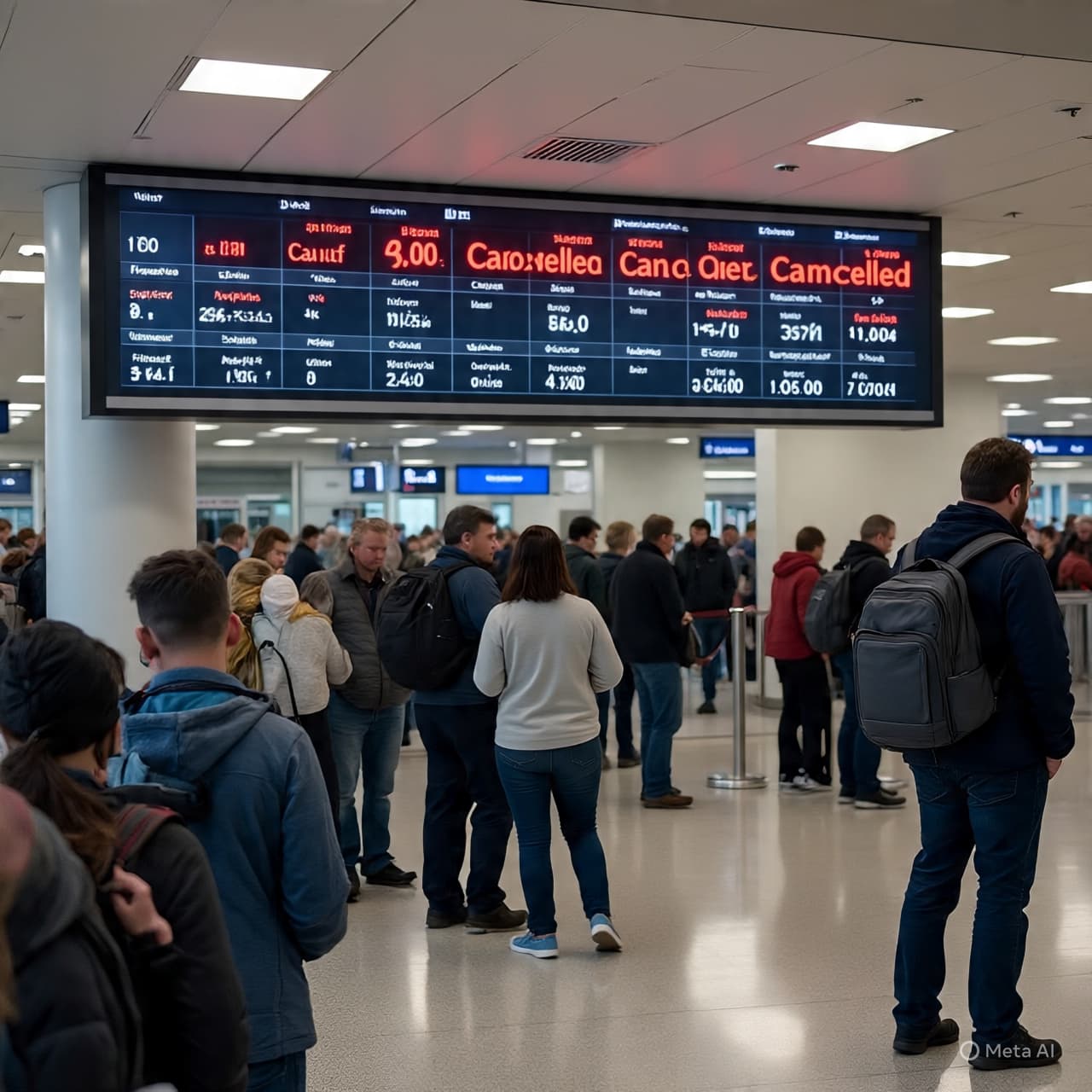
In an unexpected quiet that still reverberates across bustling terminals, the U.S. air travel system finds itself in a moment of grounded pause. Airports that normally hum with departures and arrivals instead display a tangle of cancelled flights and anxious travellers, a visible reflection of a government stand-still playing out in the skies.
On the second day of mandated reductions, more than 1,000 flights were cancelled nationwide by airlines complying with the Federal Aviation Administration’s order to cut operations at roughly 40 major airports. The root cause lies in the ongoing federal government shutdown: thousands of air traffic controllers and other essential personnel have been working without pay, leading to increased absenteeism and safety concerns. At selected major hubs—Atlanta, Chicago, Newark, Denver—long waits, rebookings, and uncertainty have become the new normal.
For many travellers, what began as routine plans turned into contingency modes. “We always hope nothing goes wrong,” one passenger said, “but this felt like being on standby before we even left home.” Some airlines reassured that international flights were largely unaffected, but warned that the disruption could broaden if the shutdown continues. The FAA has indicated that flight reductions could climb from around 4% up to 10% or more at those key airports if staffing shortages deepen.
Among the hidden ripples: air-freight shipments carried in passenger aircraft bellies may slow, adding cost and delay to goods in transit. Rental car demand is already rising as some travellers opt to drive instead of risk further cancellations. This disruption reminds us how integrated our travel networks are—and how fragile they become when essential links are deferred.
Yet there’s a measure of resilience too. Airlines and airports are scrambling to rebook passengers, deploy extra staff, and communicate changes. Passengers are adjusting, checking statuses, and seeking alternate routes. The question isn’t just how many flights are grounded, but how quickly normal rhythm will return once the shutdown resolves.
As the holiday travel season approaches, the stakes grow higher. A prolonged shutdown would not only affect weekend leisure travellers—it could ripple into business travel, freight supply chains, tourism, and across sectors that rely on timely air transport.
The second consecutive day of over 1,000 cancelled flights underscores the tangible impact of the government shutdown on U.S. air travel. Airlines, airports, and travellers face ongoing disruptions—and should the shutdown persist, the cascading consequences may extend beyond delays and rebookings into broader economic and logistical terrain.
AI Image Disclaimer Graphics are AI-generated and intended for representation, not reality.
Sources : The Associated Press Reuters CBS News ABC News Business Insider
Published by Banx Network. This article is part of the Banx decentralized media programme, powered by the BXE token on the XRP Ledger.