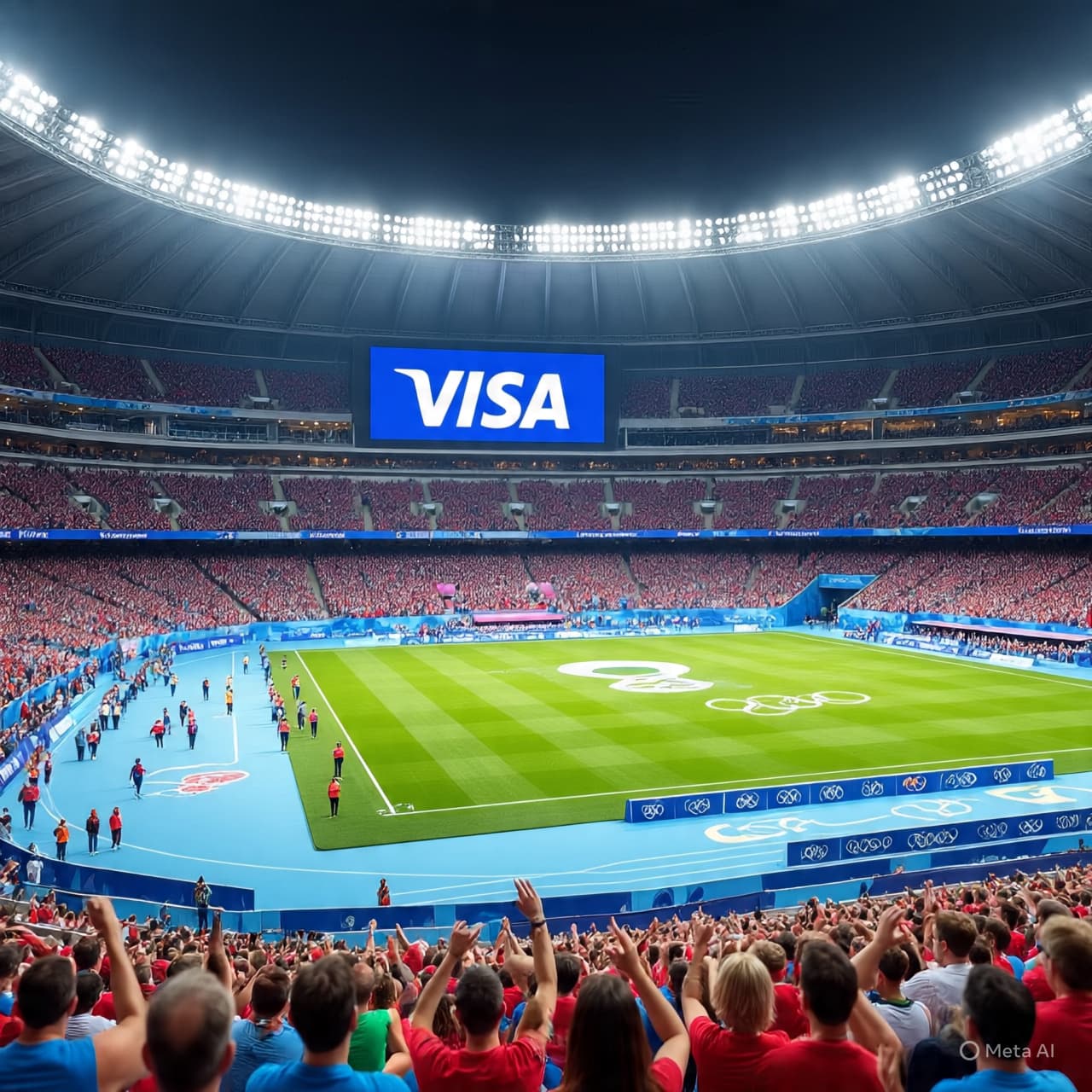
In the world of global sports, few stages hold as much weight and anticipation as the Olympics. It's a spectacle of human achievement and international unity, a time when nations come together under the banner of competition. Yet, behind the shimmering displays of athleticism, there is another race taking place—one that is less visible but just as crucial. It is a race to control the flow of money, the currency of modern sports. In this context, Visa’s near-total monopoly over payment systems for the Olympic Games emerges as a quietly growing concern for Europe. The longstanding partnership between Visa and the International Olympic Committee (IOC) is not merely a contract; it is the backbone of financial transactions for one of the world’s most-watched events. But as this arrangement continues, questions about the fairness and flexibility of such an exclusive deal begin to surface, especially when viewed through the lens of Europe’s increasingly complex payment ecosystem. Visa’s exclusive status as the payment processor for the Olympic Games creates a monopoly that extends far beyond the mere swiping of cards. It is an all-encompassing agreement that sees Visa’s logos gracing Olympic venues, sponsorship banners, and even Olympic merchandise. This global reach gives Visa unmatched influence in shaping the financial infrastructure of the Games, yet it also raises the question: what does this mean for other payment providers, particularly in Europe, where the financial landscape is far more fragmented? Unlike in other regions, Europe’s payment systems are a mosaic of diverse options, from traditional banks to modern fintech solutions. The European Union has long championed consumer choice and competition, yet Visa’s exclusive partnership with the Olympics restricts this. While the U.S. benefits from the ubiquity of Visa’s dominance, Europeans are often left with limited options when it comes to making Olympic-related purchases or participating in sponsorship-driven experiences. The heart of the issue lies in how such exclusivity affects consumers. In an age where mobile payments, contactless technology, and digital wallets have revolutionized the way people make transactions, Europe’s broader payment market remains stifled by the IOC's longstanding commitment to Visa. Consumers may find themselves restricted to a single method of payment, one that may not align with their preferred choice or the payment infrastructure they rely on. What’s more, Visa’s position allows it to maintain a level of influence over global sports that few companies hold in any industry. This power comes at a cost: the ecosystem around payments in sports becomes less innovative, and the potential for new players to introduce fresh ideas to the market diminishes. Europe, with its vibrant fintech scene and strong regulatory oversight, could be the breeding ground for alternative models of sponsorship and payment partnerships. But, for now, Visa’s stranglehold over the Olympics stymies that possibility. The dominance of Visa in the Olympic arena is a reflection of the intricate dance between sports, sponsorship, and finance. It serves as a reminder of the evolving nature of global commerce, where the lines between sportsmanship and business are often blurred. As the 21st century progresses, however, the question of how best to balance tradition with innovation remains open. Europe’s complex payment ecosystem might eventually find a way to navigate this tangled web, but for now, the Olympic Games will continue to run on Visa’s terms—at least until the next wave of change comes. Whether that change is driven by consumer demand or regulatory reform is still uncertain, but it will no doubt shape the future of global sporting sponsorships. AI Image Disclaimer (Rewritten): “Images in this article are AI-generated illustrations, meant for concept only.” “Visuals are created with AI tools and are not real photographs.” “Illustrations were produced with AI and serve as conceptual depictions.” “Graphics are AI-generated and intended for representation, not reality.” Sources: The Financial Times Reuters Bloomberg The Wall Street Journal CNBC
Published by Banx Network. This article is part of the Banx decentralized media programme, powered by the BXE token on the XRP Ledger.