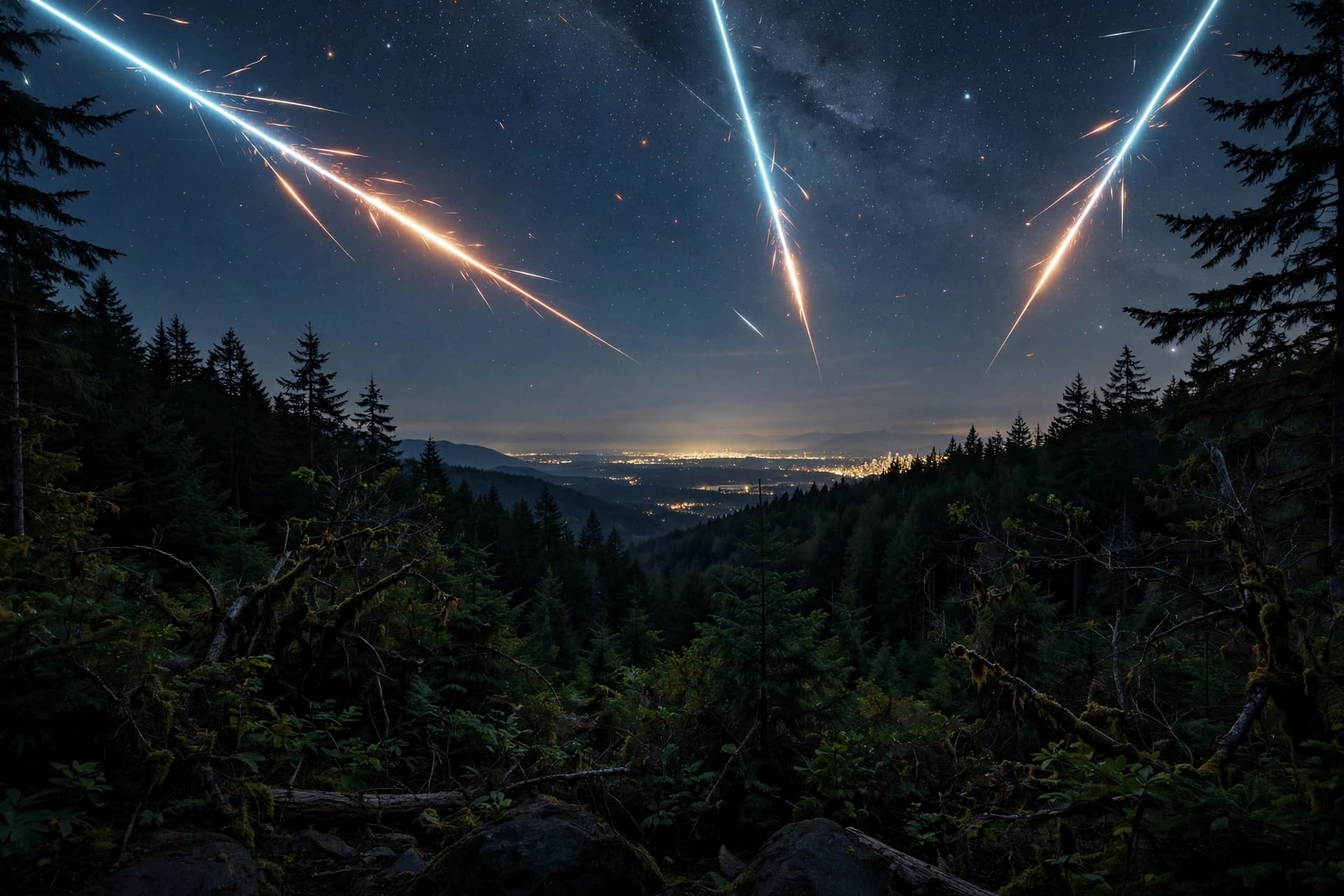
There is an old comfort in looking up. The sky above Metro Vancouver, often softened by cloud and city glow, still holds the occasional surprise for those patient enough to wait. This November, the heavens are offering a triple invitation: not one, not two, but three meteor showers will peak or remain active through the month, and at least two of them are known for producing fireballs—meteors bright enough to cast shadows, to leave trails that linger, to make the viewer forget, for a moment, the ordinary world below .
The Southern Taurids peak on the night of November 4 to 5. This shower is not known for prodigious numbers; observers might see around ten meteors per hour at best. But what it lacks in quantity, it makes up for in spectacle. The Taurids are the source of some of the brightest fireballs of the year, slow-moving meteors that enter Earth's atmosphere at a relatively leisurely 17 miles per second and can leave glowing trails that persist for seconds . The American Meteorological Society compares their brightness to Venus in the morning or evening sky. Some observers report vivid colors, and on rare occasions, even faint sounds—sonic booms or electrophonic crackles—though these are the exception rather than the rule.
The Northern Taurids follow, peaking around November 12 and continuing to produce shooting stars until roughly December 10 . Together, the two Taurid streams form what astronomers sometimes call the Taurid fireball season, a period when the odds of seeing something genuinely spectacular are higher than at almost any other time of year. The shower's radiant point lies in the constellation Taurus, which rises in the eastern sky after sunset and climbs high by midnight.
But the best of November's offerings, according to local astronomers, may be the Leonids. Active from November 3 to December 2, the Leonids peak around November 18. At their best, they produce up to thirteen meteors per hour, and they are known for bright meteors with persistent trains—the glowing ionized trails that hang in the sky after the meteor itself has burned away . The Leonids also produce earth grazers, meteors that streak close to the horizon and often leave long, colorful tails. The best viewing window comes in the dawn hours, after the moon has set, when the sky is darkest and the radiant is highest.
For those planning to watch, the advice is simple and time-tested. Get away from city lights if possible; the darker the sky, the more meteors you will see. Bring a blanket or a reclining chair, dress warmly, and give your eyes at least twenty minutes to adjust to the darkness. A red-filtered flashlight will help preserve night vision. And bring patience—meteor watching is not a performance but a vigil, a quiet act of attention rewarded unpredictably.
There is something quietly democratic about meteor showers. They require no ticket, no equipment, no special knowledge. A dark patch of sky and a willingness to look are enough. In a region known for its rain and its gray winter skies, a clear November night is a gift, and the Taurids and Leonids will be waiting for anyone who steps outside to receive it.
Image Disclaimer: This article's image was produced using AI generation and is not a photograph of an actual meteor shower.
Sources: Richmond News, Vancouver Is Awesome, HighOnCity, NASA, American Meteorological Society
Published by Banx Network. This article is part of the Banx decentralized media programme, powered by the BXE token on the XRP Ledger.