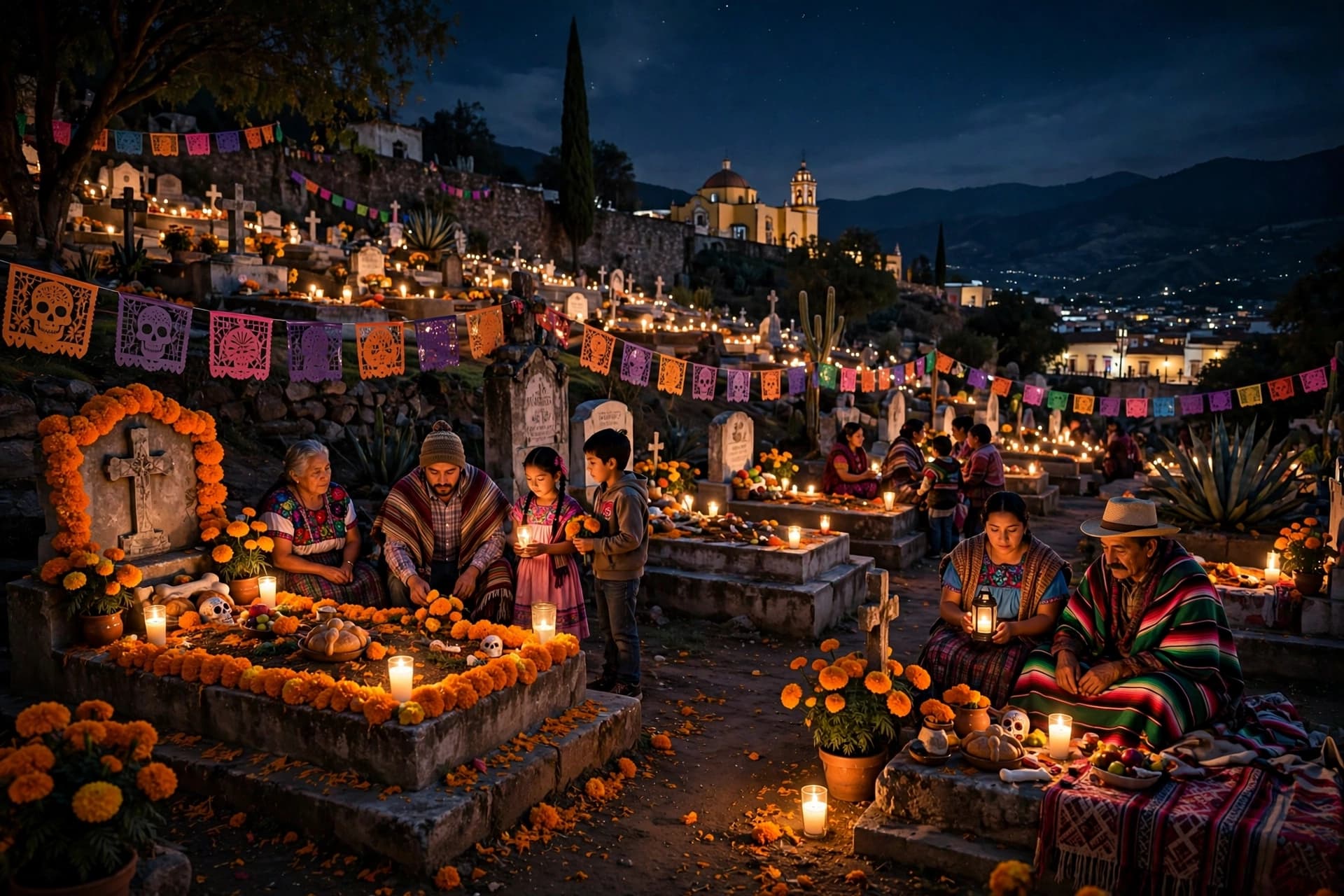
There is a particular kind of aliveness that comes when a culture chooses to welcome its dead rather than fear them. In Mexico, the arrival of autumn brings not a chill of dread but a warmth of reunion—a season when the boundary between the living and the departed grows thin, and families set out to make their loved ones feel at home again. Bright orange marigolds, called cempasúchil, line the streets, their color believed to light the path of souls returning to earth. Candles flicker on altars. The scent of pan de muerto, the sweet bread of the dead, drifts from bakeries. It is a celebration that begins in October and culminates on November 1 and 2, when the souls of the deceased are believed to temporarily return to reunite with their families .
The roots of this tradition reach deep into Mexico's pre-Hispanic past, entwined with agricultural beliefs about the cycles of life, death, and rebirth. When the Spanish arrived in 1521, Catholic traditions were woven into the observance, creating the hybrid practice that persists today . No one knows precisely when the first observance took place, but its endurance across centuries speaks to something essential in the Mexican relationship with mortality—a willingness to hold grief and joy in the same hand.
In Mexico City, the celebration has taken on a grandeur that attracts visitors from around the world. Massive parades wind along the capital's main avenues, floats decorated with catrinas—the elegant skeleton figures born from José Guadalupe Posada's satirical illustrations—glide past crowds. Streets, businesses, and markets are draped in marigold orange. Families decorate altars in their homes, placing treats, food, and mezcal as offerings beside photographs of their loved ones . In the Zócalo, the city's vast central square, a monumental ofrenda honors the dead, this year featuring a thirty-two-meter cartonería sculpture of the Catrina herself .
But beyond the spectacle lies a quieter, more intimate observance. On the night of November 1, families gather at cemeteries across the country, just as their ancestors have done for centuries. In Oaxaca, candlelight vigils illuminate the graves of loved ones in the early hours, families keeping watch in the darkness . In the town of Santa Rosa Xochiac, the ritual begins at noon on November 1 when the church bell rings, signaling that the souls have arrived. Doors open, and families call their departed by name, inviting them to sit, to eat, to rest after their long journey. They place the clothing the deceased once wore, believing the souls return soiled and must change. Water is left for them to wash. Chairs are set for them to sit .
This year, however, the celebration has also brought questions about the cost of its growing international spotlight. In Janitzio, a small island in Michoacán whose celebrations were recognized by UNESCO as Intangible Cultural Heritage of Humanity in 2008, authorities closed the cemetery to tourists for the first time. The community council had reported the collapse of damaged tombs, crosses, and parts of the cemetery wall due to the flood of visitors. Only local families and friends of those buried there were allowed in . In Mexico City, some locals view the annual parade with skepticism, noting that the procession was created for the 2015 James Bond film Spectre and later incorporated into the city's celebrations, though it was not previously part of the tradition .
These tensions do not diminish the celebration. They simply remind us that living traditions are never static. They evolve, absorb, and sometimes resist. The Day of the Dead is not a museum piece but a practice, shaped by the hands that keep it. In Zacatecas, this year's festival runs from October 26 to November 3, with Oaxaca as the guest state, bringing the Guelaguetza and its eight regions of dancers to share their traditions. The program honors eighteen local figures whose lives shaped the community's memory, including artists, clergy, and ordinary citizens whose legacies live in the streets they walked .
What remains constant, across the parades and the vigils, the altars and the arguments, is the essential gesture: the refusal to let death sever connection. The dead are not gone; they are awaited. They are fed, remembered, celebrated. They are given a place at the table. In a world that often treats grief as something to be moved past, Mexico's Day of the Dead offers a different wisdom—that mourning and joy can coexist, that love does not end with the last breath. The marigolds bloom, the candles burn, and the souls come home.
Image Disclaimer: The visual accompanying this article was generated by artificial intelligence and is not a photograph of actual celebrations.
Sources: CBC News, The Associated Press, Xinhua, Gobierno del Estado de Zacatecas, INAH, CDMX
Published by Banx Network. This article is part of the Banx decentralized media programme, powered by the BXE token on the XRP Ledger.