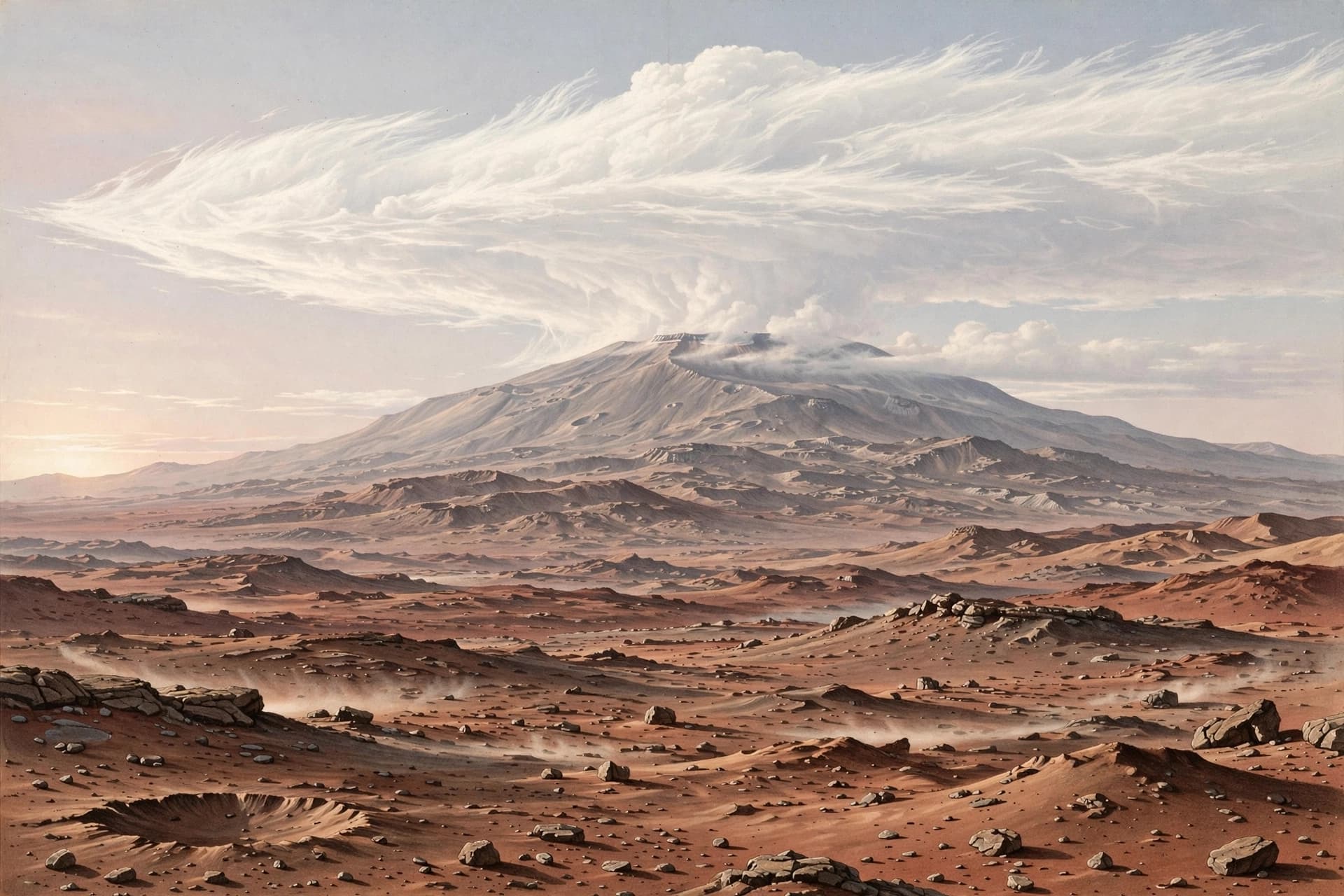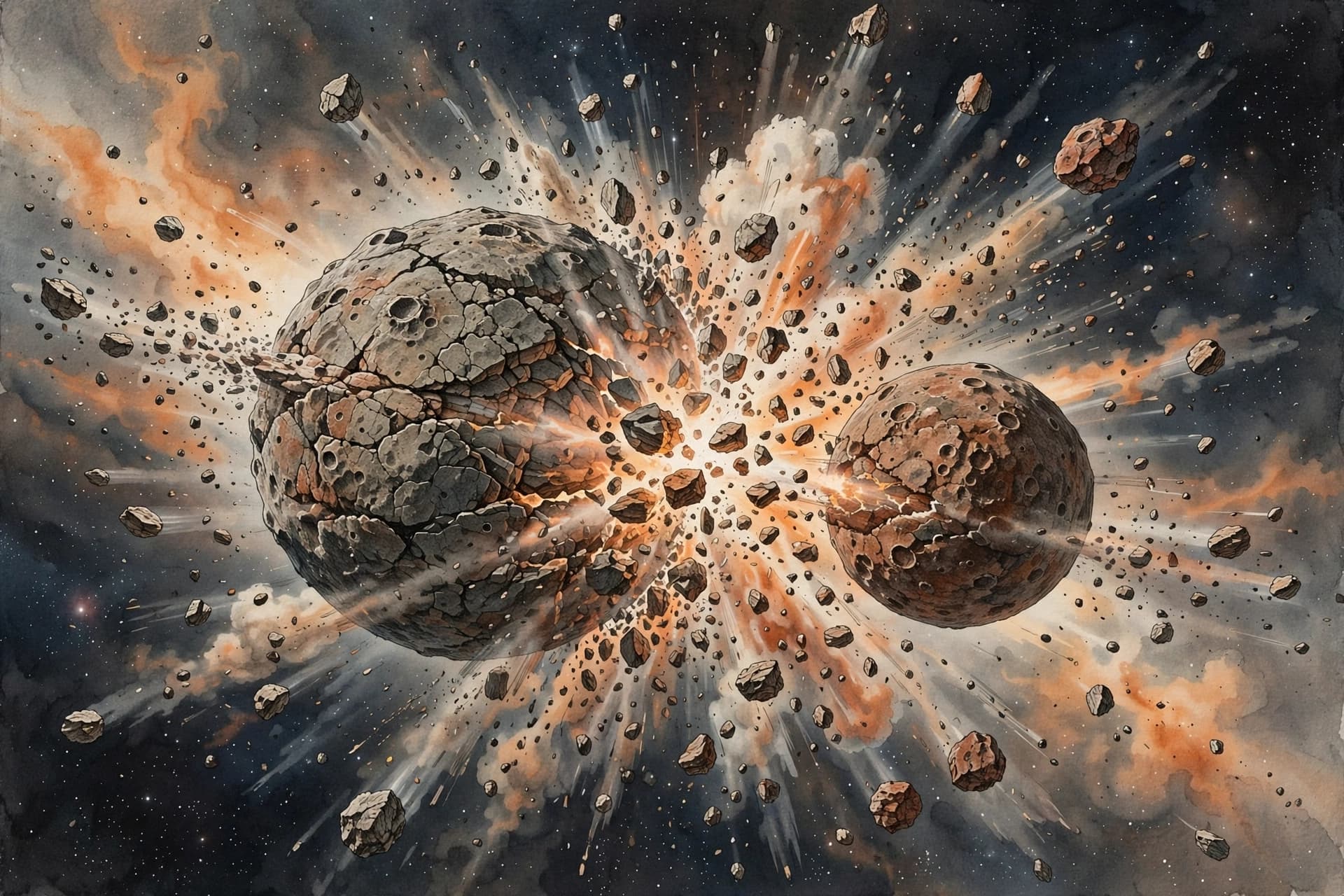
There is a particular kind of wonder that comes from realizing the universe is stranger and faster than we imagined. For decades, the story of our Moon’s birth has been told as a slow, patient process—a cosmic collision, a debris disk, and then eons of gentle accretion, like sediment settling at the bottom of a pond. But a new simulation suggests that story may need to be rewritten, and that the Moon may have been born in the time it takes to watch a movie.
The study, led by researchers at the Southwest Research Institute and the University of Arizona, used high-resolution computer modeling to revisit the giant impact hypothesis—the idea that a Mars-sized body called Theia struck the young Earth about 4.5 billion years ago . Unlike previous models that treated the colliding bodies as fluids, this one factored in the mechanical strength of their rocky material, a variable that turns out to make all the difference .
The results, published in The Astrophysical Journal Letters, are striking. Under certain conditions—specifically, if Earth and Theia were still hot and pliable from their own formation—a fully formed Moon could have emerged from the impact in just five hours, settling directly into orbit rather than gradually coalescing from a debris disk .
Lead author Adeene Denton explained the shift in thinking. “When you simulate the Earth and the Moon as colliding bodies with geologic properties, it changes how the Moon forms out of that impact—that’s something we considered unnecessary before,” she said . The key was recognizing that hot protoplanets are mechanically weaker than cold ones, allowing Theia to be absorbed into Earth while a large fragment was flung directly into orbit .
The scenario is not without its puzzles. The isotopic similarity between Earth rocks and lunar samples—the so-called “isotope crisis”—remains unexplained by the new model, just as it was by older ones . And the exact temperatures of Earth and Theia at the moment of impact can never be known with certainty; the five-hour Moon is a possibility, not a proven fact .
Yet the implications are profound. If the Moon formed in hours rather than millennia, its early thermal history, its retention of volatile compounds, and the timeline of Earth’s own development may all need rethinking . For now, the research offers something rare in planetary science: a reminder that even the most familiar object in our night sky may have a story more sudden and violent than we ever suspected.
AI Image Disclaimer: The images accompanying this article are generated by artificial intelligence and are intended for illustrative purposes only.
Sources: Futura-Sciences, Nautilus, VOV, The Astrophysical Journal Letters, Southwest Research Institute
Published by Banx Network. This article is part of the Banx decentralized media programme, powered by the BXE token on the XRP Ledger.