Key Highlights
- New Study:Research indicates human-driven climate change may have prevented the onset of a new ice age.
- Geological Impact:The next ice age was expected to begin in about 50,000 years, but human emissions have disrupted this cycle.
- Anthropocene Epoch:Findings highlight the significant influence of human activity on Earth's climate systems.
A recent study published in the journal Nature has unveiled a striking irony: the very activities that threaten to push the planet into a state of uninhabitability may have also thwarted the onset of a new ice age. This geological event, which would have commenced tens of thousands of years from now, could have drastically altered the planet's climate, sea levels, and ecosystems. While this finding does not alleviate the dire consequences of ongoing warming, it underscores the complexity of Earth's climate system, where human influence has become a dominant force.
The research, spearheaded by scientists from the University of Potsdam and the Potsdam Institute for Climate Impact Research, utilized advanced climate models and geological data to reconstruct the natural cycles of ice ages and interglacial periods spanning millions of years. Their analysis revealed that the current interglacial period, known as the Holocene, would typically be expected to endure for another 50,000 years before the onset of the next ice age. However, the significant emissions of carbon dioxide and other greenhouse gases from human activities have disrupted this natural cycle.
This revelation carries profound implications for our understanding of the Anthropocene—the proposed geological epoch characterized by human impact on the planet. If human actions have already altered the timing of the next ice age, it suggests that the Anthropocene is not merely a theoretical future but a present reality, with repercussions that extend far beyond the lifetimes of current generations.
Researchers emphasize that their findings do not imply that climate change is harmless. The warming driven by human emissions is already manifesting in severe consequences, including rising sea levels and an increase in extreme weather events. These impacts are expected to escalate unless significant reductions in emissions are achieved. The study serves as a cautionary reminder that the climate system is not a straightforward mechanism that can be manipulated without repercussions.
For climate scientists, this study contributes to a broader understanding of how human activities are reshaping the planet. It highlights the Earth's extensive history of dramatic climate shifts and positions human influence as a force comparable to the geological processes that have historically shaped the environment. Additionally, the findings provoke ethical considerations regarding potential interventions in the climate system, such as geoengineering, and the responsibilities of current generations towards future ones.
The prospect of an ice age that may never materialize is a perplexing concept. It represents a natural cycle that has been interrupted, emphasizing the profound impact of human influence and the associated warnings. As the Earth continues to evolve, the changes will increasingly be dictated by human choices and the emissions already released into the atmosphere.
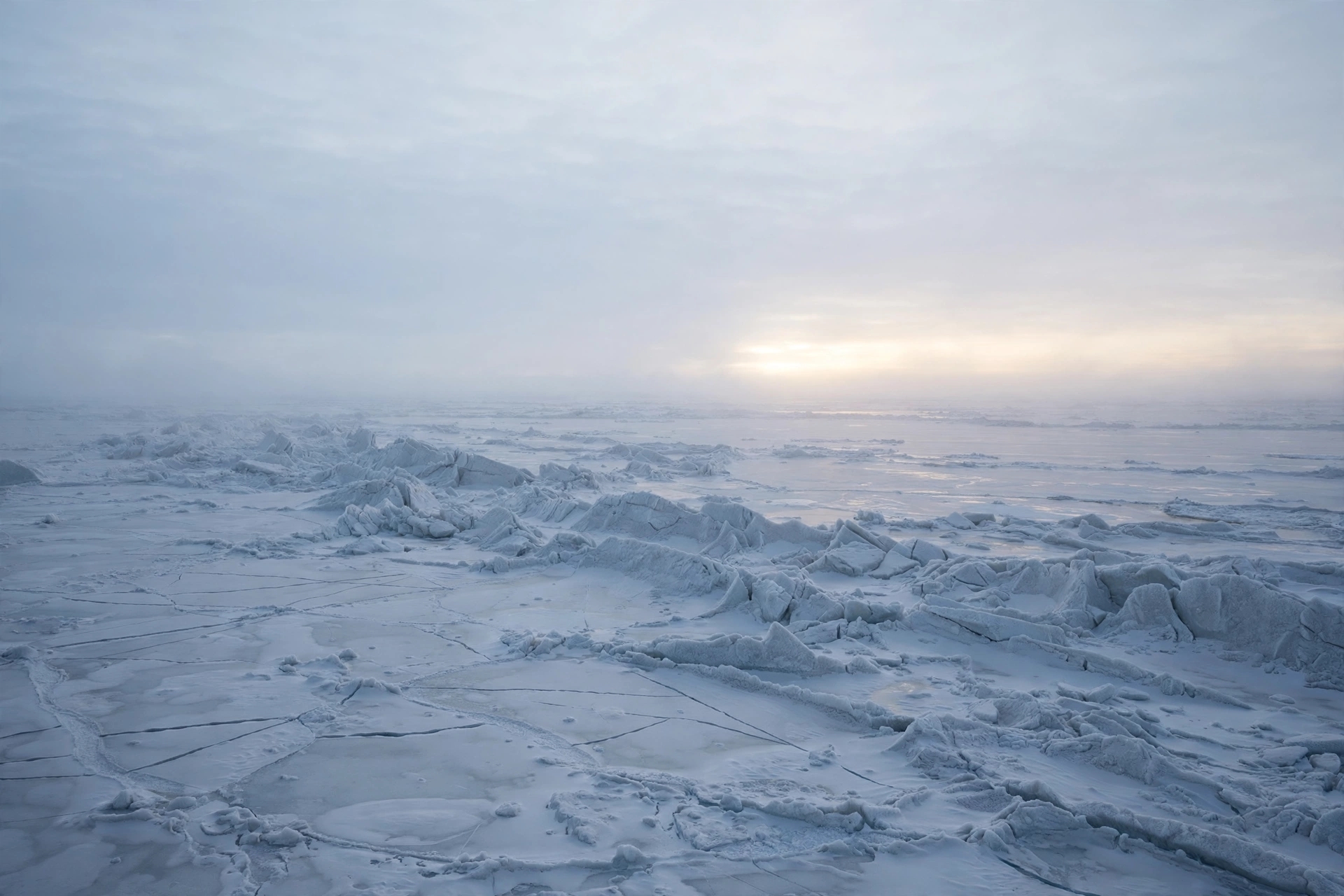
AI Image Disclaimer: The images in this article are generated by artificial intelligence and are for illustrative purposes only; they do not depict the actual research, the researchers, or the specific climate scenarios.
Published by Banx Network. This article is part of the Banx decentralized media programme, powered by the BXE token on the XRP Ledger.