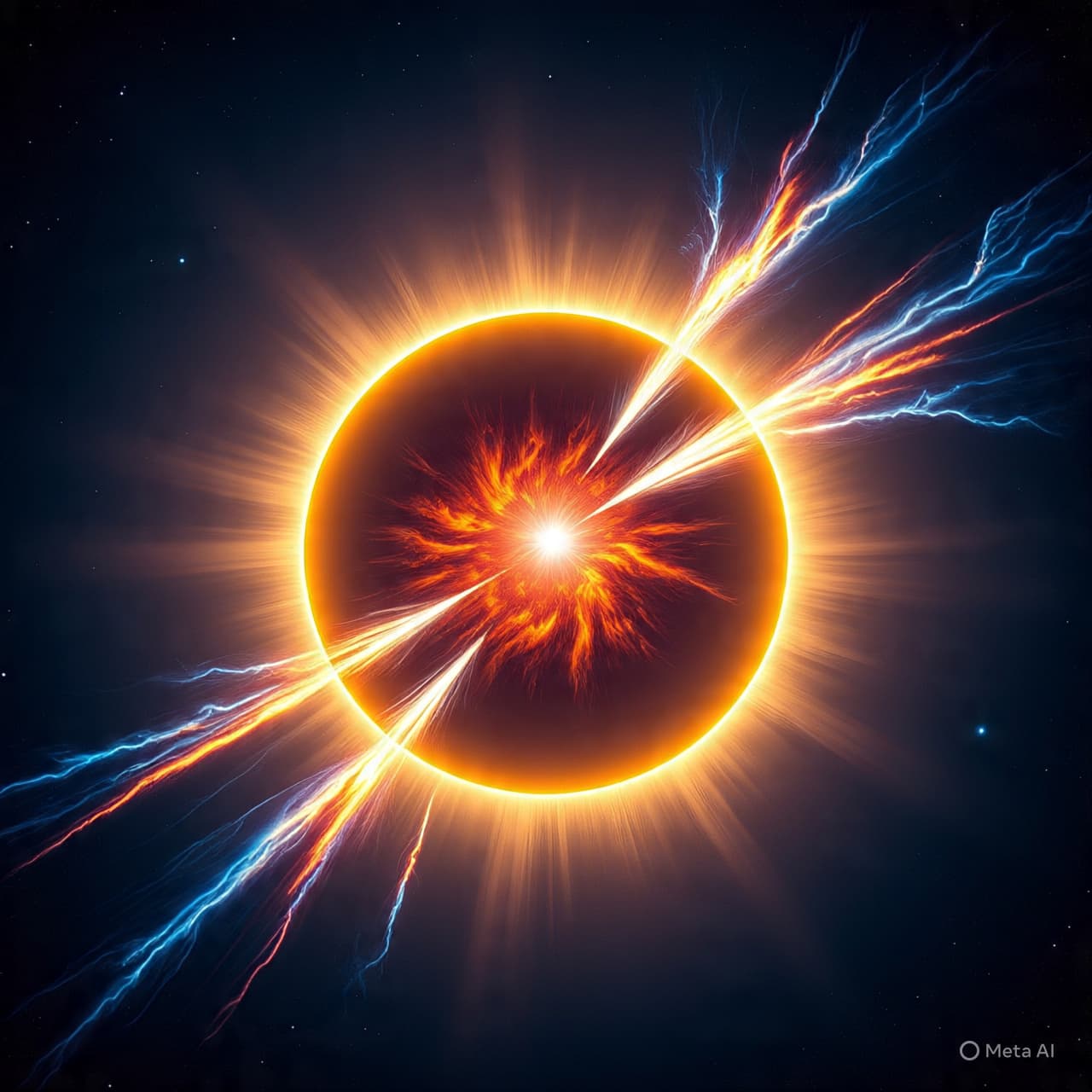
In the vast expanse above, our closest star reminded Earth of its immense power. Scientists report that the Sun emitted the second-strongest solar flare of 2025, sending a burst of electromagnetic energy that sparked widespread radio blackouts across parts of Africa. For hours, communications and navigation systems were disrupted, highlighting the delicate connection between human technology and the whims of space weather.
The flare, classified as an X-class event, is among the most intense types of solar eruptions, capable of affecting radio signals, satellite communications, and power grids. Observatories around the globe tracked the event, noting its speed, energy output, and trajectory toward Earth. The resulting geomagnetic storm caused high-frequency radio blackouts, particularly in regions under direct solar exposure, affecting aviation communications, maritime navigation, and certain emergency response channels.
Scientists emphasize that such flares, while dramatic, are a natural aspect of the Sun’s 11-year cycle of activity. Predicting their exact timing remains challenging, though satellites and ground-based sensors allow for early warning systems that can mitigate impacts. In this instance, monitoring systems provided alerts, enabling some operators to adjust equipment and protect critical infrastructure from potential damage.
Beyond the technical impact, the event serves as a reminder of humanity’s reliance on technologies vulnerable to cosmic phenomena. From satellites enabling GPS navigation to radio networks connecting communities, solar activity remains a subtle but persistent force shaping our modern lives. Researchers continue to study the flare’s behavior to refine forecasts and improve resilience against future space weather events.
As the radio signals gradually returned, the skies regained their ordinary hum. Yet the flare leaves a lasting impression: even in an age dominated by technology, the Sun can remind us that the cosmos is far from silent, and its influence reaches directly into our daily world.
Published by Banx Network. This article is part of the Banx decentralized media programme, powered by the BXE token on the XRP Ledger.