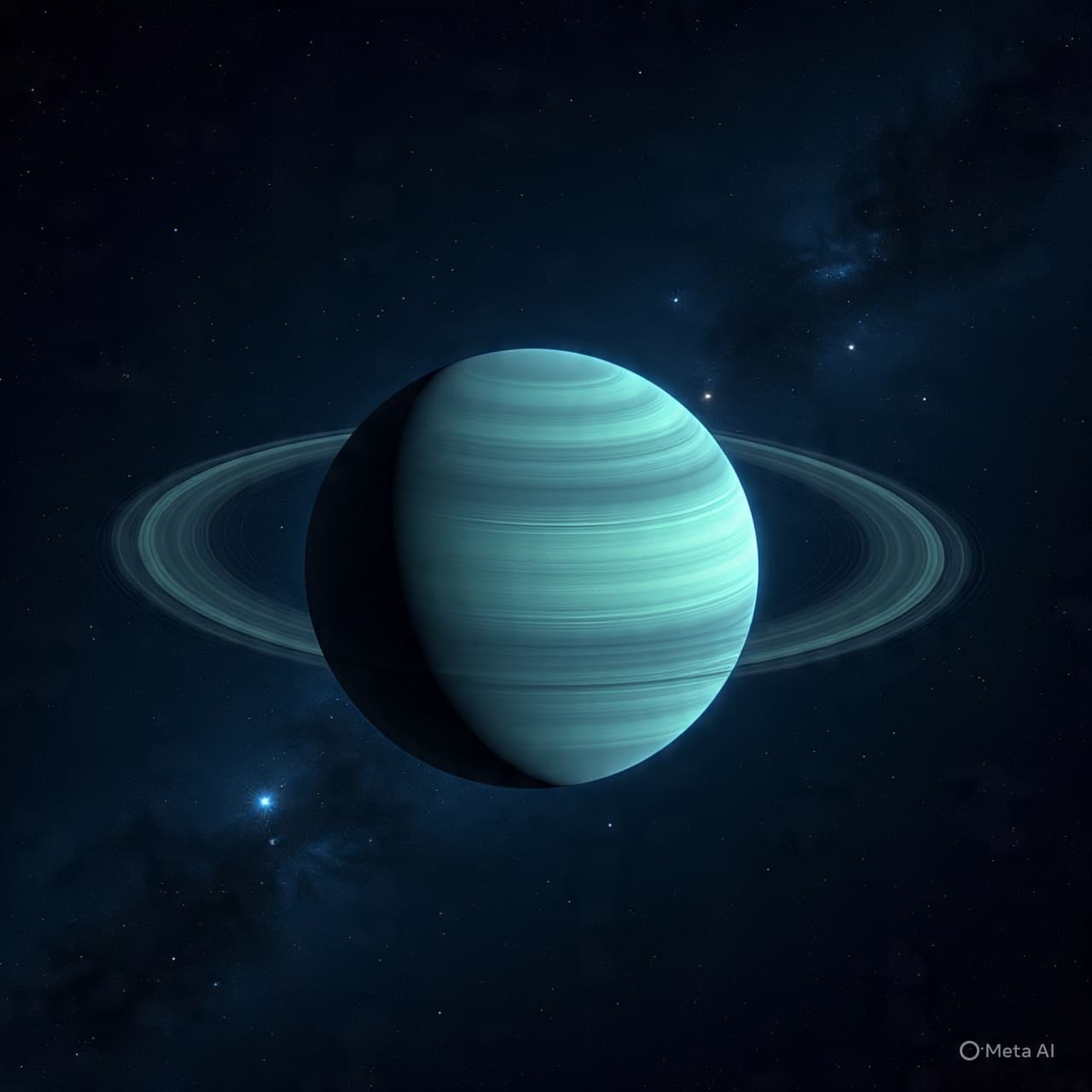
There are worlds that whisper rather than shout. Far beyond the warmth of Earth’s orbit, past the familiar glow of Mars and Jupiter, Uranus turns slowly in a pale, distant light. It is a planet that has long seemed reserved, tilted dramatically on its side, as though listening to secrets carried through the cold of space. And sometimes, to understand such a world, we must simply watch — patiently, intently, without blinking.
That is precisely what the has done. In a sustained 17-hour observation, Webb focused on , revealing auroral activity that appears even more unusual than scientists had anticipated. The findings offer a new glimpse into a planet already known for defying easy explanations.
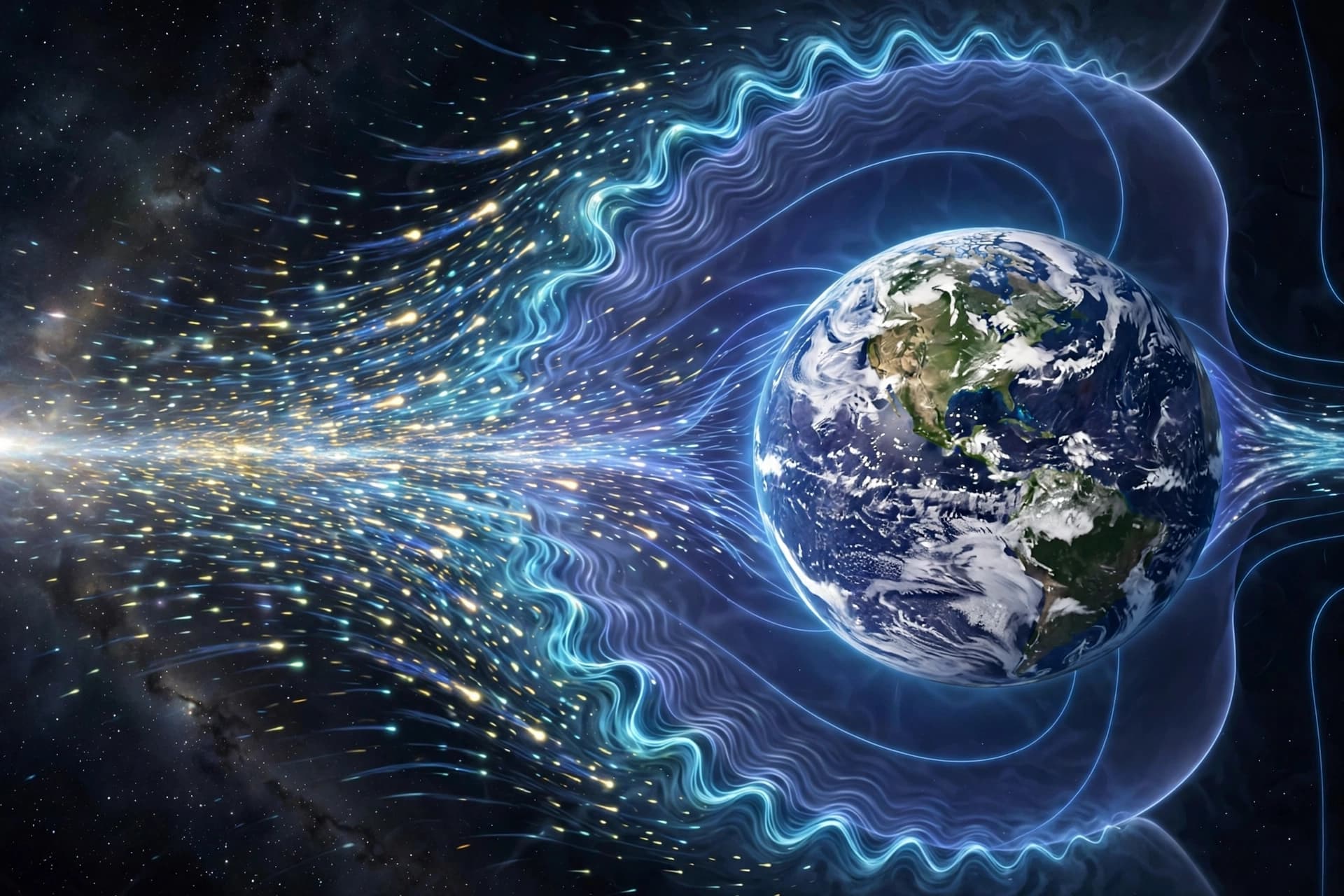
Auroras, familiar to many on Earth as shimmering curtains of green and red light near the poles, occur when charged particles interact with a planet’s magnetic field and atmosphere. On Uranus, however, the story is less straightforward. The planet’s magnetic field is significantly tilted and offset from its rotational axis. Combined with Uranus’ extreme axial tilt — nearly 98 degrees — this creates a magnetosphere that behaves in ways unlike those of Earth, Jupiter, or Saturn.
Webb’s infrared instruments allowed researchers to observe subtle emissions linked to auroral processes. The long-duration stare captured changes over time, helping scientists trace how solar wind particles may be interacting with the planet’s complex magnetic environment. Instead of neat, symmetrical ovals like those often seen on other planets, Uranus’ auroras appear irregular and dynamically shaped, reflecting the magnetic field’s unusual geometry.
Previous missions, including observations from the Voyager 2 flyby in 1986 and later data from the Hubble Space Telescope, hinted at this magnetic peculiarity. But Webb’s sensitivity in infrared wavelengths adds depth to the picture. It allows scientists to detect faint atmospheric signatures, offering clues about temperature variations and chemical reactions triggered by auroral energy.
The 17-hour observation was not a fleeting glance but a deliberate act of attention. Over that stretch of time, researchers were able to monitor how auroral features evolved, moved, and brightened. Each fluctuation provides insight into how Uranus responds to solar activity — a key step in understanding ice giants more broadly.
Beyond Uranus itself, the findings carry broader implications. Ice giants are common in planetary systems beyond our own, yet they remain comparatively understudied. By refining our knowledge of Uranus’ magnetosphere and atmospheric behavior, scientists gain a framework for interpreting distant exoplanets with similar mass and composition.
NASA has indicated that continued analysis of Webb’s data is underway, and further observations may follow to deepen understanding of Uranus’ magnetic environment. The recent findings add to a growing body of research reshaping how scientists view the outer solar system. For now, the distant planet continues its quiet rotation — no longer quite as silent as it once seemed.
AI Image Disclaimer Illustrations were produced with AI and serve as conceptual depictions.
Sources
NASA
Space.com
The Associated Press
Reuters
Ars Technica
Published by Banx Network. This article is part of the Banx decentralized media programme, powered by the BXE token on the XRP Ledger.