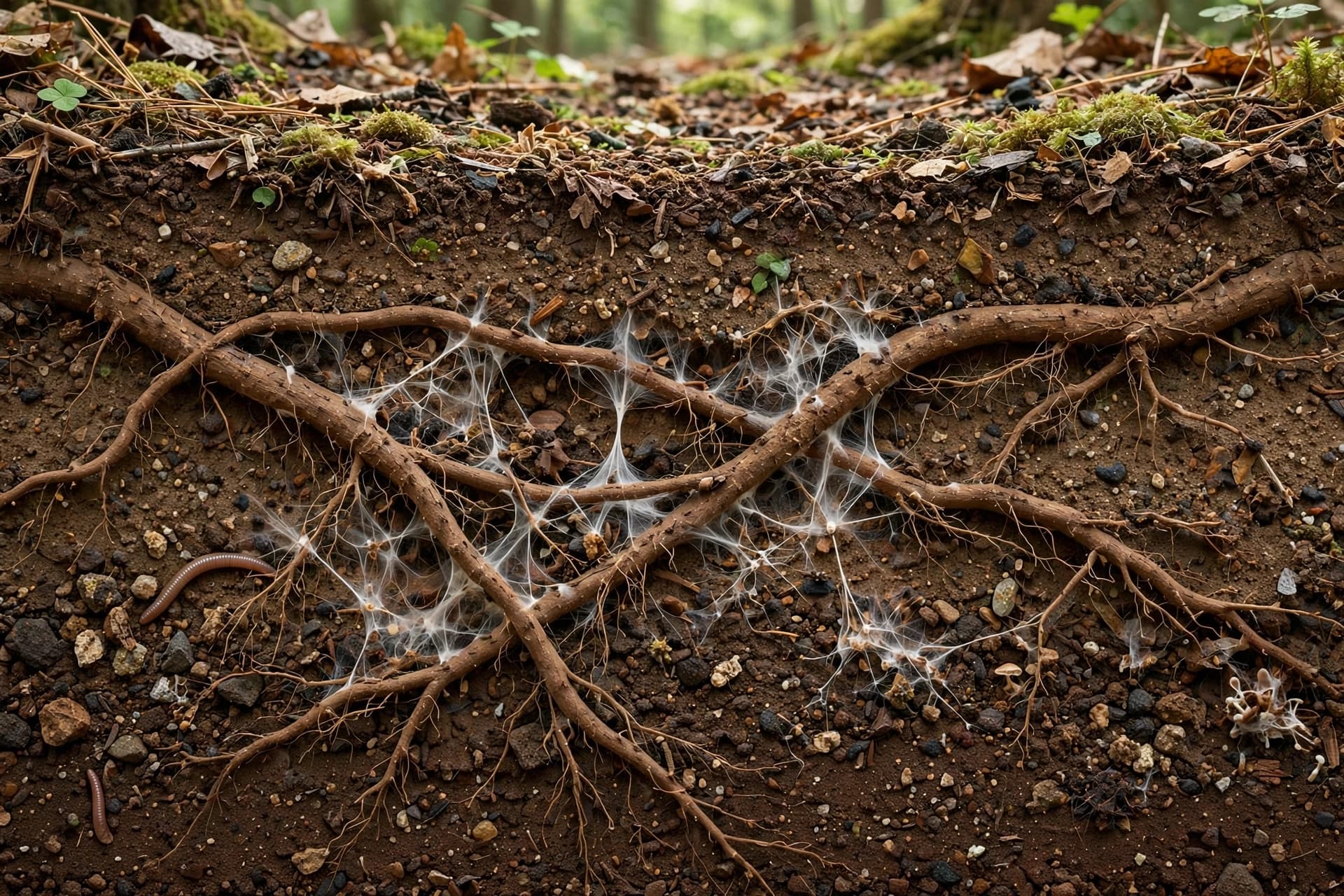
There is a quiet exchange that happens beneath every forest, an economy of carbon and nutrients that operates out of sight and largely out of mind. Tree roots release sugars and other compounds into the soil, feeding the microbes that live there. In return, those microbes break down organic matter and release nutrients the roots can absorb. It is a partnership as old as forests themselves. New research suggests that warming may be disrupting it.
A Dartmouth-led study published in New Phytologist has found that higher temperatures can actually reduce the rate at which tree roots release these carbon compounds—a process called exudation. The finding surprised researchers, who had expected warming to increase all kinds of plant activity. “The results were surprising,” said Thomas Muratore, the study’s first author and a postdoctoral researcher in the lab of Shersingh Joseph Tumber-Dávila at Dartmouth .
The study focused on two common tree species and examined how they responded to higher temperatures and higher nitrogen levels in the soil—both of which can be byproducts of climate change. The researchers found that the size and shape of the root systems did not change. But higher temperatures drove down exudation. Increased nitrogen levels increased exudation regardless of temperature, but nitrogen levels are unlikely to rise everywhere .
“So exudation will likely decrease in places where temperatures go up but nitrogen levels don’t—and that means the dynamic interaction between plants and soil in those places will decline,” Muratore explained . The consequences could ripple through forest ecosystems. If roots feed soil microbes less, those microbes may become less active, slowing the breakdown of organic matter and the release of nutrients that trees need to grow.
The research is part of a broader push to understand the underground strategies plants use to survive. Tumber-Dávila, an assistant professor at Dartmouth, has helped compile a database of more than 10,000 plant species, cataloging every measurable trait associated with subterranean strategies—from exudation to cloning, where underground stems become genetic copies of the original plant. The goal, he said, is to examine these strategies collectively rather than in isolation, because “these things don’t exist in a vacuum” .
Muratore also emphasized the need for more research beyond the United States. “We need to do more to better understand plant behaviors in the Global South, particularly given the biodiversity and density of plant life involved,” he said. For a warming world, the partnership between roots and soil may be more fragile than it appeared—and understanding how it holds together is becoming increasingly urgent .
AI Image Disclaimer: This article’s image is AI-generated and does not depict the actual research sites or tree species studied
Published by Banx Network. This article is part of the Banx decentralized media programme, powered by the BXE token on the XRP Ledger.